 November 2025 in “Archives of Dermatological Research”
 Limelight (CB-EVs) safely promotes hair growth.
FGF5 spliceosomes inhibit rabbit hair growth by affecting gene expression.
Non-immune dermal cells dominate, epidermal cells increase after day 9, and certain immune cells persist beyond inflammation in wound-induced hair follicle regeneration.
September 2021 in “IP Indian Journal of Clinical and Experimental Dermatology” The herbal supplement improved hair growth, density, and strength without side effects.

Glycyrrhizic acid and licorice extract can significantly reduce unwanted hair growth.
 June 2011 in “The Journal for Nurse Practitioners”
 Up to half of adult women may experience hair loss, and doctors should use medical history, exams, and tests to find the cause and treat it.
 3 citations
,
July 2021 in “International journal of pharmaceutical chemistry and analysis”
3 citations
,
July 2021 in “International journal of pharmaceutical chemistry and analysis” Medicinal plants like Aloe, Amla, and Coconut oil help with hair and skin care.
 June 2023 in “Frontiers in Genetics”
 Genes related to calcium signaling and lipid metabolism are important for curly hair in Mangalitza pigs.
July 2024 in “JAAD Case Reports” Autoimmune diseases can change hair texture, but treatment can restore it.
154 citations
,
October 1996 in “Proceedings of the National Academy of Sciences of the United States of America” Estrogen affects hair growth and skin cell multiplication.
50 citations
,
September 1997 in “Developmental Biology”  September 2024 in “Journal of the American Academy of Dermatology”
 Regulatory γδ T cells help protect hair follicles from alopecia areata and promote hair regrowth.
34 citations
,
September 1997 in “Acta Dermato Venereologica” RXR agonists may promote hair growth in humans.
January 2007 in “Belarusian State Pedagogical University repository (Belarusian State Pedagogical University)” Certain hairstyles in an urban South African township are linked to specific scalp disorders.
 45 citations
,
January 2010 in “Journal of Veterinary Medical Science”
45 citations
,
January 2010 in “Journal of Veterinary Medical Science” A gene mutation causes curly hair and hair loss in rats.
 10 citations
,
January 2012 in “International Journal of Trichology”
10 citations
,
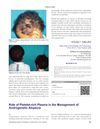
January 2012 in “International Journal of Trichology” PRP helps hair growth in common hair loss disorder.
10 citations
,
June 2019 in “Cosmetics” Mixed-race individuals have hair with varied shapes and more root damage.
 June 2026 in “Zenodo (CERN European Organization for Nuclear Research)”
 The polyherbal hair serum is a safe and effective alternative for improving hair health and reducing dandruff.
 June 2026 in “Zenodo (CERN European Organization for Nuclear Research)”
 The polyherbal hair serum is effective for improving hair health and reducing dandruff.
97 citations
,
March 2010 in “The American Journal of Human Genetics” A mutation in the KRT74 gene causes tightly curled hair.

Consider cultural practices and barriers for effective alopecia areata treatment.
 December 2023 in “Clinical, cosmetic and investigational dermatology”
 The new hair transplant technique is fast, effective, and satisfying for patients with different hair types.
 4 citations
,
January 2014 in “International Journal of Trichology”
4 citations
,
January 2014 in “International Journal of Trichology” A 12-year-old boy with a rare genetic condition has progressive hair loss with no effective treatment.
Bovines can have rare inherited skin diseases with specific symptoms like hair loss, fragile skin, and abnormal porphyrin buildup.
2 citations
,
December 2024 in “JAAD reviews.” Modifying grooming techniques and using treatments like chemical depilatories or laser hair removal can help manage Pseudofolliculitis barbae.
 1 citations
,
August 2021 in “International journal of scientific research in science and technology”
1 citations
,
August 2021 in “International journal of scientific research in science and technology” The polyherbal hair oil promotes hair growth, reduces hair loss, and is safe to use.
 1 citations
,
December 2021 in “The Open Dermatology Journal”
1 citations
,
December 2021 in “The Open Dermatology Journal” Herbal hair oil with certain herbs can improve hair growth.
210 citations
,
February 2008 in “Nature genetics” Mutations in the P2RY5 gene cause autosomal recessive woolly hair.
 74 citations
,
January 2013 in “Journal of Investigative Dermatology”
74 citations
,
January 2013 in “Journal of Investigative Dermatology” Four genetic risk spots found for hair loss, with WNT signaling involved and a link to curly hair.
 13 citations
,
April 2018 in “Scientific Reports”
13 citations
,
April 2018 in “Scientific Reports” The genes KRT25 and SP6 affect curly hair in horses, with KRT25 also causing hair loss. If both genes are mutated, the horse gets curly hair and hair loss. KRT25 can hide the effect of SP6.