20 citations
,
August 2005 in “The Journal of laboratory and clinical medicine” Mice with damaged skin or hair follicles are more susceptible to anthrax infection.
 8 citations
,
January 2007 in “International journal of experimental pathology”
8 citations
,
January 2007 in “International journal of experimental pathology” Hairless HRS/J mice resist Bacillus anthracis skin infections due to high numbers of immune cells, not because they lack hair follicles.
2 citations
,
December 2007 in “Microbial pathogenesis” Anthrax bacteria can infect and destroy hair follicles in mice, but the immune system eventually clears the infection.
5 citations
,
April 1992 in “Pediatrics in review” Children can get skin fungal infections, which are easy to diagnose and treat.
6 citations
,
September 2013 in “Journal of Evolution of Medical and Dental Sciences” Low CD4 counts in HIV patients are linked to more skin disorders.
34 citations
,
November 1974 in “Archives of Dermatology” Smaller, diluted corticosteroid injections reduce the risk of vision loss.
 1 citations
,
December 2018 in “Journal of cutaneous pathology”
1 citations
,
December 2018 in “Journal of cutaneous pathology” Some skin growths with mucin can form hair follicles and resemble skin cancer, but a special stain can help tell them apart.
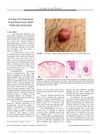 1 citations
,
February 2017 in “The American journal of dermatopathology/American journal of dermatopathology”
1 citations
,
February 2017 in “The American journal of dermatopathology/American journal of dermatopathology” A man with a skin nodule was diagnosed with a rare skin condition called cutaneous focal mucinosis, which can be confused with other skin cancers.
1 citations
,
September 2020 in “bioRxiv (Cold Spring Harbor Laboratory)” γδ T cells are crucial for early wound healing after a skin virus infection.
April 1992 in “Pediatrics in Review” Quick, simple tests help diagnose children's skin fungal infections.
32 citations
,
January 2010 in “Journal of Dermatological Science” Reduced EGFR signaling delays hair cycle and reduces fat growth, but hair development remains normal.
 26 citations
,
June 2005 in “Journal of The American Academy of Dermatology”
26 citations
,
June 2005 in “Journal of The American Academy of Dermatology” Some patients receiving pegylated interferon alfa injections developed skin necrosis, requiring treatment adjustments or discontinuation.
 January 2022 in “Turkiye Klinikleri Journal of Dermatology”
 COVID-19 patients with skin signs often stayed in the hospital for less time than those without skin signs.
 1 citations
,
January 2024 in “American journal of clinical and experimental immunology.”
1 citations
,
January 2024 in “American journal of clinical and experimental immunology.” Skin symptoms like rashes and sores can indicate COVID-19 severity, especially in older people.
 May 2025 in “International Medical Case Reports Journal”
 Lichen planus pigmentosus may indicate undetected hepatitis C infection.
 29 citations
,
November 2014 in “Experimental Dermatology”
29 citations
,
November 2014 in “Experimental Dermatology” Injecting alpha-melanocyte-stimulating hormone in mice improved skin healing and reduced scarring.
3 citations
,
March 2024 in “Viruses” γδ T cells are essential for wound healing after poxvirus infection.
 82 citations
,
June 2020 in “Inflammation Research”
82 citations
,
June 2020 in “Inflammation Research” Skin problems in COVID-19 patients are rare and may be due to the body's complex immune response or blood clotting issues.
August 2018 in “Australasian journal of dermatology” Hyaluronic acid filler and fat grafting can cause rare skin complications.
8 citations
,
February 2022 in “Frontiers in Medicine” COVID-19 may trigger severe skin flare-ups in people with autoimmune conditions like lupus.
7 citations
,
January 2025 in “Frontiers in Microbiology” Chikungunya virus often causes skin issues and inflammation.
3 citations
,
January 2005 in “Photochemistry and Photobiology” Protein kinase C epsilon may promote skin cancer development after UV exposure by affecting nearby cells.
 10 citations
,
January 2021 in “BioMed Research International”
10 citations
,
January 2021 in “BioMed Research International” Some recovered COVID-19 patients experience skin, hair, and nail issues, suggesting they need follow-up care.
Isotretinoin effectively improved severe pityriasis rubra pilaris with complications.
 November 2021 in “Journal of the European Academy of Dermatology and Venereology”
 Skin and mucosal issues can occur after COVID-19 in adults and children.
28 citations
,
January 2005 in “Photochemistry and Photobiology” Protein kinase C epsilon may increase skin cancer risk by affecting nearby cells.
 3 citations
,
January 1985 in “British Journal of Dermatology”
3 citations
,
January 1985 in “British Journal of Dermatology” Zinc sulphate solution was not effective in reducing the number, duration, or severity of recurrent herpes simplex infections.
 2 citations
,
October 2019 in “International Journal of Research in Dermatology”
2 citations
,
October 2019 in “International Journal of Research in Dermatology” Obese people have more and worse skin problems than those of normal weight.
 1 citations
,
January 2019 in “International Journal of Advances in Medicine”
1 citations
,
January 2019 in “International Journal of Advances in Medicine” Diabetics most often have skin infections and specific skin conditions related to diabetes.
 1 citations
,
October 2016 in “International Journal of Research in Dermatology”
1 citations
,
October 2016 in “International Journal of Research in Dermatology” Chronic alcoholics most commonly experience skin infections.