 January 2025 in “International Journal of Pharmacognosy and Life Science”
 Herbal treatments like Aloe vera, Bhringraj, Neem, Tea tree oil, Amla, and Hibiscus are promising for safer, effective hair care.
 January 2025 in “Dialnet (Universidad de la Rioja)”
 ADSC-enriched fat grafting is the best and safest aesthetic treatment, combining effectiveness and ethical confidence.
 January 2025 in “Bright Sky Publications eBooks”
 Advancements in medical physics and laser technology are improving healthcare but access remains unequal globally.
 December 2024 in “Indonesian Journal of Tropical and Infectious Disease”
 Tinea corporis and tinea cruris are the most common skin infections in Surabaya, mainly affecting adult women.
 December 2024 in “Journal of Population Therapeutics and Clinical Pharmacology”
 Psoriasis worsens in winter in India due to less sunlight and dry skin, needing personalized treatment.

The mesenchymal stem cell secretome may effectively treat various diseases as an alternative to traditional stem cell therapies.
 May 2024 in “IP International Journal of Periodontology and Implantology”
 Treating gum disease and stress may help improve alopecia.
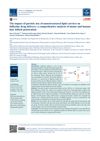 March 2024 in “Bioimpacts”
 400 nm particles penetrate hair follicles best, but mouse models aren't fully reliable for human studies.
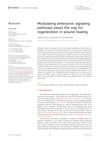 February 2024 in “Frontiers in physiology”
 Modifying certain signals in the body can help wounds heal without scars and regrow hair.
 December 2023 in “bioRxiv (Cold Spring Harbor Laboratory)”
 Aged individuals heal wounds less effectively due to specific immune cell issues.
 November 2023 in “Linköping University medical dissertations”
 Keratinocytes and adipose-derived stem cells can effectively heal difficult skin wounds.
 October 2023 in “Biomedical science and engineering”
 Innovative methods are reducing animal testing and improving biomedical research.
 September 2023 in “Frontiers in cell and developmental biology”
 Vav2 changes how hair follicle stem cells' genes work as they age, which might improve regeneration but also raise cancer risk.
 July 2023 in “Medicina Estética Revista Científica de la Sociedad Española de Medicina Estética (SEME)”
 Infrared light, alone or with hyaluronic acid, effectively treats skin laxity with minimal side effects.
 April 2023 in “Digital Library of Theses and Dissertations (Universidade de São Paulo)”
 Mesenchymal stem cells from laser-assisted liposuction are as effective and safe as those from conventional liposuction for cell therapy.

Mesenchymal stem cells from laser-assisted liposuction are as effective and safe as those from conventional methods for cell therapy.
 February 2023 in “Asian journal of pharmaceutical research and development”
 Flavonoids in Iraqi marshland plants have potential health benefits like antioxidant and anti-inflammatory effects.
 January 2023 in “Fundamental toxicological sciences”
 Mozuku seaweed fucoidan can inhibit harmful skin bacteria growth.
 January 2023 in “Åbo Akademi University Research Portal”
 Vimentin is crucial for wound healing, cell growth, and managing immune responses.
 September 2022 in “Institutional Repositories DataBase (IRDB)”
 3D-oxy exosomes may significantly boost hair growth, offering new treatment options for hair loss.
 August 2022 in “bioRxiv (Cold Spring Harbor Laboratory)”
 Mouse touch-sensitive nerve cells adjust their connections based on competition with other similar cells.
Extracellular vesicles could help treat hair loss by influencing hair growth cycles.
The document concludes that diagnosing female hair loss requires careful examination, with treatments varying by condition and psychological support often necessary.
 April 2019 in “The journal of investigative dermatology/Journal of investigative dermatology”
 DHT may reduce inflammation caused by certain bacteria in skin cells.
 June 2018 in “Journal of Acupuncture and Meridian Studies”
 New technologies in acupuncture and biosensors show promise for better medical treatments and healing.
 April 2017 in “The journal of investigative dermatology/Journal of investigative dermatology”
 HSD11b1 affects skin nerves and increases non-histaminergic itch.
 January 2016 in “Springer eBooks”
 New materials and methods could improve skin healing and reduce scarring.

Chemicals and stem cells combined have advanced regenerative medicine with few safety concerns, focusing on improving techniques and treatment effectiveness.
 January 2014 in “Springer eBooks”
 Inflammasome proteins can indicate the severity and treatment response of various diseases and injuries.
 January 2012 in “heiDOK (Heidelberg University)”
 Dormant melanoma cells in mice interact minimally with memory T cells due to a suppressive tumor environment.