 December 2017 in “Chin J Cell Stem Cell (Electronic Edition)”
 Hair follicle stem cells help skin wounds heal faster.
June 2018 in “Dermatologic Surgery” 
Fraser's Dolphin can heal skin wounds with minimal scarring, unlike humans.
 August 2022 in “Research Square (Research Square)”
 Implanted special stem cells from hair follicles helped heal wounds faster and with less scarring in mice.
2 citations
,
July 2012 in “PubMed” Ceramide-rich liposomes can effectively repair and strengthen damaged hair.
 April 2023 in “Journal of Investigative Dermatology”
 Disrupting a specific protein's function in hair follicle stem cells triggers their activation and a self-healing process.
 26 citations
,
July 2012 in “Biochimica et Biophysica Acta (BBA) - General Subjects”
26 citations
,
July 2012 in “Biochimica et Biophysica Acta (BBA) - General Subjects” The review found that different stem cell types in the skin are crucial for repair and could help treat skin diseases and cancer.
 28 citations
,
March 2017 in “Endocrinology”
28 citations
,
March 2017 in “Endocrinology” Removing vitamin D and calcium receptors in mice skin cells slows down skin wound healing.
 6 citations
,
October 2007 in “médecine/sciences”
6 citations
,
October 2007 in “médecine/sciences” Mammals can regenerate new hair follicles from skin stem cells.
 3 citations
,
September 2022 in “The journal of investigative dermatology/Journal of investigative dermatology”
3 citations
,
September 2022 in “The journal of investigative dermatology/Journal of investigative dermatology” Keratin 75 is important for fast wound healing and works with SOX2 and the LINC complex to help skin cells move and repair damage.
31 citations
,
November 2022 in “Cold Spring Harbor Perspectives in Biology” Epithelial cells adapt and work together to heal skin wounds effectively.
1 citations
,
December 2017 in “Wound healing” Vitamin D and calcium are crucial for proper skin wound healing.
9 citations
,
July 2007 in “Journal of Investigative Dermatology” Claudin expression changes help the skin respond to injury.
 13 citations
,
March 1998 in “Journal of Biomedical Materials Research”
13 citations
,
March 1998 in “Journal of Biomedical Materials Research” Island grafts can help study skin regeneration separately from other healing processes.
 April 2016 in “Journal of Investigative Dermatology”
 Full thickness wounds on Lanyu pigs' skin resulted in abnormal skin structure and function due to changes in molecular expression patterns.
63 citations
,
May 2020 in “Advanced Healthcare Materials” The new wound dressing helps skin heal completely, including blood vessels and hair growth.
January 2000 in “Medical Entomology and Zoology”  20 citations
,
August 2014 in “PloS one”
20 citations
,
August 2014 in “PloS one” MED1 affects skin wound healing differently in young and old mice.
 19 citations
,
November 2001 in “Journal of Investigative Dermatology Symposium Proceedings”
19 citations
,
November 2001 in “Journal of Investigative Dermatology Symposium Proceedings” Human hair follicles can regenerate and recover after severe injury by going through a brief abnormal resting phase before growing again.

NIMO-CH hydrogel effectively heals wounds with minimal scarring and promotes hair growth.
11 citations
,
January 1977 in “Archives of dermatological research” Mouse tail skin has different keratinization near hair follicles and scales.
 22 citations
,
October 2021 in “Cold Spring Harbor Perspectives in Biology”
22 citations
,
October 2021 in “Cold Spring Harbor Perspectives in Biology” Three types of stem cells help maintain and repair skin, responding to health and environmental changes.
22 citations
,
May 2011 in “Molecular Biology of the Cell” Integrin-linked kinase is crucial for normal skin healing.
 86 citations
,
April 2016 in “Nature Communications”
86 citations
,
April 2016 in “Nature Communications” Notch1 helps skin heal by attracting specific immune cells.
 87 citations
,
September 2019 in “Nature Communications”
87 citations
,
September 2019 in “Nature Communications” SOX11 and SOX4 help skin cells act like embryonic cells to heal wounds in mice.
 3 citations
,
April 2016 in “Dermatologic Surgery”
3 citations
,
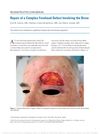
April 2016 in “Dermatologic Surgery” A man's forehead and eyebrow were successfully reconstructed with a skin and hair graft that matched his other eyebrow, without needing frequent trimming.
18 citations
,
June 1993 in “Archives of Dermatological Research” Human hair follicles can be used to create skin-like tissue for wound healing and drug testing.
35 citations
,
September 2009 in “Development” Necl2 affects skin cell behavior and slows wound healing.
January 2006 in “Elsevier eBooks” Most vertebrates can regenerate skin, nails, and corneas, but only some can regenerate teeth and lenses.
 57 citations
,
May 2007 in “Nature”
57 citations
,
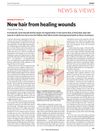
May 2007 in “Nature” Adult mice can grow new hair from skin wounds.