August 1969 in “Archives of Dermatology” After calciphylaxis, rats showed incomplete skin and hair regeneration, resembling scar tissue with fewer hairs.
 5 citations
,
January 2022 in “Scientific reports”
5 citations
,
January 2022 in “Scientific reports” The research identified two types of keratinocytes in chicken scales: one for hard scales and another for soft skin, with similarities to human skin differentiation.
 1 citations
,
January 2013 in “International Journal of Trichology”
1 citations
,
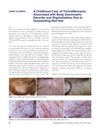
January 2013 in “International Journal of Trichology” A girl with red hair developed hair-pulling and body image disorders after being bullied for her hair color.
 82 citations
,
March 2012 in “Development”
82 citations
,
March 2012 in “Development” Drosha and Dicer are essential for hair follicle health and preventing DNA damage in skin cells.
 2 citations
,
February 2019 in “Anais brasileiros de dermatologia/Anais Brasileiros de Dermatologia”
2 citations
,
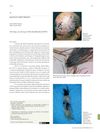
February 2019 in “Anais brasileiros de dermatologia/Anais Brasileiros de Dermatologia” Tufted folliculitis is common in patients with folliculitis decalvans.
3 citations
,
August 2017 in “Clinical case reports” A rare skin condition causes red and dark patches on the face and limbs.
17 citations
,
August 2018 in “Clinics in Dermatology” Skin and hair-picking disorders are common and need both skin and mental health treatments.
1 citations
,
December 2023 in “Animals” Winter provides the best fur quality for Rex rabbits due to seasonal changes in specific signaling pathways.
 40 citations
,
December 2012 in “PLoS ONE”
40 citations
,
December 2012 in “PLoS ONE” Removing Ctip2 in skin cells causes skin inflammation similar to atopic dermatitis.
28 citations
,
June 2007 in “Journal of Cutaneous Pathology” IRS premature desquamation is not unique to CCCA and occurs in various scarring alopecias.
13 citations
,
April 2016 in “Journal of Visualized Experiments” The method successfully isolates hair follicle stem cells and skin cells from mice for research.
47 citations
,
July 1997 in “British Journal of Dermatology” The inner root sheath is crucial for hair follicle stability during the transition from growth to involution.
 25 citations
,
September 2006 in “Birth Defects Research”
25 citations
,
September 2006 in “Birth Defects Research” Different processes create patterns in skin and things like hair and feathers.
13 citations
,
January 1985 in “International Journal of Dermatology” The document found differences in lesion distribution and microscopic features among trichostasis spinulosa and similar skin conditions.
January 2012 in “Open MIND” Oral minoxidil can cause painful skin bumps and scarring in some people.
 127 citations
,
December 2007 in “Journal of Investigative Dermatology”
127 citations
,
December 2007 in “Journal of Investigative Dermatology” Mice hair growth patterns get more complex with age and can change with events like pregnancy or injury.
17 citations
,
July 1977 in “International Journal of Dermatology” Proper shaving techniques and specific topical treatments can help manage pseudofolliculitis barbae.
Spiny keratoderma is a rare skin condition with small spines on palms and soles, possibly linked to abnormal hair formation.
 12 citations
,
February 2006 in “Lipids”
12 citations
,
February 2006 in “Lipids” Hair texture changes with age due to varying levels of lipids.
 May 2026 in “The EMBO Journal”
 Feather follicles form through specific cellular flows and mechanical changes in the skin.
 April 2016 in “The journal of investigative dermatology/Journal of investigative dermatology”
 MPZL3 is crucial for seborrheic dermatitis development.
 December 2025 in “Cureus”
 Avoiding friction and using topical treatments can significantly improve rough skin caused by repeated rubbing.
236 citations
,
April 2015 in “Cell” Plucking some hairs can trigger nearby unplucked hairs to grow back more due to a collective response.
December 2004 in “PLoS ONE” The Foxn1(-/-) phenotype disrupts hair growth and affects skin stem cells.
7 citations
,
December 2010 in “대한의생명과학회지” Hair growth after depilation increases skin thickness, mast cell counts, and cell activity.
29 citations
,
October 2010 in “Journal of Investigative Dermatology” Activating Kras in mouse skin causes excess skin and hair loss.
 25 citations
,
June 2022 in “Developmental cell”
25 citations
,
June 2022 in “Developmental cell” Overactivating Hedgehog signaling makes hair follicle cells in mice grow hair faster and create more follicles.
25 citations
,
August 1991 in “Journal of Investigative Dermatology”  January 1994 in “Nihon Chikusan Gakkaiho”
 Collagen fibrils in mink skin change structure during hair growth, becoming looser and thicker in the active phase.