10 citations
,
January 1925 in “Archives of Dermatology” Trichostasis spinulosa is a rare skin condition with hair-filled plugs in hair follicles.
20 citations
,
December 2010 in “Journal of Morphology” Lizard claws have hair-like keratins similar to those in mammals.
3 citations
,
February 1983 in “Journal of Investigative Dermatology” Hair plucking quickly increases antizyme, reducing a specific enzyme activity in rats.
February 2013 in “Journal of the American Academy of Dermatology” Uncombable hair syndrome causes dry, frizzy hair that can't be combed flat, seen in a young child.
 1 citations
,
December 2017 in “Anais Brasileiros de Dermatologia”
1 citations
,
December 2017 in “Anais Brasileiros de Dermatologia” Frontal fibrosing alopecia can mimic traction alopecia but has distinct features like facial papules and eyebrow thinning.
7 citations
,
January 2012 in “International journal of trichology” Permanent hair removal with lasers may cure itchy black hair bristles on the back.
103 citations
,
December 1986 in “Journal of Investigative Dermatology” April 2011 in “www.virtualization.info” Early diagnosis of trachyonychia improves treatment and reduces psychological and cosmetic issues.
18 citations
,
March 2023 in “Molecular Therapy — Nucleic Acids” Mechanical stimuli and CCL2 can help regenerate hair follicles in adult mice.
51 citations
,
March 1990 in “Journal of Investigative Dermatology” 12 citations
,
January 2013 in “Indian dermatology online journal” Dermatopathia pigmentosa reticularis causes skin discoloration, hair loss, and nail problems.
Retinoic acid can change skin development, like turning scales into feathers or forming glands.
 April 2017 in “Journal of Investigative Dermatology”
 Sweat glands and hair follicles are determined by opposing signals, with BMPs promoting sweat glands and blocking BMPs leading to hair follicles.
 April 2023 in “The journal of investigative dermatology/Journal of investigative dermatology”
 EGFR deficiency causes significant changes in skin cells and hair follicles.
 107 citations
,
September 2002 in “Journal of Investigative Dermatology”
107 citations
,
September 2002 in “Journal of Investigative Dermatology” Researchers found that hair shedding happens mostly when new hair is growing and involves a unique process.
 August 2024 in “Microscopy Research and Technique”
 The study identifies the pheromone gland's location and structure in Endoclita vietnamensis, aiding future pest control methods.
97 citations
,
January 2005 in “Wear” Human hair and skin friction vary by ethnicity, hair type, and environmental conditions.
 3 citations
,
October 2020 in “Dermatology Practical & Conceptual”
3 citations
,
October 2020 in “Dermatology Practical & Conceptual” Bubble hair damage is caused by high heat from styling tools, and trichoscopy helps diagnose it.
 40 citations
,
May 2016 in “Proceedings of the National Academy of Sciences of the United States of America”
40 citations
,
May 2016 in “Proceedings of the National Academy of Sciences of the United States of America” Changes in keratin make hair follicles stiffer.
1 citations
,
January 1963 in “The Anatomical Record” Glyceride levels in mouse skin are higher during hair growth.
 January 2024 in “International Journal of Advanced Research”
 Topical 6% salicylic acid effectively reduced skin plaques in a patient with wooly hair and palmoplantar keratoderma.
20 citations
,
January 1979 in “Journal of Experimental Zoology” Plucking hair speeds up the next hair growth, but hormones can change this timing.
 245 citations
,
January 1998 in “Genes & Development”
245 citations
,
January 1998 in “Genes & Development” Hoxc13 gene is essential for hair, nail, and papilla development.
 1 citations
,
October 2012 in “The Journal of Dermatology”
1 citations
,
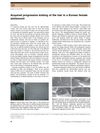
October 2012 in “The Journal of Dermatology” A Korean girl developed kinky hair without known cause or effective treatment.
27 citations
,
February 2006 in “International Journal of Dermatology” Some children and young adults with eyebrow and eyelash hair loss actually have a hair-pulling disorder, often with related psychological issues.
August 1993 in “Journal of Dermatological Science” 375 citations
,
June 2013 in “Biochimica et biophysica acta. Molecular cell research” Cornification is how skin cells die to form the protective outer layer of skin, hair, and nails.
40 citations
,
November 1966 in “Archives of Dermatology” Trichorrhexis nodosa is mainly caused by hair trauma and improves with gentler hair care.
Light tickling can be unpleasant and may feel worse for individuals with autism.
 1 citations
,
February 2023 in “All Life”
1 citations
,
February 2023 in “All Life” The research identified proteins that change as goat hair follicles begin to form, helping to understand how cashmere grows.