1 citations
,
August 1981 in “The Journal of Dermatology” All major hair defects involve cuticle abnormalities.
May 2026 in “Journal of Photochemistry and Photobiology” Solar radiation and pollution damage hair, especially light-colored and bleached hair.
 February 2025 in “Brazilian Journal of Hair Health”
 The Brazilian candle flame technique can damage hair by melting the cuticle and exposing the cortex.
Human hair can almost fully recover its structure within about 1,000 minutes after being stretched.
 June 2023 in “Experimental dermatology”
 Pubic hair has a thicker, more protective outer layer than scalp hair, possibly due to evolution.
April 2023 in “CRC Press eBooks” Hair care products mainly work on the hair's surface and need professional guidance for use.
 May 2022 in “Experimental dermatology”
 Trichothiodystrophy hair is structurally abnormal with protein and organization issues.
 February 2019 in “PubMed”
 The research found that twisting hair fibers can show changes in stiffness and damage, and help tell apart different hair treatments.
Hair fibers degrade and change color in very basic water.
 June 2017 in “University of the Arts London Research Online (University of the Arts London)”
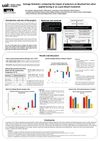
 Polymers help reduce damage and improve bleached hair when used during or after bleaching.
November 2015 in “Summit (Simon Fraser University)” Surgical stress temporarily changes hair fiber dimensions, returning to normal after four weeks.
January 2014 in “한국미용학회지” UV-A radiation significantly damages semi-permanent dyed hair.
December 2011 in “URMIA MEDICAL JOURNAL” Glycoconjugate sugars are important for hair follicle development.
January 2008 in “대한미용학회지” UV exposure severely damages hair, making it rough and weak.
The 16th-century mummy's hair was well-preserved due to a calcium coating.
 8 citations
,
January 2016 in “Journal of fiber science and technology”
8 citations
,
January 2016 in “Journal of fiber science and technology” Bleaching hair increases cysteic acid levels in a predictable way.
3 citations
,
October 2006 in “Journal of dermatology” X-ray microscopy can non-invasively show hair structure changes after treatments, but it's less detailed than TEM and needs improvement.
Hair germ cells differ from epidermal cells in keratin expression, and specific keratins form after hair differentiation.
15 citations
,
January 1998 Frequent blow-drying causes cracks and breakage in hair cuticles.
 356 citations
,
December 1986 in “The journal of cell biology/The Journal of cell biology”
356 citations
,
December 1986 in “The journal of cell biology/The Journal of cell biology” Hair and nail cells share similar proteins, indicating a common differentiation pathway.
11 citations
,
January 1981 in “Cells Tissues Organs” Human hair cuticle has five cell layers with specific junctions and granules.
1 citations
,
January 2007 in “AIP conference proceedings” High-resolution x-ray images showed three main structures in human hair: medulla, cortex, and cuticle.
17 citations
,
February 1987 in “Journal of the American Academy of Dermatology” The hair cuticle acts as a barrier against fungal infection, which occurs only deep within the hair follicle.
 March 2010 in “Cosmetic Dermatology”
 Hair straightening methods have advanced to improve effectiveness and reduce damage, but still rely on heat and chemicals.
21 citations
,
June 2002 in “International Journal of Cosmetic Science” Advancements in hair keratin research could lead to better hair health treatments.
 January 2017 in “Clinical approaches and procedures in cosmetic dermatology”
 Cosmetic procedures can harm hair, but damage can be minimized with knowledge and care; however, once hair is damaged, it cannot be reliably repaired.
1 citations
,
January 2019 in “Zenodo (CERN European Organization for Nuclear Research)” Eclipta alba has unique stem, leaf, and root features, including air cavities and secretory structures.
16 citations
,
December 2016 in “ecancermedicalscience” Hair analysis may help detect breast cancer early by identifying changes in lipid content.
September 2025 in “OPAL (Open@LaTrobe) (La Trobe University)” SELP::KP improves hair strength, elasticity, and health, making it a promising hair cosmetic.
 November 2011 in “Informa Healthcare eBooks”
 Environmental, chemical, mechanical, and personal health factors can all damage hair and contribute to hair loss or changes in hair quality.