 November 2023 in “The journal of investigative dermatology/Journal of investigative dermatology”
 The study developed a mouse model for Alopecia Areata that responds to treatment, useful for future research.

Placental cell medium boosts blood vessel growth in lab tests.
Placental components enhance blood vessel growth.
 1 citations
,
January 2013 in “Journal of Investigative Dermatology”
1 citations
,
January 2013 in “Journal of Investigative Dermatology” The document concludes that stem cells and their environments are crucial for skin and hair health and have potential for medical treatments.
 January 2025 in “Cell Communication and Signaling”
 CXXC5 can both suppress and promote cancer, making it a complex target for treatment.
 1 citations
,
May 2019 in “Cytotherapy”
1 citations
,
May 2019 in “Cytotherapy” New Australian advertising rules improved stem cell marketing practices but further regulation is needed for consumer safety.
 1 citations
,
May 2019 in “Cytotherapy”
1 citations
,
May 2019 in “Cytotherapy” The new ddPCR method reliably detects unwanted viruses in CAR-T cell products, ensuring their safety for patients.
 July 2024 in “Medical alphabet”
 Combining treatments is key to managing vitiligo effectively.
 June 2020 in “Acta Scientific Otolaryngology”
 Three sessions of PRP mixed with calcium chloride effectively treated alopecia.
 May 2019 in “Cytotherapy”
 Patients in Australia underwent costly, unproven stem cell treatments due to weak regulations and aggressive marketing.
 April 2018 in “Journal of Investigative Dermatology”
 Kaempferol helps skin stem cells grow and may improve skin thickness due to its 3-OH group.
 April 2018 in “Journal of Investigative Dermatology”
 Removing STAT5 from 3D-cultured human skin cells reduces their ability to grow hair.
 April 2018 in “Journal of Investigative Dermatology”
 Ginsenoside Rd may help improve skin aging by increasing collagen in the skin.
 April 2018 in “Journal of Investigative Dermatology”
 Aging reduces skin cell renewal and defense against germs due to TGFbeta, but blocking TGFbeta could help restore these functions.
 April 2018 in “Journal of Investigative Dermatology”
  86 citations
,
April 2016 in “Nature Communications”
86 citations
,
April 2016 in “Nature Communications” Notch1 helps skin heal by attracting specific immune cells.
 42 citations
,
February 2018 in “International Journal of Molecular Sciences”
42 citations
,
February 2018 in “International Journal of Molecular Sciences” Minoxidil boosts hair growth by triggering growth factor release from specific stem cells.
 24 citations
,
January 2016 in “Lasers in Medical Science”
24 citations
,
January 2016 in “Lasers in Medical Science” Erbium glass laser treatment may help with skin remodeling, reduce inflammation, and improve skin cell maturation.
 155 citations
,
June 2009 in “International Journal of Dermatology”
155 citations
,
June 2009 in “International Journal of Dermatology” Lichen planus is a skin condition that can resolve on its own, is linked to hepatitis C, and increases the risk of skin cancer.
 148 citations
,
December 2018 in “Journal of autoimmunity”
148 citations
,
December 2018 in “Journal of autoimmunity” Alopecia areata is an autoimmune disease causing patchy hair loss, often with other autoimmune disorders, but its exact causes are unknown.
 68 citations
,
November 2015 in “The Journal of Allergy and Clinical Immunology”
68 citations
,
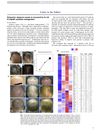
November 2015 in “The Journal of Allergy and Clinical Immunology” Blocking IL-12/IL-23p40 helped reverse severe hair loss in patients.
 61 citations
,
September 2010 in “Genomics”
61 citations
,
September 2010 in “Genomics” The study found that immune responses disrupt hair growth cycles, causing hair loss in alopecia areata.
 58 citations
,
January 2020 in “International Journal of Molecular Sciences”
58 citations
,
January 2020 in “International Journal of Molecular Sciences” Different methods of preparing Platelet-Rich Plasma (PRP) can affect wound healing and hair regrowth in plastic surgery. Using a kit with specific standards helps isolate PRP that meets quality criteria. Non-Activated PRP and Activated PRP have varying effects depending on the tissue and condition treated. For hair regrowth, Non-Activated PRP increased hair density more than Activated PRP. Both treatments improved various aspects of scalp health.
 53 citations
,
August 2019 in “American journal of human genetics”
53 citations
,
August 2019 in “American journal of human genetics” FOXN1 gene variants cause low T cells and immune issues from birth.
 52 citations
,
March 2010 in “British Journal of Dermatology”
52 citations
,
March 2010 in “British Journal of Dermatology” Alopecia areata shows a unique type 1 interferon signature, suggesting potential treatment by targeting this pathway.
 36 citations
,
January 2021 in “Scientific Reports”
36 citations
,
January 2021 in “Scientific Reports” Key genes and pathways, including Wnt, NF-Kappa, and JAK-STAT, are crucial for starting Pashmina fiber growth in goats.
 27 citations
,
July 2017 in “European Journal of Dermatology”
27 citations
,
July 2017 in “European Journal of Dermatology” Certain microRNAs are linked to various skin diseases and could be used to diagnose and treat these conditions.
 24 citations
,
March 2018 in “Experimental Dermatology”
24 citations
,
March 2018 in “Experimental Dermatology” Treg dysfunction is linked to various autoimmune skin diseases, and understanding Treg properties is key for new treatments.
 17 citations
,
April 2017 in “International Journal of Biological Macromolecules”
17 citations
,
April 2017 in “International Journal of Biological Macromolecules” Monoolein-alginate beads help heal wounds by controlling moisture and effectively delivering adenosine to the skin.
 12 citations
,
November 2022 in “Archives of Dermatological Research”
12 citations
,
November 2022 in “Archives of Dermatological Research” COVID-19 can directly trigger certain skin conditions like pustular dermatoses due to an inflammatory response.