
Blocking autophagy worsens lipid buildup and dysfunction in brain cells after injury.
 July 2025 in “Scientific Reports”
 Six key genes can predict bladder cancer outcomes and may serve as prognostic biomarkers.

Menopause-related skin changes may increase fungal infections and inflammation.

Dual TCR Treg cells are common in various mouse tissues and show diverse characteristics.
 August 2024 in “Qucosa (Saxon State and University Library Dresden)”
 White fat tissue in the skin helps control inflammation by affecting certain immune cells.
 July 2024 in “Journal Of Stem Cell Research”
 Mesenchymal stem cells improve skin appearance and structure in dermatology and aesthetic medicine.
 March 2024 in “Frontiers in genetics”
 Different types of fibroblasts play specific roles in wound healing and cancer, which could help improve treatments.

New insights into cell communication in psoriasis suggest innovative drug treatments.
 December 2023 in “Curēus”
 COVID-19 vaccination does not significantly increase the risk of developing alopecia areata.
 November 2023 in “Klìtinna ta organna transplantologìâ”
 MSC-derived exosomes can help treat COVID-19, hair loss, skin aging, and arthritis.
 October 2023 in “Biomedical science and engineering”
 Innovative methods are reducing animal testing and improving biomedical research.
 October 2023 in “bioRxiv (Cold Spring Harbor Laboratory)”
 Immune cells are essential for early hair and skin development and healing.
 October 2023 in “Frontiers in medicine”
 Targeted immunotherapy could be a promising new treatment for hair regrowth.
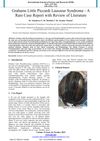 October 2023 in “International Journal of Science and Research (IJSR)”
 Early diagnosis of GLPLS is crucial to prevent complications, but scarring alopecia is irreversible.
 August 2022 in “Revista de la Universidad Industrial de Santander/Salud UIS”
 Stress-related hair loss was reversed with a special medication.
 June 2022 in “bioRxiv (Cold Spring Harbor Laboratory)”
 ILC1-like cells can cause alopecia areata by attacking hair follicles.
No single biomarker is reliable enough for diagnosing and assessing SLE.
 February 2022 in “Research Square (Research Square)”
 High TSPEAR levels in colorectal cancer predict worse outcomes.
 January 2022 in “Research Square (Research Square)”
 High TSPEAR levels in colorectal cancer predict worse outcomes.
 April 2016 in “The journal of investigative dermatology/Journal of investigative dermatology”
 M2 macrophages help hair regrowth in wounds by making growth factors.
Lupus is a complex disease that requires personalized treatment because it varies greatly between individuals.
 September 2013 in “Experimental Dermatology”
 The document concluded that stem cells are crucial for skin repair, regeneration, and may help in developing advanced skin substitutes.
 April 2026 in “DiRROS repository (University of Maribor)”
 MSC-derived EVs have potential as therapeutic agents but face challenges like production complexity and high costs.
 March 2026 in “Molecular and Cellular Biomedical Sciences”
 EH-MSCs may help treat hair loss by reducing inflammation.
 May 2025 in “Experimental Dermatology”
 Triphenylphosphine oxide can increase oil production and reduce inflammation in skin cells without affecting TRPM5.
56 citations
,
January 2023 in “Genes & Diseases” Repurposing existing drugs and using micronutrients may effectively target cancer stem cells and improve cancer treatment.
January 2025 in “Dermatologic Therapy” Alopecia areata patients don't have increased atherosclerosis risk, but may have higher cardiovascular risk due to smoking, blood sugar, and blood pressure.
December 2025 in “Clinical and Translational Science” EGFR inhibitors in breast cancer treatment can cause serious skin issues affecting patient quality of life.
6 citations
,
June 2023 in “Journal of the European Academy of Dermatology and Venereology” Inflammation damages sweat ducts, causing sweat gland injury.
July 2025 in “Journal of Investigative Dermatology” Resident memory T cells and necroptosis may drive fibrosis in eosinophilic fasciitis and morphea.