18 citations
,
July 2006 in “British Journal of Dermatology” Connexin 30 is usually absent in normal skin but can appear in certain skin conditions.
January 2011 in “대한피부과학회지” A 7-year-old girl was diagnosed with trichothiodystrophy due to low sulfur levels in her hair.
March 2026 in “JID Innovations” Aire mutation reduces alopecia areata, while Notch4 mutation prevents it in mice.
 November 2022 in “Journal of Investigative Dermatology”
 Most Recessive Dystrophic Epidermolysis Bullosa patients with a specific mutation likely have Sephardic ancestry from about 500 years ago.
 5 citations
,
September 2012 in “Journal of Investigative Dermatology”
5 citations
,
September 2012 in “Journal of Investigative Dermatology” Scientists can mimic hair disorders by altering genes in lab-grown human hair follicles, but these follicles lack some features of natural ones.
May 2010 in “Faculty Opinions – Post-Publication Peer Review of the Biomedical Literature” A mutation in the KRT74 gene causes woolly hair by affecting hair texture.
27 citations
,
April 2004 in “Biochemical and Biophysical Research Communications” Two new gene clusters important for hair formation were found on human chromosome 11.
 28 citations
,
February 2010 in “British journal of dermatology/British journal of dermatology, Supplement”
28 citations
,
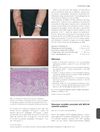
February 2010 in “British journal of dermatology/British journal of dermatology, Supplement” WNT10A mutations cause varied symptoms in patients with odonto-onycho-dermal dysplasia.
75 citations
,
September 2007 in “Journal of Heredity” FGF5 gene mutations cause long hair in domestic cats.
September 2022 in “European Journal of Dermatology” Gene sequencing is essential for diagnosing Junctional epidermolysis bullosa.
 40 citations
,
December 2012 in “PLoS ONE”
40 citations
,
December 2012 in “PLoS ONE” Removing Ctip2 in skin cells causes skin inflammation similar to atopic dermatitis.
151 citations
,
June 2010 in “Endocrinology and metabolism clinics of North America” Two rare genetic diseases cause severe rickets in children due to defects in vitamin D metabolism.
16 citations
,
September 2015 in “International Journal of Molecular Sciences” A specific gene variant causes severe skin issues and increases infection risk, requiring careful medical monitoring.
467 citations
,
May 1999 in “Molecular Cell” Activating c-Myc in skin causes rapid cell growth and changes, but these effects are reversible.
 91 citations
,
May 2005 in “The Journal of Clinical Endocrinology & Metabolism”
91 citations
,
May 2005 in “The Journal of Clinical Endocrinology & Metabolism” A new mutation in the human glucocorticoid receptor reduces its function and causes resistance to glucocorticoids.
46 citations
,
December 1992 in “The Journal of Steroid Biochemistry and Molecular Biology” Affected males are born with ambiguous genitalia, raised as females, but develop male traits at puberty due to enzyme deficiency.
 January 2025 in “Dermatology Reports”
 Early and accurate diagnosis is crucial for managing rare genetic disorders like this localized variant of junctional epidermolysis bullosa.
67 citations
,
August 2004 in “Endocrinology” A specific gene mutation causes vitamin D resistance, but certain vitamin D analogs might help.
139 citations
,
September 2001 in “The journal of investigative dermatology/Journal of investigative dermatology” Mutations in the Vitamin D receptor gene can cause hair loss similar to mutations in the Hairless gene.
3 citations
,
August 1988 in “PubMed” January 2016 in “Zurich Open Repository and Archive (University of Zurich)” Dietary L-serine supplementation can reduce symptoms of HSAN1 by lowering harmful 1-deoxySL levels.
November 2025 in “Cancer Cell International” Cancer-associated fibroblasts promote tumor growth in skin cancer.
March 2026 in “Journal of Investigative Dermatology” Genetic factors, especially PADI3 gene variants, contribute to CCCA in women of African descent.
 28 citations
,
August 2014 in “Journal of Assisted Reproduction and Genetics”
28 citations
,
August 2014 in “Journal of Assisted Reproduction and Genetics” The VEGF +405G allele may increase the risk of PCOS in South Indian women.
 4 citations
,
September 2010 in “Journal of Dermatological Science”
4 citations
,
September 2010 in “Journal of Dermatological Science” A new gene location for Keratosis follicularis squamosa was found on chromosome 7p14.3-7p12.1.
 April 2023 in “The journal of investigative dermatology/Journal of investigative dermatology”
 HPV8 causes hair follicle stem cells to grow, leading to skin lesions.
4 citations
,
May 2024 in “Genes” KRT81 gene variations in sheep affect wool weight but not fiber length or thickness.
5 citations
,
January 2011 in “Archives de Pédiatrie” A severe form of Netherton syndrome caused by a specific gene mutation led to neonatal deaths in a family.
 April 2024 in “JEADV. Journal of the European Academy of Dermatology and Venereology/Journal of the European Academy of Dermatology and Venereology”
 A new change in the WNT10A gene caused a condition leading to short hair growth in a Chinese family.
1 citations
,
January 2017 in “International Journal of Trichology” A new mutation caused a rare hair disorder in a Polish girl, not inherited from her family.