 April 2023 in “The journal of investigative dermatology/Journal of investigative dermatology”
 Blocking a key energy pathway in human hair follicles can trigger stress responses that stop cell growth.
11 citations
,
July 2010 in “European Journal of Dermatology” The condition is linked to chromosome 12, but no mutations were found in the known genes.
14 citations
,
September 1999 in “Mammalian genome” The scraggly mutation causes hair loss and skin defects in mice.
 January 2025 in “JCEM Case Reports”
 Enzyme replacement therapy may help alleviate symptoms in complex cases like this.
26 citations
,
January 1983 in “PubMed” Trichothiodystrophy involves brittle hair due to low sulfur amino acids, not a transport defect.

Skin tumor cells in patients with tuberous sclerosis have higher levels of a protein called cathepsin B.
 July 2022 in “The journal of investigative dermatology/Journal of investigative dermatology”
 Increasing type 17 collagen reduces aging signs in skin cells caused by UV light.
1 citations
,
May 2004 in “Biochemical and Biophysical Research Communications” Two new gene clusters important for hair formation were found on human chromosome 11.
July 2025 in “Human Genomics” New LSS gene variants help understand congenital hypotrichosis 14 better.
12 citations
,
June 2016 in “Clinical and experimental dermatology” A new genetic mutation in the TRPV3 gene causes Olmsted-like syndrome in a Mongolian family.
 January 2022 in “Function”
 Studying rare genetic disorders can help us understand and treat common diseases better.
 6 citations
,
October 2020 in “Endocrine journal”
6 citations
,
October 2020 in “Endocrine journal” A patient with Werner syndrome showed a range of aging-like symptoms and metabolic issues, underscoring the need for early detection and treatment.
 7 citations
,
August 2022 in “Experimental dermatology”
7 citations
,
August 2022 in “Experimental dermatology” Blocking YAP/TAZ could be a new way to treat skin cancer.
88 citations
,
June 2000 in “Journal of Investigative Dermatology” Keratin 17 is important for hair and nail structure and affects pachyonychia congenita symptoms.
November 2022 in “Journal of Investigative Dermatology” ILC1-like cells can cause alopecia areata by themselves.
7 citations
,
March 2025 in “Cytotechnology” Potential new drugs for treating PCOS were identified.
2 citations
,
September 2017 in “Journal of Investigative Dermatology” Notch1 signaling is impaired in hidradenitis suppurativa, affecting skin and hair cells.
 37 citations
,
January 2008 in “Gynecological Endocrinology”
37 citations
,
January 2008 in “Gynecological Endocrinology” Shorter CAG repeats in a specific gene may increase male hormone activity and symptoms like acne and excess hair in women with PCOS.
July 2024 in “Journal of Investigative Dermatology” Patients with cutaneous lupus erythematosus have a higher risk of skin cancer and other cancers.
36 citations
,
January 2016 in “The journal of investigative dermatology/Journal of investigative dermatology” The document concludes that understanding genetic mutations in the PI3K-AKT-mTOR pathway can lead to better diagnosis and treatment for certain genetic skin disorders.
April 2023 in “The journal of investigative dermatology/Journal of investigative dermatology” MEF2C is crucial for normal hair cycle progression.
October 2019 in “Al Mustansiriyah Journal of Pharmaceutical Sciences” The CTLA-4 gene polymorphism does not affect polycystic ovarian syndrome.
January 2005 in “Experimental Dermatology” Genetic factors play a major role in acne.
 1 citations
,
September 2023 in “British journal of dermatology/British journal of dermatology, Supplement”
1 citations
,
September 2023 in “British journal of dermatology/British journal of dermatology, Supplement” WNT10A gene mutations cause short anagen hair syndrome.
 4 citations
,
May 2011 in “Movement Disorders”
4 citations
,
May 2011 in “Movement Disorders” A woman's unique dementia was misdiagnosed, a genetic mutation increases Parkinson's risk with age, and finasteride may help with Tourette syndrome.
64 citations
,
February 2008 in “Cancer Research” Inactivating both p53 and Rb genes in mice speeds up aggressive skin cancer development.
 1 citations
,
May 2021 in “BMC Proceedings”
1 citations
,
May 2021 in “BMC Proceedings” The document concludes that more research is needed to reduce frequent hospital visits, addiction medicine education improves with specific training, early breast cancer surgery findings are emerging, nipple smears are not very accurate, surgery for older melanoma patients doesn't extend life, a genetic condition in infants can often be treated with one drug, doctors are inconsistent with blood clot medication, a certain gene may protect against cell damage, muscle gene overexpression affects many other genes, and some mitochondrial genes are less active in mice with tumors.
47 citations
,
April 2021 in “BMC Medical Genomics” Certain gene variants can influence acne risk and severity.
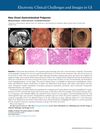 August 2013 in “Gastroenterology”
 A 60-year-old man with Cronkhite-Canada syndrome improved with treatment, but the condition has a high mortality rate and a risk of colorectal cancer.