9 citations
,
January 2011 in “Journal of X-ray science and technology” Perming and bleaching damage hair differently, with bleached hair having more cysteic acid in the cuticle.
11 citations
,
January 2006 in “Journal of the American Leather Chemists Association” Oxidizing agents break down keratin in wool and hair, causing swelling and increased solubility.
 3 citations
,
May 2024 in “Amino Acids”
3 citations
,
May 2024 in “Amino Acids” Disrupted cysteine metabolism may cause hair breakage in Alopecia Areata, suggesting potential treatments like N-acetylcysteine.
January 2026 in “Molecules” A new perming method is less damaging to hair and works as well as traditional methods.
January 2018 in “ScholarWorks @UVM (University of Vermont)” Selenium in proteins helps prevent over-oxidation and supports chemical reversibility.
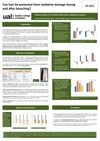 September 2018 in “University of the Arts London Research Online (University of the Arts London)”
 L-arginine, hydrolysed keratin, and cystine-silanol copolymer can help protect hair from damage during and after bleaching.
 September 2025 in “International Journal of Cosmetic Science”
 Heat and UV exposure damage hair structure by altering keratins.
75 citations
,
March 2018 in “Molecules/Molecules online/Molecules annual” L-Cysteine may have health benefits, but its effectiveness is still debated due to limited clinical trial data.
 126 citations
,
January 2009 in “International Journal of Trichology”
126 citations
,
January 2009 in “International Journal of Trichology” Oxidative stress contributes to hair graying and loss as we age.
 2 citations
,
August 2020 in “Clinical, Cosmetic and Investigational Dermatology”
2 citations
,
August 2020 in “Clinical, Cosmetic and Investigational Dermatology” The hair-growth formula with L-cystine helps protect and grow hair cells.
 215 citations
,
March 2018 in “Archives of Toxicology”
215 citations
,
March 2018 in “Archives of Toxicology” Tiny pollution particles called PM2.5 can harm skin cells by causing stress, damage to cell parts, and cell death.
 July 2022 in “The journal of investigative dermatology/Journal of investigative dermatology”
 Particulate matter causes inflammation in hair cells, potentially harming hair growth.
June 2002 in “Science of aging knowledge environment” The cancer gene c-Myc increases harmful chemicals that damage DNA and can lead to cancer, but antioxidants can reduce this damage.
 38 citations
,
October 2011 in “Analytical biochemistry”
38 citations
,
October 2011 in “Analytical biochemistry” Hair proteins have weak spots in their α-helical segments.
 36 citations
,
October 2014 in “Langmuir”
36 citations
,
October 2014 in “Langmuir” Bleaching hair removes its protective top layer and exposes more hydrophilic groups, changing its chemical surface and affecting how it interacts with products.
March 2025 in “Digital Library of Theses and Dissertations (Universidade de São Paulo)” Ferulic acid and resveratrol protect hair from chemical and sun damage.
30 citations
,
September 2018 in “International Journal of Cosmetic Science” Bleaching hair causes severe structural and chemical damage, including protein loss and oxidation.
39 citations
,
June 2012 in “Journal of Structural Biology” Disulfide bonds are crucial for hair structure during keratinization.
31 citations
,
February 2007 in “Journal of Structural Biology” Oxidation changes the structure of hair protein filaments, causing them to compact and rearrange.
 12 citations
,
December 2017 in “Journal of biomaterials science. Polymer ed.”
12 citations
,
December 2017 in “Journal of biomaterials science. Polymer ed.” Human hair protein extracts can protect skin cells from oxidative stress.
 6 citations
,
October 2016
6 citations
,
October 2016 Understanding how keratin structures in hair are arranged and interact is key for creating methods to extract and purify them.
 4 citations
,
August 2014 in “Journal of molecular structure”
4 citations
,
August 2014 in “Journal of molecular structure” Chemical treatments on bleached black hair change its internal structure by breaking and reforming bonds, and treatments with hydrolyzed eggwhite protein help repair it.
 3 citations
,
January 2019 in “International Journal of Trichology”
3 citations
,
January 2019 in “International Journal of Trichology” The balance of thiol-disulfide in women with hair loss is affected but not damaged.
June 2025 in “OPAL (Open@LaTrobe) (La Trobe University)” A new hair dye method uses polyphenols and oxidation to create a long-lasting brown color on gray hair.
January 2014 in “한국미용학회지” UV-A radiation significantly damages semi-permanent dyed hair.
 4 citations
,
November 2022 in “Journal of biomedical materials research. Part B, Applied biomaterials”
4 citations
,
November 2022 in “Journal of biomedical materials research. Part B, Applied biomaterials” Human hair proteins, especially keratins, can protect cells from oxidative stress in lab settings.
 March 2010 in “International Journal of Cosmetic Science”
 Disulfide bonds affect the melting behavior of hair's crystalline structure, but hair retains some stability even after these bonds are broken.
Chemical treatments weaken hair's thermal stability and structure.
 April 2018 in “Journal of Investigative Dermatology”
 Mint water extract boosts protective enzymes in skin cells.
4 citations
,
May 2023 in “Pigment Cell & Melanoma Research” BMI1 is essential for preventing hair greying and maintaining hair color.