 24 citations
,
May 2021 in “Nature Communications”
24 citations
,
May 2021 in “Nature Communications” Cavity macrophages gather on organ surfaces but don't really invade or help repair the organs after injury.
 18 citations
,
February 2015 in “Acta Crystallographica Section D: Structural Biology”
18 citations
,
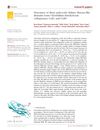
February 2015 in “Acta Crystallographica Section D: Structural Biology” The study concludes that certain domains in Clostridium histolyticum enzymes are structurally unique, bind calcium to become more stable, and play distinct roles in breaking down collagen, with potential applications in medicine and drug delivery.
November 2025 in “F1000Research” Certain fungi may contribute to hair loss in cynomolgus macaques.
252 citations
,
January 1991 in “Electron Microscopy Reviews” 425 citations
,
August 2002 in “BioEssays” The cornified cell envelope forms a protective barrier in skin and hair, using specific proteins and lipids to maintain effectiveness.
 60 citations
,
February 1997 in “Journal of Dermatological Science”
60 citations
,
February 1997 in “Journal of Dermatological Science” Liposomes can safely and effectively deliver substances to mouse hair follicles, potentially useful for human hair treatments.
4 citations
,
January 2006 in “International Journal of Cosmetic Science” The method shows how hair lipids form specific patterns and their roles in hair structure.
 January 2026 in “Frontiers in Immunology”
 Icariin can regulate macrophages and may help treat inflammation, cancer, bone disorders, and fibrotic diseases.
 October 2025 in “Advanced Materials”
 New lipid/fiber microplexes improve mRNA therapy for degenerative diseases by enhancing cell function and treatment effectiveness.
9 citations
,
December 2021 in “Journal of Cellular and Molecular Medicine” HAT-MSCs can effectively engulf harmful microbes and particles, aiding infection treatment.
 11 citations
,
November 2006 in “Journal of Veterinary Diagnostic Investigation”
11 citations
,
November 2006 in “Journal of Veterinary Diagnostic Investigation” An alpaca acted like a male and couldn't have babies because of a benign tumor in its ovary that caused high testosterone levels.
 November 2015 in “European journal of dermatology/EJD. European journal of dermatology”
 A 55-year-old woman with several health conditions did not see hair regrowth after a transplant.
 March 1998 in “Journal of dermatological science”
 Diphencyprone initially increases mouse hair growth, then slows it, possibly due to changes in specific protein levels.
 January 1995 in “Skin Cancer”
 The outer root sheath in hair follicles changes during growth, with different keratinization processes in its layers.
 18 citations
,
January 2000 in “Food Science and Technology Research”
18 citations
,
January 2000 in “Food Science and Technology Research” Apple polyphenols, especially from unripe apples, can help prevent cells from turning into fat cells.
35 citations
,
October 2005 in “European journal of pharmaceutics and biopharmaceutics” Polymers increased skin permeation and stability of steroid hormones in liposomal formulations.
159 citations
,
July 2014 in “Molecular pharmaceutics” New micelle nanocarriers deliver Tacrolimus more effectively to skin layers for psoriasis treatment than the current Protopic ointment.
1 citations
,
April 2023 in “International journal of molecular sciences” Certain skin proteins can form anchoring structures without the protein AMACO.
2 citations
,
July 2025 in “Analytical Chemistry” The method effectively images and correlates elements and metabolites in tissue samples at a micron scale.
 282 citations
,
April 2007 in “Journal of Agricultural and Food Chemistry”
282 citations
,
April 2007 in “Journal of Agricultural and Food Chemistry” Apple polyphenol, especially oligomeric procyanidins, can reduce fat absorption and lower blood fat levels.
March 2026 in “Bioconjugate Chemistry” Peptide-based PROTACs show promise in targeting hard-to-treat proteins, especially for cancer therapy.
CCC1 is crucial for pH balance in plant cells, affecting growth and stress tolerance.
14 citations
,
February 2011 in “Experimental dermatology” A protein called COMP is part of the connective tissue in normal human hair follicles and may be important for hair health.
13 citations
,
September 2012 in “Cell & tissue research/Cell and tissue research” pCLCA2 protein may help maintain skin structure and function.
161 citations
,
June 1993 in “Journal of Biological Chemistry” Trichohyalin helps in hair and skin cell structure and function by binding calcium and linking proteins.
 1398 citations
,
May 2008 in “Histochemistry and Cell Biology”
1398 citations
,
May 2008 in “Histochemistry and Cell Biology” Keratins are crucial for cell stability, wound healing, and cancer diagnosis.
 555 citations
,
July 2001 in “Genes & Development”
555 citations
,
July 2001 in “Genes & Development” Tcf3 and Lef1 are key in deciding skin stem cell roles.
 308 citations
,
September 2010 in “Nucleic acids research”
308 citations
,
September 2010 in “Nucleic acids research” Increasing mir-302 turns human hair cells into stem cells by changing gene regulation and demethylation.
 286 citations
,
April 2009 in “The journal of neuroscience/The Journal of neuroscience”
286 citations
,
April 2009 in “The journal of neuroscience/The Journal of neuroscience” TRPA1 is crucial for mechanical sensitivity in skin sensory neurons.
 277 citations
,
July 2011 in “Journal of the Dermatology Nurses’ Association”
277 citations
,
July 2011 in “Journal of the Dermatology Nurses’ Association” The skin's layers protect, sense, and regulate the body's internal balance, but can be prone to cancer.