 June 2025 in “Biomolecules”
 RORA affects hair follicle stem cells' structure and movement, potentially helping treat hair loss.
 32 citations
,
December 2003 in “Planta”
32 citations
,
December 2003 in “Planta” Hypaphorine from a fungus changes the internal structure of Eucalyptus root hairs, stopping their growth.
109 citations
,
January 1997 in “Journal of Experimental Botany” Root hair growth is influenced by bacteria signals, cytoskeleton organization, and genetic factors.
 April 2018 in “Journal of Investigative Dermatology”
 The keratin network in mouse skin changes during cornification and affects the skin's protective barrier.
126 citations
,
January 1987 in “Current topics in developmental biology/Current Topics in Developmental Biology” Different keratin proteins are expressed in various epithelial cells at different stages, affecting cell structure and function.
 87 citations
,
September 2019 in “Nature Communications”
87 citations
,
September 2019 in “Nature Communications” SOX11 and SOX4 help skin cells act like embryonic cells to heal wounds in mice.
 45 citations
,
May 2003 in “Journal of Cell Science”
45 citations
,
May 2003 in “Journal of Cell Science” α3β1-integrin is crucial for maintaining normal hair follicle shape and function but not needed for the development of the surrounding skin.
32 citations
,
August 2016 in “Science Signaling” Alopecia areata patients show unique protein activity patterns, suggesting imbalanced signaling pathways.
 31 citations
,
March 2013 in “Gene”
31 citations
,
March 2013 in “Gene” Signaling pathways are crucial for hair growth in goats.
 16 citations
,
January 2011 in “Archives of Dermatological Research”
16 citations
,
January 2011 in “Archives of Dermatological Research” The study found that expanded skin regenerates similarly to normal skin, with 77 genes playing a role in the process.
10 citations
,
September 2016 in “Animal genetics” Researchers identified key genes and proteins linked to wool growth in sheep.
10 citations
,
November 2013 in “Biochemistry and Molecular Biology Education” Keratins are crucial proteins for hair and nails, with a structure that helps teach protein principles.
 9 citations
,
May 2012 in “PLOS ONE”
9 citations
,
May 2012 in “PLOS ONE” ILK is essential for skin development, pigmentation, and healing.
8 citations
,
February 2017 in “International journal of molecular sciences” Mollusc egg extract helps skin and hair cells grow and heal.
6 citations
,
October 1989 in “PubMed” Optimized conditions and specific treatments enhance the growth of hair cells from C3H mice.
 3 citations
,
May 2022 in “Oncogene”
3 citations
,
May 2022 in “Oncogene” Vav2 and Vav3 proteins help control skin stem cell numbers and activity in both healthy and cancerous cells.
3 citations
,
January 2021 in “FEBS open bio” Camellia japonica extract may improve scalp health and promote hair growth.
1 citations
,
February 2019 in “bioRxiv (Cold Spring Harbor Laboratory)” Lymphatic vessels are essential for hair follicle regeneration and growth.
 April 2026 in “BMC Genomics”
 Hair type differences in cashmere goats are linked to keratin and cytoskeletal organization.
 October 2023 in “IBRO neuroscience reports”
 Rat hair follicle stem cells have functional oxytocin receptors, useful for studying neuropsychiatric disorders.
 April 2019 in “Journal of Investigative Dermatology”
 BRG1 is essential for skin cells to move and heal wounds properly.
254 citations
,
January 2007 in “Chemical Society Reviews” Hair is a complex protein fiber with unique properties useful for developing hair products.
33 citations
,
September 2017 in “Journal of Investigative Dermatology” A mutation in the KRT25 gene causes woolly hair and hair loss.
8 citations
,
May 2005 in “The American journal of dermatopathology/American journal of dermatopathology” The hair defect is due to abnormal inner root sheath keratinization.
1 citations
,
June 2022 in “Gene reports” The analysis found genes linked to skin and hair development are more active in Pashmina goats, which may explain their long-fiber production.
 October 2024 in “Archives of Dermatological Research”
 Male and female pattern hair loss have different molecular pathways, suggesting unique treatment targets for each sex.
 July 2023 in “bioRxiv (Cold Spring Harbor Laboratory)”
 The study developed a 3D model that closely imitates remaining ovarian cancer after treatment and identified a potential drug targeting resistant cancer cells.
 October 2021 in “Journal of Investigative Dermatology”
 Skin cell strength decreases significantly as we age.
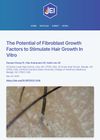
Some fibroblast growth factors may promote hair growth similarly to minoxidil and could potentially treat hair loss.
 April 2017 in “Journal of Investigative Dermatology”
 Chemotherapy and radiation therapy cause skin and hair damage by altering gene expression and signaling pathways.