 May 2026 in “The EMBO Journal”
 Skin aging can be slowed by targeting cells, hormones, and the microbiome.
 169 citations
,
June 2010 in “Molecular & cellular proteomics”
169 citations
,
June 2010 in “Molecular & cellular proteomics” Pectin biosynthesis is essential for the growth of cotton fibers and Arabidopsis root hairs.
 12 citations
,
April 2016 in “Chinese Medicine”
12 citations
,
April 2016 in “Chinese Medicine” The research identified 12 antioxidant compounds in Polygonum multiflorum roots, suggesting these as quality markers for the plant's processed roots.
 July 2024 in “Journal of Bioscience and Bioengineering”
 Different conditions affect how easily hair bacteria can be isolated.
 369 citations
,
June 2013 in “Biochimie”
369 citations
,
June 2013 in “Biochimie” Myo-inositol supplements may improve insulin sensitivity and help with conditions like PCOS and gestational diabetes, but more research is needed.
 81 citations
,
July 2008 in “The Journal of Clinical Endocrinology and Metabolism”
81 citations
,
July 2008 in “The Journal of Clinical Endocrinology and Metabolism” Certain mutations in the H6PD gene cause Cortisone Reductase Deficiency by affecting hormone production.
 45 citations
,
January 2020 in “Pharmaceutical Biology”
45 citations
,
January 2020 in “Pharmaceutical Biology” Dendrobium officinale polysaccharides may help with hair growth, skin moisturization, and protection against oxidative damage.
 40 citations
,
January 2010 in “Indian Journal of Dermatology, Venereology and Leprology”
40 citations
,
January 2010 in “Indian Journal of Dermatology, Venereology and Leprology” Certain diets can affect skin conditions, but more research is needed to understand these relationships fully.
 30 citations
,
July 2004 in “Fertility and Sterility”
30 citations
,
July 2004 in “Fertility and Sterility” Amenorrhea is when a woman doesn't have periods, with primary amenorrhea starting by age 15 or within five years of breast development, and secondary amenorrhea when periods stop for three months. It affects 3-4% of women not pregnant, breastfeeding, or in menopause, mainly due to polycystic ovary syndrome, hypothalamic amenorrhea, hyperprolactinemia, and ovarian failure.
 21 citations
,
September 2004 in “Fertility and Sterility”
21 citations
,
September 2004 in “Fertility and Sterility” Amenorrhea, or the absence of periods, should be evaluated by age 15 or within five years of early breast development, and is most commonly caused by conditions like polycystic ovary syndrome and hypothalamic amenorrhea.
 9 citations
,
April 2019 in “International journal of molecular sciences”
9 citations
,
April 2019 in “International journal of molecular sciences” Human hair grows better in a special gel that mimics skin.
 6 citations
,
March 2020 in “Scientific reports”
6 citations
,
March 2020 in “Scientific reports” Hair growth genes work better with more glucose due to changes in gene-regulating markers.
 6 citations
,
January 1985 in “ACTA HISTOCHEMICA ET CYTOCHEMICA”
6 citations
,
January 1985 in “ACTA HISTOCHEMICA ET CYTOCHEMICA” Tumor cells in calcifying epithelioma of Malherbe resemble hair follicle cells.
 4 citations
,
July 2023 in “Legume Research - An International Journal”
4 citations
,
July 2023 in “Legume Research - An International Journal” Leucaena seeds are nutritious but need treatment to reduce toxicity.
 2 citations
,
January 2023 in “Bioresource Technology Reports”
2 citations
,
January 2023 in “Bioresource Technology Reports” Enzymes can release hydrocarbons from Botryococcus braunii without harming cells, suggesting potential for continuous extraction.
 1 citations
,
June 2023 in “International Journal of Scientific Research in Science and Technology”
1 citations
,
June 2023 in “International Journal of Scientific Research in Science and Technology” Kiwi is a nutritious fruit that boosts immunity, aids digestion, and supports heart health.
 1 citations
,
October 1996 in “Journal of Cutaneous Medicine and Surgery”
1 citations
,
October 1996 in “Journal of Cutaneous Medicine and Surgery” Gene therapy shows promise for treating skin disorders and cancer, but faces technical challenges.

Selenium is essential for health, but too little or too much can cause serious health problems.
 August 2023 in “Gadua Journal of Pure and Allied Science”
 Ziziphus spina-christi leaf extract lowered blood sugar and protected organs in diabetic rats.
 May 2023 in “Current Medicinal Chemistry”
 Microneedle patches improve drug delivery for skin treatments and cosmetic enhancements.
 112 citations
,
May 2019 in “Pharmacological Research”
112 citations
,
May 2019 in “Pharmacological Research” Lignans and neolignans from plants may help protect against various health issues, including cancer and heart disease.
 1 citations
,
September 2024 in “African Journal of Biomedical Research”
1 citations
,
September 2024 in “African Journal of Biomedical Research” Curcuma longa and Dalbergia sissoo may work well together to treat inflammation, stress, and cancer.
 829 citations
,
May 2007 in “Nature”
829 citations
,
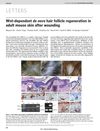
May 2007 in “Nature” Hair follicles can regrow in wounded adult mouse skin using a process like embryo development.
 479 citations
,
January 2005 in “BioEssays”
479 citations
,
January 2005 in “BioEssays” Hair follicle development is controlled by interactions between skin tissues and specific molecular signals.
 421 citations
,
January 2015 in “Chemical Society Reviews”
421 citations
,
January 2015 in “Chemical Society Reviews” Improving artificial vascular grafts requires better materials and surface designs to reduce blood clotting and support blood vessel cell growth.
 245 citations
,
January 1998 in “Genes & Development”
245 citations
,
January 1998 in “Genes & Development” Hoxc13 gene is essential for hair, nail, and papilla development.
 232 citations
,
January 2013 in “Nature Cell Biology”
232 citations
,
January 2013 in “Nature Cell Biology” Understanding where cancer cells come from helps create better prevention and treatment methods.
 199 citations
,
April 2010 in “Nature”
199 citations
,
April 2010 in “Nature” A gene called APCDD1, which controls hair growth, is found to be faulty in a type of hair loss called hereditary hypotrichosis simplex.
 100 citations
,
September 2017 in “Molecular and Cellular Endocrinology”
100 citations
,
September 2017 in “Molecular and Cellular Endocrinology” Male hormones and their receptors play a key role in hair loss and skin health, with potential new treatments being explored.
 91 citations
,
May 2005 in “The Journal of Clinical Endocrinology & Metabolism”
91 citations
,
May 2005 in “The Journal of Clinical Endocrinology & Metabolism” A new mutation in the human glucocorticoid receptor reduces its function and causes resistance to glucocorticoids.