 November 2022 in “The journal of investigative dermatology/Journal of investigative dermatology”
 Deleting the CD271 gene in mouse skin cells leads to disorganized skin and increased hair growth, suggesting CD271 is important for skin health.
61 citations
,
July 2022 in “Journal of Nanobiotechnology” Fucoidan-derived carbon dots can effectively treat root canal infections by killing bacteria and are safer than traditional disinfectants.
 July 2022 in “Journal of the Dermatology Nurses' Association”
 The document encourages attending the 2023 Dermatology Nurses' Association Convention.
 October 2024 in “Journal of the Endocrine Society”
 Certain genetic variants reduce enzyme activity, contributing to non-classic congenital adrenal hyperplasia.
 April 2024 in “BMB Reports”
 Lack of Cisd2 disrupts calcium balance in cells, leading to poorly functioning neutrophils.
 30 citations
,
June 2012 in “Current Opinion in Endocrinology, Diabetes and Obesity”
30 citations
,
June 2012 in “Current Opinion in Endocrinology, Diabetes and Obesity” Nonclassic congenital adrenal hyperplasia is a genetic disorder causing hormone imbalances, affecting fertility and requiring personalized treatment.
 May 2023 in “Journal of the Dermatology Nurses' Association”
 The DNA convention was a valuable opportunity for learning and networking, especially after COVID-19.
41 citations
,
July 2016 in “Journal of Investigative Dermatology” Dysplastic nevi have unique gene expressions, making them distinct from common melanocytic nevi.
8 citations
,
December 2022 in “Journal of Translational Medicine” WNMFDDA effectively predicts drug-disease associations.
56 citations
,
January 2004 in “Journal of the American Academy of Dermatology” Cyclosporine can cause a unique skin condition called "cyclosporine-induced folliculodystrophy."
 April 2018 in “Journal of Investigative Dermatology”
 CENPV, a new partner of CYLD, helps regulate ciliary acetylated tubulin and is overexpressed in certain skin tumors.
2 citations
,
March 2023 in “Frontiers in Medicine” Proper cleansing can resolve dermatosis neglecta, which may indicate underlying psychiatric issues.
60 citations
,
July 2014 in “Autophagy” The protein FLCN is involved in cellular cleanup and is regulated by ULK1.
 May 2023 in “Frontiers in Endocrinology”
 Blocking CRF1 receptors improved male hormone levels and reduced testicular tumor size in men with a specific adrenal condition.
64 citations
,
October 2018 in “Thérapie” Enriching the French health care database with external data greatly improved its usefulness.
June 2026 in “Strathprints: The University of Strathclyde institutional repository (University of Strathclyde)” Topical IKKα inhibitors may help prevent CCS tumours.
3 citations
,
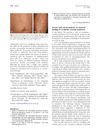
October 2013 in “International Journal of Rheumatic Diseases” A young woman with severe symptoms of CPAN improved with intensive treatment but needed a leg amputation.
 13 citations
,
June 2010 in “Journal of The American Academy of Dermatology”
13 citations
,
June 2010 in “Journal of The American Academy of Dermatology” A man with Cronkhite-Canada syndrome had all 20 nails detach but improved with treatment.
 19 citations
,
August 2023 in “Experimental & Molecular Medicine”
19 citations
,
August 2023 in “Experimental & Molecular Medicine” Blocking CXXC5 speeds up diabetic wound healing by improving blood vessel growth and skin repair.
January 2024 in “Wiadomości Lekarskie” DEC cells show promise as a safe and effective treatment for Duchenne muscular dystrophy.
 3 citations
,
May 2022 in “The journal of investigative dermatology/Journal of investigative dermatology”
3 citations
,
May 2022 in “The journal of investigative dermatology/Journal of investigative dermatology” Skin lesions in Carney Complex are caused by a gene change in some skin cells that leads to increased pigmentation and may lead to tumors.
28 citations
,
November 2018 in “American Journal of Medical Genetics Part A” ODC1 gene mutations cause a neurodevelopmental disorder with large head size, hair loss, and facial abnormalities.
 42 citations
,
April 2013 in “Steroids”
42 citations
,
April 2013 in “Steroids” Non-classic congenital adrenal hyperplasia is a common disorder causing symptoms like acne and infertility, and it's managed based on symptoms, not just test results. Treatment can improve fertility and reduce miscarriage risk.
 October 2007 in “Clinical Biochemistry”
 New genotype linked to non-classical congenital adrenal hyperplasia found in Italian siblings.
16 citations
,
January 2019 in “Aging” Lack of functional CYLD in mice leads to early aging and cancer.
 7 citations
,
March 2024 in “Scientific Reports”
7 citations
,
March 2024 in “Scientific Reports” The neighborhood face index (NFI) accurately predicts properties of complex molecules.
 April 2018 in “Journal of Investigative Dermatology”
 Basonuclin 1 (BNC1) helps skin cells multiply and move, which is crucial for wound healing.
 March 2005 in “Journal of The American Academy of Dermatology”
 Mycophenolate mofetil improved skin condition in a man with nephrogenic fibrosing dermopathy.
 7 citations
,
January 2018 in “Neurodegenerative Diseases”
7 citations
,
January 2018 in “Neurodegenerative Diseases” Researchers found a new ABCD1 gene mutation linked to a rare brain and nerve disorder with unusual brain changes.
January 2012 in “Chinese Clinical Oncology” Disodium folinate can safely and effectively replace calcium folinate in colorectal cancer treatment.