7 citations
,
June 2020 in “npj regenerative medicine” GDNF helps grow hair and heal skin wounds by acting on hair stem cells.
 February 2023 in “Benha Journal of Applied Sciences”
 R-Spondin-1 is important for skin health and could help diagnose and treat various skin conditions.
 March 2021 in “Research Square (Research Square)”
 Strontium ranelate helps cartilage growth by blocking a specific cell pathway.
 October 2025 in “Dermatology Practical & Conceptual”
 ChatGPT 4.0 and Gemini 1.5 Flash are effective for educating patients about androgenetic alopecia, while Deepseek R1 is less reliable.
91 citations
,
August 2019 in “Frontiers in Microbiology” RpoS helps Borrelia burgdorferi survive in hosts and adapt to different environments.
20 citations
,
April 2000 in “Experimental dermatology” ODC transgenic mice can model human hair loss with skin lesions.
 June 2023 in “International Journal of Research in Medical Sciences”
 Two brothers from Bangladesh were diagnosed with X-linked adrenoleukodystrophy, showing neurological and adrenal symptoms.
 78 citations
,
June 2003 in “Journal of Investigative Dermatology Symposium Proceedings”
78 citations
,
June 2003 in “Journal of Investigative Dermatology Symposium Proceedings” TGF-β1 from dermal papilla cells suppresses hair growth, and targeting it may help treat androgenetic alopecia.
 June 2026 in “Indian Journal of Postgraduate Dermatology”
 Rash from EGFRI treatment can indicate both side effects and treatment effectiveness.
24 citations
,
May 2009 in “The FASEB Journal” Akt2 and SGK3 are both important for normal hair growth and development.

The document's conclusion cannot be provided because the document is not available or cannot be read.
 16 citations
,
January 2016 in “Annals of Dermatology”
16 citations
,
January 2016 in “Annals of Dermatology” Green tea component EGCG may help prevent hair loss by changing microRNA levels in certain scalp cells.
2 citations
,
May 2023 in “Biology” New mouse models of Pemphigus show severe symptoms and need better treatments.
2 citations
,
September 2020 in “International Journal of Molecular Sciences” Removing certain hair follicle stem cells worsens skin reactions to allergens.
31 citations
,
December 2016 in “Anais Brasileiros de Dermatologia” DHEA reduction may be linked to frontal fibrosing alopecia, but more research is needed.
November 2025 in “Journal of Investigative Dermatology” September 2017 in “The journal of investigative dermatology/Journal of investigative dermatology” N-acetyl-GED may help prevent and partially reverse a process that leads to scarring hair loss.
November 2006 in “評価・診断に関するシンポジウム講演論文集” KSR1 is crucial for certain skin tumor formation and could be a cancer therapy target.
 9 citations
,
January 1997 in “Endocrine Journal”
9 citations
,
January 1997 in “Endocrine Journal” Gonadal biopsy is the best method to diagnose gonadal dysgenesis.
97 citations
,
March 2006 in “Journal of Investigative Dermatology” Mutations in the DSG4 gene cause a severe form of brittle hair and skin issues.
 March 2026 in “Zenodo (CERN European Organization for Nuclear Research)”
 The N-K GM Series offers highly selective, eco-friendly antimicrobials free for everyone.
 53 citations
,
April 2014 in “Experimental Dermatology”
53 citations
,
April 2014 in “Experimental Dermatology” Wnt10b makes hair follicles bigger, but DKK1 can reverse this effect.
December 2011 in “Journal of the Turkish Academy of Dermatology” Pityriasis rubra pilaris can occur with myasthenia gravis.
 April 2026 in “Institutional Repositories DataBase (IRDB)”
 CD200- cells in hair follicles have a higher ability to regenerate hair.
 82 citations
,
March 2012 in “Development”
82 citations
,
March 2012 in “Development” Drosha and Dicer are essential for hair follicle health and preventing DNA damage in skin cells.
June 2026 in “Journal of Cosmetic Dermatology” CGF-PF may improve hair loss treatment by targeting hair follicle stem cells more effectively.
Delta-opioid receptors affect skin cell circadian rhythms, possibly impacting wound healing and cancer.
2 citations
,
January 1975 in “Archives of Dermatological Research” Certain enzymes react strongly with some hormones in rat skin during hair growth, mainly in sebaceous glands and hair sheaths.
88 citations
,
August 1998 in “Carcinogenesis” High levels of ODC and a mutant Ha-ras gene cause tumors in mice.
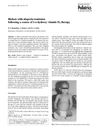 6 citations
,
August 1989 in “European journal of pediatrics”
6 citations
,
August 1989 in “European journal of pediatrics” Child with rickets improved with a specific vitamin D therapy, but alopecia did not change.