 37 citations
,
February 2019 in “Experimental Dermatology”
37 citations
,
February 2019 in “Experimental Dermatology” Spiny mice are better at regenerating hair after injury than laboratory mice and could help us understand how to improve human skin repair.
 7 citations
,
November 2020 in “Experimental Dermatology”
7 citations
,
November 2020 in “Experimental Dermatology” Different cell types work together to repair skin, and targeting them may improve healing and reduce scarring.
 9 citations
,
November 2021 in “Current Opinion in Genetics & Development”
9 citations
,
November 2021 in “Current Opinion in Genetics & Development” Wounds can cause new hair growth in adult mice, influenced by Wnt signaling.
 53 citations
,
April 2021 in “Cell Host & Microbe”
53 citations
,
April 2021 in “Cell Host & Microbe” Skin bacteria, specifically Staphylococcus aureus, help in wound healing and hair growth by using IL-1β signaling. Using antibiotics on skin wounds can slow down this natural healing process.
1 citations
,
January 2023 in “Science Advances” The skin's microbiome helps hair regrow by boosting certain cell signals and metabolism.
 June 2020 in “Journal of Investigative Dermatology”
 Certain bacteria can enhance skin regeneration.
 February 2024 in “Frontiers in physiology”
 Modifying certain signals in the body can help wounds heal without scars and regrow hair.
 May 2007 in “Science's STKE”
 Healing skin wounds in mice can create new hair follicles, and adjusting Wnt signaling could potentially reduce scarring and treat hair loss.
6 citations
,
July 2009 in “Journal of Cutaneous Pathology” Hair follicle stem cells are key for hair growth and skin repair.
 5 citations
,
September 2022 in “Journal of Investigative Dermatology”
5 citations
,
September 2022 in “Journal of Investigative Dermatology” Careful selection of mice by genetics and age, and controlled housing conditions improve the reliability of hair regrowth in wound healing tests.
 February 2025 in “Science Advances”
 Wnt signaling helps regenerate hair follicles by affecting how skin cells sense and respond to mechanical forces.
 2 citations
,
April 2021 in “International Journal of Molecular Sciences”
2 citations
,
April 2021 in “International Journal of Molecular Sciences” The study concluded that changing the culture conditions can cause sika deer skin cells to switch from a flat to a 3D pattern, which is important for creating hair follicles.
 9 citations
,
December 2002 in “Novartis Foundation Symposium”
9 citations
,
December 2002 in “Novartis Foundation Symposium” LEF1 is essential for the development of airway glands and is regulated by the Wnt/ß-catenin pathway.
 359 citations
,
January 2015 in “Cold Spring Harbor Perspectives in Medicine”
359 citations
,
January 2015 in “Cold Spring Harbor Perspectives in Medicine” Hair growth phase and certain genes can speed up wound healing, while an inflammatory mediator can slow down new hair growth after a wound. Understanding these factors can improve tissue regeneration during wound healing.
 128 citations
,
August 2015 in “Cell Stem Cell”
128 citations
,
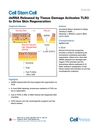
August 2015 in “Cell Stem Cell” Damage to skin releases dsRNA, which activates TLR3 and helps in skin and hair follicle regeneration.
 37 citations
,
June 2017 in “Journal of Investigative Dermatology”
37 citations
,
June 2017 in “Journal of Investigative Dermatology” Blocking a protein called CXXC5 with a specific peptide can stimulate hair regrowth and new hair growth in wounds.
 15 citations
,
January 2019 in “Experimental Dermatology”
15 citations
,
January 2019 in “Experimental Dermatology” Lanyu pigs show that partial-thickness wounds can partially regenerate important skin structures, which may help improve human skin healing.
 July 2024 in “Journal of Nanobiotechnology”
 Mouse cell exosomes help hair regrowth and wound healing by activating a specific signaling pathway.
 66 citations
,
May 2021 in “Science Advances”
66 citations
,
May 2021 in “Science Advances” Different scaffold patterns improve wound healing and immune response in mouse skin, with aligned patterns being particularly effective.
 61 citations
,
October 1996 in “Development”
61 citations
,
October 1996 in “Development” Hair growth can be stimulated by combining certain skin cells, which can rejuvenate old cells and cause them to specialize in hair follicle creation.
 2 citations
,
December 2022 in “Pharmaceutics”
2 citations
,
December 2022 in “Pharmaceutics” The enzyme pyruvate kinase M2 helps hair regrowth and could be a potential treatment for hair loss.
 4 citations
,
October 2021 in “Journal of Cellular and Molecular Medicine”
4 citations
,
October 2021 in “Journal of Cellular and Molecular Medicine” White blood cells and their traps can slow down the process of new hair growth after a wound.
 18 citations
,
October 2021 in “Frontiers in Physiology”
18 citations
,
October 2021 in “Frontiers in Physiology” Lipocalin-Type Prostaglandin D2 Synthase (L-PGDS) is a protein that plays many roles in the body, including sleep regulation, pain management, food intake, and protection against harmful substances. It also affects fat metabolism, glucose intolerance, cell maturation, and is involved in various diseases like diabetes, cancer, and arthritis. It can influence sex organ development and embryonic cell differentiation, and its levels can be used as a diagnostic marker for certain conditions.
 1 citations
,
April 2023 in “Science Advances”
1 citations
,
April 2023 in “Science Advances” High levels of ERK activity are key for tissue regeneration in spiny mice, and activating ERK can potentially redirect scar-forming healing towards regenerative healing in mammals.

Using a combination of AMD3100 and FK506 can speed up and improve wound healing in diabetic rats.
328 citations
,
November 2020 in “Nature Materials” Hydrogel scaffolds can help wounds heal better and grow hair.
 49 citations
,
March 2014 in “Journal of Investigative Dermatology”
49 citations
,
March 2014 in “Journal of Investigative Dermatology” Using the drugs AMD3100 and Tacrolimus together greatly improves skin healing and hair growth after a deep skin cut by increasing stem cells in the wound.
 5 citations
,
March 2019 in “Experimental dermatology”
5 citations
,
March 2019 in “Experimental dermatology” Activating TLR3 may help produce retinoic acid, important for tissue regeneration.
 1 citations
,
April 2022 in “Regenerative Therapy”
1 citations
,
April 2022 in “Regenerative Therapy” Activating the GDNF-GFRα1-RET signaling pathway could potentially promote skin and limb regeneration in humans and could be used to treat hair loss and promote wound healing.
86 citations
,
February 2012 in “Journal of Clinical Investigation” Stem cells in hair follicles are diverse and change throughout the hair cycle.