 2 citations
,
July 2019 in “PLOS ONE”
2 citations
,
July 2019 in “PLOS ONE” Certain genetic variations are linked to higher liver enzyme levels in patients treated for chronic hepatitis C with specific drugs.
 1 citations
,
January 2020 in “Benha Journal of Applied Sciences”
1 citations
,
January 2020 in “Benha Journal of Applied Sciences” Certain gene variations may increase the risk and severity of alopecia areata.
15 citations
,
October 2012 in “Journal of child neurology” The same genetic mutation in Sjögren-Larsson syndrome can lead to different levels of severity, suggesting other factors influence the symptoms.
July 2022 in “Journal of Investigative Dermatology” Arg1+ macrophages may play a role in Alopecia Areata, offering new treatment targets.
32 citations
,
December 1965 in “The Lancet” Argininosuccinic aciduria can cause hair loss.
47 citations
,
September 2002 in “Journal of Bone and Mineral Research” A mutation in the vitamin D receptor causes severe resistance to vitamin D, affecting bone health but not hair growth.
 February 2019 in “Neoreviews”
 The infant with a urea cycle disorder improved with treatment and a liver transplant.
227 citations
,
January 1998 in “Journal of biological chemistry/The Journal of biological chemistry” Mutations at Val-889 and Arg-752 disrupt key interactions in the androgen receptor, affecting its function.
 2 citations
,
September 1980 in “Experientia”
2 citations
,
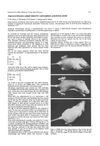
September 1980 in “Experientia” Polyethylene alanine caused hair loss in young lab animals but not in adults, with hair regrowth occurring within 20 days.
The enzyme Dgat1 is essential for healthy hair and skin by controlling retinoid levels.
12 citations
,
June 2011 in “Journal of applied polymer science” L-phenylalanine and hydrolyzed eggwhite protein deeply penetrate human hair.
 September 2009 in “Annales D Endocrinologie”
 DHEA supplementation may improve quality of life, neuropsychological functions, and sexual satisfaction in individuals with adrenal insufficiency, but more research is needed to confirm its safety and effectiveness.
 2 citations
,
August 2021 in “Photodiagnosis and Photodynamic Therapy”
2 citations
,
August 2021 in “Photodiagnosis and Photodynamic Therapy” Using 5-aminolevulinic acid photodynamic therapy for hair loss didn't increase hair growth but slightly reduced scalp oiliness, and it was safe with mild side effects.
2 citations
,
September 1992 in “Steroids” New A-homo-B, 19-dinor steroids showed strong antiandrogenic activity without affecting the enzyme 5α-reductase or androgen receptor binding.
15 citations
,
July 2009 in “Biomedical Chromatography” A reliable method was developed to measure aristolochic acid-I in rat blood.
 25 citations
,
December 2005 in “Molecular Genetics and Metabolism”
25 citations
,
December 2005 in “Molecular Genetics and Metabolism” Taking riboflavin and eating less lysine can help some people with a specific genetic disorder avoid brain damage.
124 citations
,
November 2000 in “The journal of investigative dermatology/Journal of investigative dermatology” PAD3 plays a key role in hair and skin protein structure and may be linked to skin diseases.
May 2026 in “Journal of Medicinal Chemistry” dAR-6–1 is a promising new treatment for hair loss that works better than minoxidil.
December 2022 in “Scientific Reports” Compound 4 is a promising treatment for hair loss with low toxicity.
2 citations
,
January 1975 in “Archives of Dermatological Research” Certain enzymes react strongly with some hormones in rat skin during hair growth, mainly in sebaceous glands and hair sheaths.
 November 2022 in “Arab Gulf Journal of Scientific Research”
 Taurine is important for many body functions and its deficiency can cause health problems.
January 2007 in “日本看護学会抄録集 成人看護1” Certain amino acids in 5AR1 and 5AR2 are crucial for binding and resistance to Finasteride.
12 citations
,
July 2017 in “International Journal of Cosmetic Science” N‐AOHPA is a promising alternative to traditional surfactants for better hair conditioning.
2 citations
,
January 2020 in “Benha Journal of Applied Sciences” 8-OHdG may help diagnose and assess alopecia areata.
 December 2024 in “Globus: an international journal of medical science, engineering and technology.”
 10% dalandan peel oil promotes hair growth effectively.
7 citations
,
February 2011 in “Journal of dermatology” The 736T>A mutation in the LIPH gene is common in Japanese people with autosomal recessive woolly hair.
 July 2022 in “Journal of Investigative Dermatology”
 IL-15 helps maintain hair growth and protects the immune status of hair follicles.
6 citations
,
January 2015 in “Journal of clinical & experimental dermatology research” The combination therapy may be more effective for mild alopecia areata, especially in patients with allergies.
 4 citations
,
August 2021 in “Annals of Translational Medicine”
4 citations
,
August 2021 in “Annals of Translational Medicine” Dihydroartemisinin helps reduce prostate enlargement in rats by stopping the growth of prostate cells.
 10 citations
,
March 2014 in “Scandinavian journal of clinical and laboratory investigation”
10 citations
,
March 2014 in “Scandinavian journal of clinical and laboratory investigation” Malondialdehyde-modified DNA may trigger an immune response in alopecia areata patients.