 11 citations
,
December 2014 in “The American journal of pathology”
11 citations
,
December 2014 in “The American journal of pathology” A gene deletion in mice causes weak protein, immune issues, hair loss, airway problems, and wasting disease.
 3 citations
,
December 2015 in “Acta Veterinaria Brasilica”
3 citations
,
December 2015 in “Acta Veterinaria Brasilica” A chinchilla got ringworm from stress and contact with dog-related items.
 March 2026 in “Buletin Veteriner Udayana”
 The dog's skin condition and worm infection improved with a combination of candlenut oil and other treatments.
October 2025 in “Brazilian Journal of Veterinary Research and Animal Science” Neotropical porcupines can get co-infected with poxvirus and Toxoplasma gondii.
 13 citations
,
December 2010 in “Journal of the American Veterinary Medical Association”
13 citations
,
December 2010 in “Journal of the American Veterinary Medical Association” A dog in Colorado was diagnosed with leishmaniasis, suggesting the disease might be present in the state.
3 citations
,
June 2019 in “Veterinary record case reports” A dog developed a skin condition called pemphigus foliaceus after taking NexGard, but got better with treatment.
 2 citations
,
January 2005 in “The Japanese Journal of Veterinary Dermatology”
2 citations
,
January 2005 in “The Japanese Journal of Veterinary Dermatology” Abnormal adrenal function is not the cause of alopecia in Pomeranians; it may be due to breed-specific hormones.
178 citations
,
June 1994 in “Journal of Investigative Dermatology” Alopecia areata in these mice is inherited, more common in young females, and can be treated with triamcinolone acetonide.
 19 citations
,
March 2013 in “Journal of Cutaneous Pathology”
19 citations
,
March 2013 in “Journal of Cutaneous Pathology” The study found unique skin changes in a rare type of alopecia linked to a skin condition called linear morphea.
July 2025 in “Veterinary Parasitology Regional Studies and Reports” NexGard® and Frontline Combo® are both 100% effective at eliminating lice in dogs.
January 2025 in “Veterinary Record Case Reports” The dog's skin condition improved quickly with treatment and did not return.
Alopecia areata is an autoimmune disease that targets hair follicles.
9 citations
,
June 2011 in “American Journal of Dermatopathology” Molluscum contagiosum can occur in epidermoid cysts, especially with prolonged steroid use.
February 2026 in “Scientific Messenger of LNU of Veterinary Medicine and Biotechnology” Dermatophytosis in cats is treated with antifungal medications.
 October 2022 in “Gadua Journal of Pure and Allied Science”
 Terbinafine is the most effective treatment for tinea capitis, a scalp infection often confused with other conditions.
 January 2025 in “Parasites & Vectors”
 Leishmaniosis was found in meerkats in Madrid wildlife parks, highlighting the need for more research and careful diagnosis.
 3 citations
,
July 2013 in “Journal of Cutaneous Pathology”
3 citations
,
July 2013 in “Journal of Cutaneous Pathology” A woman's hair loss, resembling an autoimmune condition, improved after treatment, but requires ongoing checks due to potential serious associations.
 April 2016 in “The journal of investigative dermatology/Journal of investigative dermatology”
 MPZL3 is crucial for seborrheic dermatitis development.
January 2024 in “International Journal of Trichology” Matted hair should not be judged as a sign of mental instability; proper diagnosis and gentle care are key.
June 2016 in “Journal of Coastal Life Medicine” The terrier dog with pituitary-dependent hyperadrenocorticism was successfully treated with mitotane.
25 citations
,
May 1972 in “Canadian journal of zoology” Black-tailed deer have four types of pelages and molt twice a year.
 3 citations
,
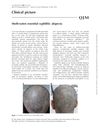
July 2014 in “QJM”
3 citations
,
July 2014 in “QJM” A 35-year-old man had patchy hair loss that was actually due to syphilis, not alopecia areata.
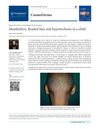 January 2026 in “Cosmoderma”
 A 9-year-old girl has a rare hair disorder causing beaded, sparse hair.
3 citations
,
January 2018 Bacterial skin diseases in camelids are often caused by moisture, trauma, and infections.
 23 citations
,
January 2010 in “Journal of Medical Primatology”
23 citations
,
January 2010 in “Journal of Medical Primatology” Hair loss in Rhesus macaques may be caused by a skin allergy-related condition.
12 citations
,
August 2004 in “Veterinary Dermatology” Fipronil effectively treats Lynxacarus radovskyi in outdoor cats.
 October 2025 in “Indian Dermatology Online Journal”
 Trichoscopy helped correctly diagnose and treat a scalp and eyebrow fungal infection.
13 citations
,
September 1997 in “Archives of Dermatology” The boy likely has a fungal infection causing hair loss.
 1 citations
,
January 2022 in “Advances in animal and veterinary sciences”
1 citations
,
January 2022 in “Advances in animal and veterinary sciences” Ketoconazole cream effectively treats fungal skin infections in cats.
35 citations
,
November 2021 in “Journal of Animal Science and Biotechnology/Journal of animal science and biotechnology” DNA methylation changes in Tan sheep affect growth and fur traits.