 January 2013 in “The Pan African medical journal”
 Monilethrix causes short, fragile hair with no specific treatment available.
January 2020 in “International journal of scientific research” Dermoscopy shows that varying hair shaft thickness and single hair follicles are main signs of male pattern baldness, especially in the fronto-temporal region.

Whiskers can form without sensory nerves or Foxd1, thanks to Meis2 in mesenchymal cells.
January 2026 in “Clinical Case Reports” A 6-year-old girl had both monilethrix and trichorrhexis nodosa, causing brittle hair, with minimal improvement from treatment.
 67 citations
,
February 2009 in “Journal of Dermatology” July 2018 in “IP Indian Journal of Clinical and Experimental Dermatology”
67 citations
,
February 2009 in “Journal of Dermatology” July 2018 in “IP Indian Journal of Clinical and Experimental Dermatology” A rare scalp condition was successfully treated with minocycline and clarithromycin.
41 citations
,
April 1989 in “Experimental and Applied Acarology”  9 citations
,
November 2000 in “Journal of the American Academy of Dermatology”
9 citations
,
November 2000 in “Journal of the American Academy of Dermatology” A woman with a rare type of dermatomyositis improved with low-dose prednisone and methotrexate.
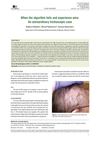 January 2026 in “Forum Dermatologicum”
 Thorough hair examination is crucial for accurate diagnosis and treatment.
 19 citations
,
September 2014 in “British Journal of Dermatology”
19 citations
,
September 2014 in “British Journal of Dermatology” Minoxidil foam 5% effectively treats hair loss in both frontal and vertex scalp regions.
186 citations
,
October 1957 in “A M A Archives of Dermatology” Alopecia mucinosa is a challenging condition with unclear diagnosis and treatment.
April 2019 in “The journal of investigative dermatology/Journal of investigative dermatology” Disrupting the Tsc2 gene in certain cells leads to thicker skin, larger hair, and changes in hair growth signaling, which can be partly reversed with specific treatment.
 November 2023 in “bioRxiv (Cold Spring Harbor Laboratory)”
 Scientists made a mouse that shows how a specific protein in the skin changes and affects hair growth and shape.
1 citations
,
January 2005 in “Experimental Dermatology” MC-1R in skin cells may influence inflammation and collagen production.
December 2025 in “Pomeranian Journal of Life Sciences” A miner developed extra shoulder hair due to long-term work pressure and inflammation.
October 2024 in “Skin Research and Technology” Pili annulati causes zebra-striped hair but doesn't affect hair strength or quality of life.
7 citations
,
June 2012 in “Journal of dairy science” Bovine milk fats applied to mouse skin can promote hair growth similar to known hair growth treatments.
 18 citations
,
August 2018 in “The FASEB journal”
18 citations
,
August 2018 in “The FASEB journal” Rabbits lacking the Hoxc13 gene show similar hair and skin issues to humans with ECTD-9, making them good for research on this condition.
4 citations
,
November 2020 in “Case reports in dermatology” A rare skin condition causes red, dark, bumpy facial lesions.
 63 citations
,
November 1999 in “British journal of dermatology/British journal of dermatology, Supplement”
63 citations
,
November 1999 in “British journal of dermatology/British journal of dermatology, Supplement” Hair sensitivity to androgens is partly controlled by specific enzyme expressions in different hair areas.
15 citations
,
August 2004 in “Journal of the American Academy of Dermatology” Shaving can cause a viral skin infection that looks like bacterial folliculitis.
 March 2026 in “Mendeley Data”
 Basement membrane-like ECM supports fibroblast aggregation and cohesion.
 32 citations
,
June 2013 in “Journal of Investigative Dermatology”
32 citations
,
June 2013 in “Journal of Investigative Dermatology” Mice without certain skin proteins had abnormal skin and hair development.
10 citations
,
November 1993 in “Indian Journal of Dermatology Venereology and Leprology” Minoxidil can cause erythema multiforme, even if patch tests are negative.
2 citations
,
February 2023 in “Anais Brasileiros de Dermatologia”  April 2018 in “Journal of Investigative Dermatology”
 DNMT3A is crucial for healthy skin and hair growth.
April 2019 in “Journal of Investigative Dermatology” Researchers created a new mouse model for studying scleroderma.
10 citations
,
July 2014 in “Annals of Saudi Medicine” A 30-year-old man with rare skin conditions improved with antibiotics and surgery, hinting at a link to rosacea.
 15 citations
,
February 1999 in “The anatomical record”
15 citations
,
February 1999 in “The anatomical record” Some mutant mice have hair with abnormal cross-linking, mainly in the cuticle, not affecting other hair parts.
143 citations
,
October 1988 in “Clinics in Dermatology” The understanding of male-pattern baldness remains unclear.