March 2025 in “International Journal of Trichology” Oral minoxidil improved hair thickness in a person with monilethrix.
13 citations
,
August 2005 in “Journal of Investigative Dermatology Symposium Proceedings” Mutations in the DSG4 gene cause fragile, sparse hair in humans, mice, and rats.
 May 2024 in “Indian Journal of Dermatology”
 The woman has a rare skin condition called follicular Dowling-Degos disease, which has limited treatment options.
17 citations
,
February 1987 in “Journal of the American Academy of Dermatology” The hair cuticle acts as a barrier against fungal infection, which occurs only deep within the hair follicle.
69 citations
,
August 1988 in “Journal of Investigative Dermatology” 38 citations
,
September 1997 in “The journal of investigative dermatology/Journal of investigative dermatology” A mutation in mice causes hair loss and skin issues due to a defect in a gene affecting cell adhesion.
21 citations
,
April 2004 in “Australasian Journal of Dermatology” A 3-year-old girl has a rare condition causing sparse hair and nail issues, with minimal improvement from treatment.
September 2024 in “Dermatology Online Journal” Facial hair growth from minoxidil stopped after she quit using it.
January 2026 in “Surgical & Cosmetic Dermatology”  September 2023 in “Cutis”
 A baby girl has a hair disorder called monilethrix, causing fragile hair that may improve over time.
35 citations
,
November 2021 in “Journal of Animal Science and Biotechnology/Journal of animal science and biotechnology” DNA methylation changes in Tan sheep affect growth and fur traits.
5 citations
,
March 2012 in “Veterinary dermatology” A cat developed a skin lesion from a topical solution, which healed with minoxidil treatment.
 19 citations
,
December 1985 in “Journal of The American Academy of Dermatology”
19 citations
,
December 1985 in “Journal of The American Academy of Dermatology” Minoxidil can cause scalp comedones and acne.
44 citations
,
January 1997 in “British Journal of Dermatology” Stopping 5% topical minoxidil can reverse unwanted hair growth on the face and limbs.
 October 2025 in “Journal of Molecular Structure”
 Hyaluronic acid microneedles help deliver minoxidil derivatives effectively for hair regrowth.
25 citations
,
January 1999 in “Journal of cutaneous laser therapy” Diode laser effectively treats pseudofolliculitis barbae.
September 2025 in “OPAL (Open@LaTrobe) (La Trobe University)” The treatments stopped hair regrowth in mice.
 April 2024 in “Meždunarodnyj vestnik veterinarii”
 Deltsid 7.5 is the most effective treatment for bovine psoroptosis.
 April 2016 in “Journal of Investigative Dermatology” August 2025 in “Brazilian Journal of Hair Health”
 Hair-related body dysmorphic disorder is common in hair loss patients and needs early recognition for proper treatment.
March 1983 in “International Journal of Dermatology” Minoxidil can cause excessive hair growth.
December 2025 in “ILDS-DEV”  June 2026 in “International Journal of Innovative Technologies in Social Science”
 Low-dose oral minoxidil is effective and safe for treating male pattern baldness.
 April 2018 in “Journal of Investigative Dermatology”
 DNMT3A is crucial for healthy skin and hair growth.
10 citations
,
June 1999 in “Veterinary Dermatology” Two cows had a rare hair disorder causing hair loss but were otherwise healthy.
87 citations
,
August 1974 in “Journal of Investigative Dermatology” 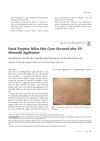 3 citations
,
January 2018 in “Annals of Dermatology”
3 citations
,
January 2018 in “Annals of Dermatology” A woman developed facial hair cysts after using a 3% minoxidil solution for hair loss, which disappeared after stopping the treatment and removing the cysts surgically.
 May 2026 in “BMC Medicine”
 ACOD1 deficiency worsens hair loss by causing cell aging and mitochondrial problems, but 4-OI may help.
 304 citations
,
July 2006 in “Journal of The American Academy of Dermatology”
304 citations
,
July 2006 in “Journal of The American Academy of Dermatology” Videodermoscopy improves diagnosis of hair and scalp disorders and may reduce scalp biopsies.
August 2017 in “ARSHI Veterinary Letters” A Shih Tzu with Cushing syndrome developed skin issues and was euthanized after treatment led to neurological problems.