
Men with androgenetic alopecia may have higher triglycerides, suggesting a link to lipid metabolism.
 January 2026 in “International Journal of Applied Pharmaceutics”
 The method accurately measures Minoxidil in drugs and is reliable for routine use.
 November 2025 in “Frontiers in Immunology”
 Immune cells are crucial for normal skin development and their dysfunction can cause skin disorders.
 November 2025 in “PARIPEX-INDIAN JOURNAL OF RESEARCH”
 GFC is more effective than PRP for treating hair loss.
August 2025 in “Tropical Journal of Natural Product Research” Celery extract and candlenut oil effectively and safely boost hair growth.
 January 2025 in “International Journal of Pharmaceutical Research and Development”
 Vitex negundo oil promotes hair growth and may treat alopecia safely.
 October 2024 in “International Journal of Pharma Professional’s Research (IJPPR)”
 Quercetin-loaded nanogels show promise for treating alopecia effectively.
 October 2024 in “International Journal of Pharmaceutical Sciences Review and Research”
 A 5% minoxidil spray could effectively treat male baldness with fewer side effects and better patient comfort.
 July 2024 in “Forum Dermatologicum”
 Topical treatments for hair loss can be effective but need careful safety evaluation.
 July 2024 in “Frontiers in Pharmacology”
 Pilose antler extracts help hair growth by activating hair follicle stem cells.
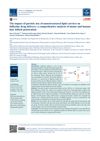 March 2024 in “Bioimpacts”
 400 nm particles penetrate hair follicles best, but mouse models aren't fully reliable for human studies.
 February 2024 in “Frontiers in physiology”
 Lymphatic vessels are important for skin repair and could affect skin disease treatments.

Elastin-like recombinamers show promise for better wound healing and skin regeneration.
 November 2023 in “International Research Journal of Modernization in Engineering Technology and Science”
 Herbal shampoos clean and improve hair naturally without harmful side effects.
 November 2023 in “bioRxiv (Cold Spring Harbor Laboratory)”
 Adipocytes can change into fibroblast-like cells to help with wound healing.
 November 2023 in “International journal of Ayurveda and pharma research”
 The herbal hair oil effectively promotes hair growth, nourishes the scalp, and prevents dandruff.
 May 2023 in “Current Applied Science and Technology”
 Higher power CO2 laser causes more severe skin burns and damage.
 August 2022 in “Scholars academic journal of pharmacy”
 Invasomes loaded with clotrimazole gel could improve drug delivery through the skin for fungal treatment.
 April 2019 in “Journal of Investigative Dermatology”
 Testosterone affects androgen receptors and lipid storage in cells, while DHEA does not convert to testosterone or affect these receptors in the same way.
 April 2019 in “Journal of Investigative Dermatology”
 The created skin model with melanoblasts improves the study of skin color and offers an alternative to animal testing.
 December 2018 in “IntechOpen eBooks”
 Neurohormones help control skin health and could treat skin disorders.
Researchers developed a new device that improves non-incision hair transplant efficiency.
 July 2018 in “Elsevier eBooks”
 New hair loss treatments show promise, but more research is needed to confirm their effectiveness.
 December 2017 in “British Journal of Dermatology”
 Targeted therapy for skin cancer is complex due to the role of the hedgehog pathway in both cancer and hair growth.
 September 2012 in “African Journal of Urology”
 Testosterone replacement therapy improves libido, mood, muscle strength, and bone density in men with Testosterone Deficiency Syndrome.
 October 2007 in “Journal of Investigative Dermatology”
 The document suggests a bacteria plays a significant role in acne rosacea and that white hair can regain color after transplant, meriting more research on reversing grey hair.
 June 2026 in “Frontiers in Bioengineering and Biotechnology”
 Hair follicle systems are being engineered to better mimic natural hair follicles for studying hair disorders and testing treatments.
 March 2026 in “Medeniyet Medical Journal”
 EH-MSCs may help treat hair loss by boosting regeneration and reducing inflammation.

JAK inhibitors effectively regrow hair in alopecia areata but hair loss often returns after stopping treatment.
 September 2025 in “Frontiers in Cell and Developmental Biology”
 Retinoic acid may help heal skin without scars by reducing fibrosis and supporting skin regeneration.