 April 2018 in “Journal of Investigative Dermatology”
 Removing STAT5 from 3D-cultured human skin cells reduces their ability to grow hair.
 August 2023 in “Cell Proliferation”
 Human cells in plasma-derived gels can potentially mimic hair follicle environments, improving hair regeneration therapies.
1 citations
,
July 2025 in “Scientific Reports” CD133+ cells are crucial for hair growth.
 35 citations
,
January 2020 in “Skin Pharmacology and Physiology”
35 citations
,
January 2020 in “Skin Pharmacology and Physiology” The review concluded that keeping the hair-growing ability of human dermal papilla cells is key for hair development and growth.
 68 citations
,
December 2011 in “Journal of Investigative Dermatology”
68 citations
,
December 2011 in “Journal of Investigative Dermatology” Sox2-positive dermal papilla cells have unique characteristics and contribute more to skin and hair follicle formation than Sox2-negative cells.
 55 citations
,
April 2017 in “Experimental Dermatology”
55 citations
,
April 2017 in “Experimental Dermatology” The document describes a way to isolate and grow human hair follicle cells in 3D to help study hair growth.
 44 citations
,
June 2018 in “Journal of Cellular Physiology”
44 citations
,
June 2018 in “Journal of Cellular Physiology” Researchers developed a 3D model of human hair follicle cells that can help understand hair growth and test new hair loss treatments.
 5 citations
,
October 2024 in “International Journal of Biological Sciences”
5 citations
,
October 2024 in “International Journal of Biological Sciences” A peptide from hair follicle stem cells can boost hair growth.
 January 2024 in “Biomaterials Research”
 3D-cultured cells in HGC-coated environments improve hair growth and skin integration.
 6 citations
,
January 2020 in “Skin Pharmacology and Physiology”
6 citations
,
January 2020 in “Skin Pharmacology and Physiology” HIF-1α stimulators, like deferiprone, work as well as popular hair loss treatments, minoxidil and caffeine, in promoting hair growth.
 3 citations
,
January 2019 in “Advances in stem cells and their niches”
3 citations
,
January 2019 in “Advances in stem cells and their niches” Dermal papilla cells are key for hair growth and color, influencing hair type and size, and their interaction with stem cells could help treat hair loss and color disorders.
 1 citations
,
February 2022 in “bioRxiv (Cold Spring Harbor Laboratory)”
1 citations
,
February 2022 in “bioRxiv (Cold Spring Harbor Laboratory)” A peptide from hair follicle stem cells promotes hair growth by activating specific skin cells.
 1 citations
,
September 2019 in “Journal of Investigative Dermatology”
1 citations
,
September 2019 in “Journal of Investigative Dermatology” Human hair matrix cells and dermal papilla fibroblasts can form early hair follicle structures but don't produce hair shafts yet.
 September 2019 in “Journal of Investigative Dermatology”
 Dermal Papilla Cells grown in 3D and with stem cells better mimic natural hair growth conditions than cells grown in 2D.
April 2017 in “The journal of investigative dermatology/Journal of investigative dermatology” Researchers developed a method to grow human hair follicles using 3D-printed skin models and modified cells.
 August 2016 in “Journal of Investigative Dermatology”
 DHT reduces a cell's ability to promote hair growth, while 3D culture without DHT improves it.
January 2022 in “Stem cell biology and regenerative medicine” Improving dermal papilla cells can help regenerate hair follicles.
 25 citations
,
August 2010 in “Acta Biomaterialia”
25 citations
,
August 2010 in “Acta Biomaterialia” Researchers developed a method to grow hair follicle cells for transplantation using a special chip.
 3 citations
,
February 2021 in “Experimental dermatology”
3 citations
,
February 2021 in “Experimental dermatology” Dermal papilla microtissues could be useful for initial hair growth drug testing.
 44 citations
,
June 2009 in “Biomaterials”
44 citations
,
June 2009 in “Biomaterials” Skin cell clumping for hair growth is improved by a protein called fibronectin, which helps cells stick and move better.
 10 citations
,
April 2013 in “Journal of Investigative Dermatology”
10 citations
,
April 2013 in “Journal of Investigative Dermatology” Scientists created a model using sheep cells to study hair root formation, which can test how different substances affect hair growth.
2 citations
,
November 2019 in “FEBS open bio” Combining specific inducers helps dermal papilla cells regain hair-forming ability.
 April 2025 in “International Journal of Molecular Sciences”
 Iris-exosomes may help treat hair loss by activating hair growth pathways.
July 2024 in “International Journal of Molecular Sciences” The inhibitor DPP can promote hair growth.
April 2026 in “Biomedical and Biotechnology Research Journal (BBRJ)” 3D culture better preserves key properties of hair follicle cells for regeneration.
8 citations
,
October 2022 in “Biomedical Materials” Researchers made progress in creating skin with hair by integrating special cell clusters.
 April 2018 in “Journal of Investigative Dermatology”
 Culturing Dermal Papilla Cells and Hair Follicle Stem Cells in 3D conditions can significantly improve hair regeneration potential.
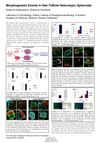
Researchers developed a method to create artificial hair follicles that may help with hair loss treatment and research.
 30 citations
,
December 2017 in “Advanced Healthcare Materials”
30 citations
,
December 2017 in “Advanced Healthcare Materials” Nanoencapsulation creates adjustable cell clusters for hair growth.
 September 2017 in “Journal of Investigative Dermatology”
 The research concluded that hyaluronic acid affects the formation and growth of hair follicle-like structures in a lab setting.