 22 citations
,
October 2020 in “Anais Brasileiros de Dermatologia”
22 citations
,
October 2020 in “Anais Brasileiros de Dermatologia” The Brazilian Society of Dermatology agrees that oral isotretinoin is effective for acne and other skin conditions, and it's safe when monitored, but more research is needed on dosing and duration.
 13 citations
,
October 2015 in “Journal of the European Academy of Dermatology and Venereology”
13 citations
,
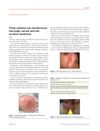
October 2015 in “Journal of the European Academy of Dermatology and Venereology” The document concludes that early recognition and appropriate treatment of red scalp, red ear, and red scrotum syndromes can lead to remission.
 April 2024 in “Liječnički vjesnik”
 Modern treatments can effectively regrow hair and improve life for people with alopecia areata.
 October 2023 in “Journal of dermatological science”
 New mutations in MBTPS2 reduce its function and cause IFAP syndrome with unusual symptoms.
 July 2021 in “Clinical Medicine”
 Iron deficiency without anemia can cause itching and other skin-related symptoms, and iron supplements may help.
 May 2019 in “Anais brasileiros de dermatologia/Anais Brasileiros de Dermatologia”
 Frontal fibrosing alopecia mostly affects postmenopausal women, with diagnosis often delayed by 3 years.
June 2004 in “Journal of Investigative Dermatology” Apoptosis may play a role in feather and hair development, SF-36 is better for mental health in skin patients, a psoriasis gene is found in Caucasians, eosinophils might not be crucial for some skin allergies, and changes in atopic dermatitis could increase skin sensitivity.
 26 citations
,
March 2014 in “Journal of cutaneous medicine and surgery”
26 citations
,
March 2014 in “Journal of cutaneous medicine and surgery” Topical vitamin D is useful for some skin conditions but not effective for others, and more research is needed.
30 citations
,
July 2023 in “Journal of Cutaneous Medicine and Surgery” Understanding sex and gender differences can improve personalized dermatology care.
 20 citations
,
July 2015 in “Journal der Deutschen Dermatologischen Gesellschaft”
20 citations
,
July 2015 in “Journal der Deutschen Dermatologischen Gesellschaft” Green tea may help with skin health and protect against UV damage, but more research is needed to confirm its safety and effectiveness.
 June 2022 in “Journal of the turkish academy of dermatology”
 During the COVID-19 pandemic, some skin conditions became more common while others decreased.
 January 2017 in “Springer eBooks”
 The document explains various skin conditions and their treatments.
158 citations
,
March 2011 in “Journal of the American Academy of Dermatology” Patients with cutaneous lupus erythematosus have a severely impaired quality of life, especially emotionally.
 1 citations
,
December 2016 in “Journal of Evolution of Medical and Dental Sciences”
1 citations
,
December 2016 in “Journal of Evolution of Medical and Dental Sciences” Hemodialysis patients often experience skin issues like dryness and itching, linked to certain blood chemical levels.
 January 2016 in “Journal of Investigative Dermatology”
 Some cells may slow melanoma growth, a protein could affect skin pigmentation, a gene-silencing method might treat hair defects, skin bacteria changes likely result from eczema, and a defensin protein could help treat multiple sclerosis.
 1 citations
,
February 2021 in “Cutis”
1 citations
,
February 2021 in “Cutis” COVID-19 can cause various skin symptoms, including rashes and lesions, which often appear early and can help in timely diagnosis.
April 2018 in “Journal of Investigative Dermatology” Screening for the NUDT15 gene variant can prevent severe side effects from thiopurine drugs in East-Asian people.
132 citations
,
September 2021 in “Frontiers in Public Health” COVID-19 affects multiple body systems, not just the lungs.
 2 citations
,
January 2014 in “Springer eBooks”
2 citations
,
January 2014 in “Springer eBooks” The book details skin conditions in older adults, their link to mental health, cancer treatment importance, hair loss remedies, and managing autoimmune and itchy skin.
 2 citations
,
January 1998 in “Dermatology”
2 citations
,
January 1998 in “Dermatology” Stopping forehead irritation and using hydrocortisone helped a man's skin, Martinique has lower melanoma rates, a man had an allergy to a specific antifungal, another had unexplained cysts, certain drugs can cause skin reactions without always being interrelated, a link between Fanconi anemia and a skin condition was suggested, high levels of a certain protein may play a role in a type of psoriasis, and there's a need to study the connection between scalp pain and hair loss.
January 2025 in “Repository of Digital Objects for Teaching Research and Culture (University of Valencia)” Non-coding RNAs may be key in diagnosing and treating rare skin disorders.
 March 2006 in “Archives of Dermatology”
 Topical steroids help Erosive Lichen Planus, finasteride with birth control aids Female Pattern Hair Loss, young age helps Occupational Hand Eczema prognosis, quitting smoking is key for Diffuse Dermal Angiomatosis, and a 3-site Botulinum Toxin A injection is effective for glabellar wrinkles.
 3 citations
,
January 2022 in “Cutis”
3 citations
,
January 2022 in “Cutis” Telemedicine is effective for diagnosing hair loss, especially in people with darker skin, during the pandemic.
21 citations
,
September 2011 in “PubMed” Scalp hair folliculitis is hard to diagnose and treat due to various causes and complex classification.
5 citations
,
June 2012 in “PubMed” Valproic acid can cause a skin condition called leukocytoclastic vasculitis, which usually gets better after stopping the drug.
May 2024 in “Frontiers in Medicine” Targeted immunological therapies offer safer and more effective treatments for skin conditions like eczema and psoriasis.
 June 2008 in “British Journal of Dermatology”
 Herpes gestationis is linked to certain antigens, atopic eczema affects T cell populations and may be eased by breastfeeding, higher doses of anti-androgen treatment can improve androgenic alopecia, topical minoxidil increases hair thickness, long-term methotrexate therapy can cause liver fibrosis in psoriasis patients, and Lichen Sclerosus et Atrophicus patients aren't at higher risk for autoimmune disorders.
 April 1986 in “Postgraduate Medicine”
 Accurate diagnosis and treatment of skin and hair disorders are crucial, with growing focus on hair loss treatments like topical minoxidil.
 5 citations
,
January 2022 in “Journal of Cosmetic Dermatology”
5 citations
,
January 2022 in “Journal of Cosmetic Dermatology” COVID-19 can cause hair loss and nail changes in some patients.
 2 citations
,
February 2022 in “Journal of The American Academy of Dermatology”
2 citations
,
February 2022 in “Journal of The American Academy of Dermatology” Hormonal intrauterine devices (IUDs) may cause or worsen skin conditions influenced by androgens.