 February 2012 in “Australasian Journal of Dermatology”
 Some moles can disappear naturally, maintenance therapy for Stage 1 mycosis fungoides may not be necessary, allergic skin reactions in children are rising, weekly methotrexate for psoriasis is more effective than daily, long-term finasteride use improves hair growth with few side effects, and petrolatum improves UV therapy for psoriasis.
 4 citations
,
August 2013 in “Expert Review of Dermatology”
4 citations
,
August 2013 in “Expert Review of Dermatology” Updated treatments for female hair loss include minoxidil, antiandrogens, hair transplants, and light therapy.
 42 citations
,
October 2012 in “Dermatologic Clinics”
42 citations
,
October 2012 in “Dermatologic Clinics” Trichoscopy is a useful tool for diagnosing different hair and scalp diseases without surgery.
 22 citations
,
March 2021 in “Journal of Cutaneous Medicine and Surgery”
22 citations
,
March 2021 in “Journal of Cutaneous Medicine and Surgery” Ultrasound is a useful, non-invasive tool in dermatology for diagnosing skin conditions and guiding treatments, but it has some limitations.
 July 2018 in “Elsevier eBooks”
 Some drugs can cause reversible hair loss, but certain chemotherapy drugs may lead to permanent hair loss; drugs can also change hair color and texture.
 August 2017 in “Journal of evolution of medical and dental sciences”
 Trichoscopy is effective for diagnosing different types of non-scarring hair loss.
 96 citations
,
January 2013 in “International Journal of Trichology”
96 citations
,
January 2013 in “International Journal of Trichology” Trichoscopy is a useful, non-invasive way to diagnose different types of hair loss.
 66 citations
,
November 2011 in “Journal of The American Academy of Dermatology”
66 citations
,
November 2011 in “Journal of The American Academy of Dermatology” A handheld dermatoscope helps diagnose different types of hair loss effectively.
 26 citations
,
September 2016 in “International Journal of Dermatology”
26 citations
,
September 2016 in “International Journal of Dermatology” Trichoscopy is good for telling apart tinea capitis and alopecia areata in kids.
 18 citations
,
July 2018 in “Skin appendage disorders”
18 citations
,
July 2018 in “Skin appendage disorders” Trichoscopy helps diagnose hair and scalp disorders in dark-skinned people by identifying unique patterns.
 3 citations
,
December 2013 in “Journal of Dermatology”
3 citations
,
December 2013 in “Journal of Dermatology” Scanning electron microscopy revealed four distinct hair root shapes in alopecia areata, suggesting a less invasive diagnostic method.
 2 citations
,
January 2015 in “Springer eBooks”
2 citations
,
January 2015 in “Springer eBooks” Early diagnosis and aggressive treatment are crucial for Cicatricial Alopecia, and treatment effectiveness varies among patients.
 June 2020 in “Journal of Evolution of medical and Dental Sciences”
 Platelet Rich Plasma (PRP) treatment effectively reduces hair fall and increases hair growth in patients with Androgenetic Alopecia (AGA), but it may cause pain.
 January 2020 in “Medpulse International Journal of General Medicine”
 Trichoscopy helps diagnose and monitor hair loss, showing different signs at various stages of hair thinning.
 June 2026 in “Journal of Sulaimani Medical College”
 Adipose-derived stem cell exosomes are more effective and satisfying for treating hair loss than minoxidil.
 5 citations
,
July 2020 in “JAMA Dermatology”
5 citations
,
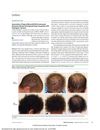
July 2020 in “JAMA Dermatology” Minoxidil solution applied twice daily improved hair growth in patients with Woolly Hair/Hypotrichosis due to LIPH gene issues, with mild side effects.
 1 citations
,
July 2021 in “Anais Brasileiros de Dermatologia”
1 citations
,
July 2021 in “Anais Brasileiros de Dermatologia” The conclusion is that three signs can help diagnose hair loss after it happens, potentially avoiding more invasive tests.
 January 2022 in “Revista del Centro Dermatológico Pascua”
 PRP therapy is a promising treatment for male hair loss on the vertex.
 91 citations
,
August 2015 in “Anais Brasileiros De Dermatologia”
91 citations
,
August 2015 in “Anais Brasileiros De Dermatologia” Female Pattern Hair Loss affects women's self-esteem and needs more research for better treatment.
 26 citations
,
May 2017 in “Lasers in Medical Science”
26 citations
,
May 2017 in “Lasers in Medical Science” Laser therapy and hair growth factors significantly improve hair density in male baldness.
 24 citations
,
September 2018 in “Lasers in Surgery and Medicine”
24 citations
,
September 2018 in “Lasers in Surgery and Medicine” Multiphoton microscopy can non-invasively tell apart scarring from non-scarring hair loss and could aid in treatment.
 15 citations
,
December 2016 in “Advanced Pharmaceutical Bulletin”
15 citations
,
December 2016 in “Advanced Pharmaceutical Bulletin” The new cream with N-acetyl glucosamine didn't change skin color after 8 weeks.
 5 citations
,
May 2008 in “Nature Precedings”
5 citations
,
May 2008 in “Nature Precedings” Trichoscopy is a useful non-invasive method to diagnose female hair loss with high accuracy.
 February 2026 in “Scientific Reports”
 The model effectively mimics radiation-induced skin damage for future research.
 January 2025 in “Universidad de Córdoba Insitutional Repository (Universidad de Córdoba)”
 An imbalanced scalp microbiome may worsen alopecia areata severity and inflammation, but treatment can partially restore balance.

Isotretinoin may cause temporary, reversible facial hair growth in some women.
 May 2018 in “European Journal of Dermatology”
 Adjusting the medication tacrolimus resolved a boy's red nail beds after a stem cell transplant.
 May 2017 in “InTech eBooks”
 Trichoscopy and trichogram are useful for diagnosing hair and scalp conditions.
 September 2010 in “Advances in Dermatology and Allergology/Postępy Dermatologii i Alergologii”
 TrichoScan is reliable for counting and measuring hair density but may not accurately assess hair types in women with hair loss.
 58 citations
,
September 2012 in “Dermatologic Clinics”
58 citations
,
September 2012 in “Dermatologic Clinics” Male pattern hair loss caused by follicular miniaturization; early diagnosis and treatment can reduce psychological burden.