November 2025 in “Journal of Investigative Dermatology” KLHL24-mutant stem cells help understand skin and heart disease.
29 citations
,
July 2003 in “Experimental Dermatology” The upper hair follicle is stable, while the lower part allows movement during hair growth.
44 citations
,
January 2017 in “Journal of Investigative Dermatology” Mutations in the KLHL24 gene cause skin blistering in epidermolysis bullosa simplex.
April 2019 in “Journal of Investigative Dermatology” Researchers created a new mouse model for studying scleroderma.

Meis2 is essential for whisker development, independent of nerve involvement.
62 citations
,
December 2007 in “Journal of biological chemistry/The Journal of biological chemistry” A specific chemical change in the S100A3 protein leads to the formation of a four-part structure important for hair formation.
 April 2018 in “Journal of Investigative Dermatology”
 NDRG1 protein helps infantile hemangioma, a common infant tumor, to grow, and its mismanagement by FOXO1 protein plays a big role in causing the tumor.
3 citations
,
January 2022 in “Burns & Trauma” CTHRC1 helps sweat glands recover by rebuilding nearby blood vessels.
July 2026 in “Materials Today Bio” The hydrogel helps diabetic wounds heal better with less scarring.

Human dermal papilla cell vesicles can reduce skin fibrosis in mice.
 35 citations
,
January 2013 in “The Journal of experimental medicine/The journal of experimental medicine”
35 citations
,
January 2013 in “The Journal of experimental medicine/The journal of experimental medicine” CD98hc's role in skin health decreases with age.
5 citations
,
May 2024 in “Developmental Cell” Lower GATA3 levels in mice help hair regrow by changing certain immune cells.
 4 citations
,
July 2012 in “Genesis”
4 citations
,
July 2012 in “Genesis” The Megsin-Cre transgene is a new tool for genetic manipulation in the skin and upper digestive tract.

Removing SIX1 in fat cells reduces skin fibrosis.
January 2022 in “International journal of dermatology and venereology” A Chinese man with KID syndrome had a new mutation in the GJB2 gene.
1 citations
,
October 2021 in “Journal of Investigative Dermatology” July 2026 in “Journal of Investigative Dermatology”  January 2012 in “Journal of Investigative Dermatology”
 Some Greek melanoma patients have gene mutations linked to increased cancer risk, a new color feature helps diagnose melanoma, the incidence of a skin condition in the Netherlands is rare, and a gene possibly affects male-pattern baldness.
 November 2022 in “Journal of Investigative Dermatology”
 Most Recessive Dystrophic Epidermolysis Bullosa patients with a specific mutation likely have Sephardic ancestry from about 500 years ago.
January 2026 in “Therapeutics” SCUBE3 is a potential target for cancer and alopecia treatment but is challenging to target due to its varied roles.
 April 2017 in “Journal of Investigative Dermatology”
 Targeted siRNA therapy may be a promising treatment for KID syndrome by reducing mutant gene expression and improving cell communication.
43 citations
,
April 1996 in “Journal of Investigative Dermatology” Carbohydrates are crucial for skin development and may help understand skin conditions.
3 citations
,
July 2024 in “Frontiers in Medicine” Mutations in the KLHL24 gene cause a skin disorder in some Russian families.
6 citations
,
January 2010 in “Journal of Biochemical and Molecular Toxicology” The ID2 gene can help distinguish between sensitizers and irritants in skin cells.
November 2022 in “Journal of Investigative Dermatology” NCSTN gene mutation causes abnormal skin cell differentiation and more inflammation, contributing to Hidradenitis Suppurativa.
138 citations
,
December 1976 in “Journal of Biological Chemistry” The enzyme from human skin can cross-link proteins and needs calcium to work.
22 citations
,
May 2007 in “Molecular Biotechnology” 1 citations
,
May 2003 in “The journal of investigative dermatology/Journal of investigative dermatology” A hormone affects hair growth, certain molecules may prevent skin damage, a skin disease is linked to immune cells, glycerol helps skin hydration, and psoriasis treatment trials need improvement.
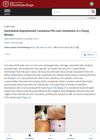 May 2024 in “Indian Journal of Dermatology”
 The woman has a rare skin condition called follicular Dowling-Degos disease, which has limited treatment options.