 November 2022 in “Journal of the Endocrine Society”
 A man's rare adrenal tumor caused feminization and white hair, was removed surgically, and improved after treatment.
June 2026 in “The Journal of Cosmetic Medicine” Scalp micropigmentation effectively creates the look of fuller hair but requires skilled application and touch-ups.
1 citations
,
May 2024 in “Pediatric Blood & Cancer” Trametinib can effectively treat severe kaposiform lymphangiomatosis when other treatments fail.
6 citations
,
March 1990 in “The American journal of cosmetic surgery” Pilomatricoma is a rare, harmless skin lump that needs accurate diagnosis and timely treatment.
June 2025 in “British Journal of Dermatology” A rare skin condition in a boy is likely due to a specific genetic mutation pattern.
 10 citations
,
March 2015 in “PubMed”
10 citations
,
March 2015 in “PubMed” Scalp micropigmentation, a cosmetic tattoo technique, is a promising non-surgical treatment for hair and scalp deformities, despite potential complications.
March 2010 in “European Journal of Cancer Supplements” 72 citations
,
July 2002 in “Journal of Investigative Dermatology” Desmoglein 1 can partly make up for the loss of Desmoglein 3 in hair adhesion but not in mucous membranes.
4 citations
,
February 2023 in “Frontiers in Oncology” Nano-Pulse Stimulation™ Therapy is more effective and less damaging than cryoablation for treating melanoma tumors in mice.
25 citations
,
January 1983 in “Archives of dermatology” The conclusion is that Darier-White disease was accurately described by White but he missed the key feature of dyskeratotic cells which Darier identified.
4 citations
,
June 1989 in “Archives of Dermatology” A man had a black pore on his cheek, which was removed and found to be a hair follicle tumor.
6 citations
,
March 2018 in “The American journal of dermatopathology/American journal of dermatopathology” BerEP4 and CD34 staining can help tell apart tricholemmoma from basal cell carcinoma.
July 2024 in “Indian Dermatology Online Journal” A benign tumor on the cheek, called trichoadenoma, should be surgically removed for cosmetic reasons.
16 citations
,
August 2000 in “British Journal of Dermatology” Removing the liver tumor improved the patient's skin condition and hair growth.
3 citations
,
June 2025 in “Stem Cell Research & Therapy” Hair follicle-derived melanocyte transplant could effectively treat vitiligo by restoring skin color.
 June 2024 in “British Journal of Dermatology”
 A rare case of a transplant patient developing a skin condition linked to HPV-49.
6 citations
,
June 1986 in “The Journal of Dermatology” Reticular erythematous mucinosis syndrome can occur with minimal mucin deposition.
September 2011 in “Chinese Journal of Dermatology” A man's skin condition was misdiagnosed and later identified as a rare type of skin cancer, which did not improve with treatment.
16 citations
,
October 2004 in “Journal of Investigative Dermatology” Normal human melanocytes can avoid cell death through multiple pathways.
33 citations
,
October 2005 in “Journal of Investigative Dermatology” A specific gene mutation causes sparse, brittle hair in a family.
 April 2023 in “The journal of investigative dermatology/Journal of investigative dermatology”
 The protein p21 is more abundant in normal skin cells than in melanoma cells and may help protect against melanoma, with UVB light affecting its levels.
 24 citations
,
February 2007 in “International Journal of Dermatology”
24 citations
,
February 2007 in “International Journal of Dermatology” A woman with cervical cancer had rare scalp metastasis causing a unique type of hair loss.
 11 citations
,
December 2010 in “Archives of Dermatology”
11 citations
,
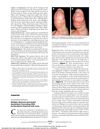
December 2010 in “Archives of Dermatology” A man with rare skin changes on his fingers was diagnosed with multiple myeloma-linked amyloidosis.
January 1990 in “대한피부과학회지” Peanut agglutinin staining helps differentiate malignant melanoma from nevocellular nevus.
 8 citations
,
December 2008 in “Clinical and Experimental Dermatology”
8 citations
,
December 2008 in “Clinical and Experimental Dermatology” Radiotherapy was effective for treating a large scalp plaque of Bowen's disease when other treatments failed.
 January 2025 in “Journal of Case Reports and Scientific Images”
 Early diagnosis and treatment are crucial for managing Folliculotropic Mycosis Fungoides on the scalp.
Keratinocytes can reduce the survival of certain melanoma cells, suggesting new therapy paths.
![[4-t-Butylphenyl]-N-(4-imidazol-1-yl phenyl)sulfonamide (ISCK03) Inhibits SCF/c-kit Signaling in 501mel Human Melanoma Cells and Abolishes Melanin Production in Mice and Brownish Guinea Pigs](/images/assets/4eb017dc-711d-4926-bcd0-c3b8f48e3a99/small/19974.jpg) 26 citations
,
July 2007 in “Biochemical Pharmacology”
26 citations
,
July 2007 in “Biochemical Pharmacology” ISCK03 stops melanin production in human melanoma cells and lightens skin color in mice and guinea pigs.
January 2008 in “Projeto: revista mensal de arquitetura” Targeted cancer drugs can cause skin reactions, so dermatologists must manage these effects.