Chemical treatments weaken hair's thermal stability and structure.
 April 2016 in “Journal of The American Academy of Dermatology”
 Dutasteride works better than finasteride for hair growth with similar side effects.
March 2024 in “European Journal of Neuroscience” Dopaminergic neurons in the gut have diverse subtypes with different neurotransmitter contents.
 4 citations
,
October 1988 in “Clinics in Dermatology”
4 citations
,
October 1988 in “Clinics in Dermatology” Dihydrotestosterone (DHT) is crucial for conditions like male-pattern baldness and acne, and measuring a byproduct, androstanediol glucuronide, is a better way to assess DHT's effects than DHT blood levels.
 37 citations
,
May 2003 in “Journal of Consumer Marketing”
37 citations
,
May 2003 in “Journal of Consumer Marketing” The debate on direct-to-consumer pharmaceutical ads continues, with consumers finding them educational and doctors concerned about their impact on patient relationships and medication understanding.
51 citations
,
December 2006 in “Mammalian Genome”  10 citations
,
May 2020 in “Journal of proteome research”
10 citations
,
May 2020 in “Journal of proteome research” Explosions don't stop hair proteins from being used to identify people.
June 2023 in “Zenodo (CERN European Organization for Nuclear Research)” 48 citations
,
January 2002 in “Journal of Structural Biology” Trichocyte filaments have a low-density core and may include proteins for hair structure.
 August 2002 in “Analytical Sciences”
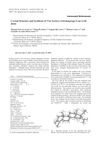
 The document concludes that a compound with potential for treating prostate cancer and hair loss was successfully made and its detailed structure was confirmed.
24 citations
,
June 2013 in “Expert opinion on pharmacotherapy” Dutasteride effectively treats benign prostatic hyperplasia but isn't approved for preventing prostate cancer.
9 citations
,
January 2021 in “Mediators of Inflammation” 15d‐PGJ2 cream protects against UVB-induced skin damage in mice.
4 citations
,
October 2021 in “Journal of Clinical Medicine” Carriers of a specific gene mutation have subtle skin changes without visible symptoms.
 2 citations
,
September 2022
2 citations
,
September 2022 The PER3 rs772027021 SNP may cause mild skin pigmentation changes in a new subtype of dyschromatosis universalis hereditaria.
2 citations
,
September 2024 in “Journal of the American Academy of Dermatology” Deuruxolitinib significantly helps regrow scalp hair in adults with moderate to severe alopecia areata.
 5 citations
,
March 2012 in “Microscopy Research and Technique”
5 citations
,
March 2012 in “Microscopy Research and Technique” UVB radiation changes the chemical makeup and dries out human hair but doesn't alter its appearance or texture.
58 citations
,
March 2006 in “Current topics in medicinal chemistry” Dutasteride effectively treats benign prostatic hyperplasia and may reduce prostate cancer risk.
8 citations
,
December 2022 in “International journal of molecular sciences” Mice without the enzyme HSD17B3 still produce normal testosterone, suggesting they have different ways to make it compared to humans.
 35 citations
,
August 2004 in “Epilepsy & behavior”
35 citations
,
August 2004 in “Epilepsy & behavior” Extended-release divalproex is better tolerated and more effective for seizures and psychiatric symptoms than delayed-release divalproex, but doesn't reduce hair loss.
2 citations
,
January 1986 in “PubMed” PIXE is an effective method to analyze hair's elemental composition.
15 citations
,
November 2012 in “Archives of Ophthalmology” A deletion in the CDH3 gene causes a rare disorder with short hair and vision loss.
September 2005 in “日本医療薬学会年会講演要旨集” 3 citations
,
January 1993 in “Toxicological Sciences” 2-Ethylhexanoic acid harms fertility and delays development in rats.
 12 citations
,
March 2018 in “Analytical chemistry”
12 citations
,
March 2018 in “Analytical chemistry” Researchers created a new method to measure brain steroids, finding higher levels of certain steroids and changes due to a drug.
DHEA inhibits growth in both mouse and human melanoma cells but works differently in each.
4 citations
,
July 2019 in “Experimental Dermatology” 2-deoxy D-glucose does not help with hair regrowth in alopecia areata.
March 2022 in “Zenodo (CERN European Organization for Nuclear Research)” 43 citations
,
July 2017 in “International journal of pharmaceutics” Using β-cyclodextrin derivatives improves the solubility and bioavailability of steroidal drugs.
April 2026 in “Future Medicinal Chemistry” PROTACs have become a breakthrough in medicine by effectively targeting and degrading specific proteins to treat diseases.
June 2026 in “Zenodo (CERN European Organization for Nuclear Research)”