 September 2024 in “Cutis”
 Sunscreen use may increase the risk of frontal fibrosing alopecia.
 September 2023 in “bioRxiv (Cold Spring Harbor Laboratory)”
 Freezing gamma-irradiated amniotic fluid may help hair growth and speed up the growth phase.
 5 citations
,
September 2021 in “Journal of The American Academy of Dermatology”
5 citations
,
September 2021 in “Journal of The American Academy of Dermatology” Most men with Frontal fibrosing alopecia also lose facial hair and the condition may be linked to hormone levels and sunscreen use.
1 citations
,
April 2025 in “American Journal of Medical Genetics Part C Seminars in Medical Genetics” Eflornithine improved symptoms in Bachmann–Bupp Syndrome patients.
 January 2024 in “Asian Journal of Medical Sciences”
 Dermoscopes help tell FPHL apart from other hair loss types and can detect it early by identifying specific patterns.
July 2024 in “Journal of Investigative Dermatology” The Fas/FasL pathway may play a role in alopecia areata.
 November 2023 in “International Journal of Pharmaceutics”
 The new delivery system improves treatment for hair loss by enhancing drug absorption and effectiveness.
April 2005 in “World Journal of Pharmaceutical and life sciences” Fluconazole-loaded hair gel may offer a longer-lasting dandruff treatment.
477 citations
,
March 2004 in “Proceedings of the National Academy of Sciences” The DMI3 gene is essential for nodule development and symbiosis in certain plants.
April 2025 in “Australasian Journal of Dermatology” Daughters with affected mothers may develop frontal fibrosing alopecia early.
 May 2023 in “Stem cell research & therapy”
 New method efficiently isolates hair growth cells from newborn mouse skin.
The study concludes that Twenty-nail dystrophy is more common in boys among children and in women among adults, with varying response to treatment.
 October 2023 in “Scientific reports”
 Dexamethasone affects hair growth by altering levels of proteins that either promote or inhibit hair follicle growth.
 1 citations
,
August 2022 in “International Journal of Molecular Sciences”
1 citations
,
August 2022 in “International Journal of Molecular Sciences” FGF12 is important for hair growth and could be targeted for hair loss treatment.
 10 citations
,
March 2016 in “Journal of The American Academy of Dermatology”
10 citations
,
March 2016 in “Journal of The American Academy of Dermatology” Antiandrogenic drugs could be a good treatment option for frontal fibrosing alopecia.
Nod factor can trigger changes in legume root hairs with just one molecule.
 1 citations
,
October 2025 in “Scientific Reports”
1 citations
,
October 2025 in “Scientific Reports” Mandarin duck sail feathers change with seasons due to hormones and genetic regulation.
 39 citations
,
December 2011 in “PLoS ONE”
39 citations
,
December 2011 in “PLoS ONE” Radiofrequency exposure can stimulate hair growth by increasing IGF-1 in hair follicle cells.
8 citations
,
March 2025 in “Journal of Drug Delivery Science and Technology” Dissolvable microneedles are a promising, painless method for effective skin treatments.
 March 2024 in “Biochimica et biophysica acta. Molecular basis of disease”
 Deferoxamine may help protect inner ear cells from damage caused by oxidative stress.
September 2017 in “The journal of investigative dermatology/Journal of investigative dermatology” Different types of human skin cells respond uniquely to various colors and doses of light, which could lead to specialized light treatments for skin conditions.
7 citations
,
March 2022 in “International Journal of Molecular Sciences” FGF21 can help reduce skin inflammation caused by C. acnes.
 33 citations
,
January 2010 in “Case reports in dermatology”
33 citations
,
January 2010 in “Case reports in dermatology” Dermoscopy helps diagnose frontal fibrosing alopecia by distinguishing it from other hair loss conditions.
 1 citations
,
June 2018 in “International Journal of Dermatology”
1 citations
,
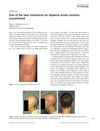
June 2018 in “International Journal of Dermatology” DNCB is highly effective for treating alopecia areata with minimal long-term side effects.
 September 2017 in “Journal of Investigative Dermatology”
 Certain miRNAs might be involved in a hair loss condition called frontal fibrosing alopecia and could possibly help in its diagnosis.
1 citations
,
June 2024 in “Skin Research and Technology” Human dermal fibroblast proteins help restore nerves during healing.
 14 citations
,
November 2020 in “International Journal of Biological Macromolecules”
14 citations
,
November 2020 in “International Journal of Biological Macromolecules” Mushroom-based scaffolds help heal skin wounds and regrow hair.
May 2023 in “Zenodo (CERN European Organization for Nuclear Research)” June 2007 in “Journal of Investigative Dermatology”