 June 2025 in “International Journal of Dermatology”
 Exosomes could transform skin treatments but face technical and regulatory hurdles.
 May 2025 in “JEADV Clinical Practice”
 Hair specialists vary in testing for alopecia areata, highlighting the need for standard guidelines.
 May 2025 in “The Journal of Rheumatology”
 Middle-aged women with dilated cardiomyopathy should be screened for antiphospholipid syndrome.
 May 2025 in “The Journal of Rheumatology”
 Early recognition and a team approach are crucial for managing diffuse alveolar hemorrhage in antiphospholipid syndrome.
January 2025 in “Repository of Digital Objects for Teaching Research and Culture (University of Valencia)” Non-coding RNAs may be key in diagnosing and treating rare skin disorders.
 May 2024 in “International journal of surgery case reports”
 A man had a large, rare cyst in his mouth removed after 10 years, which fixed his swallowing and breathing problems.
 February 2024 in “Skin research and technology”
 The research suggests that immune cells and a specific type of cell death called ferroptosis are involved in Frontal fibrosis alopecia.
 January 2024 in “Dermatology Practical & Conceptual”
 Spotted lunula may help identify alopecia areata.
 January 2024 in “Wiadomości Lekarskie”
 AI and new therapies show promise in medicine, especially for cancer and regenerative treatments.
 January 2024 in “Editora In Vivo eBooks”
 Cryptosporidiosis in dogs can spread to humans, so prevention is crucial.
 October 2023 in “Dermatology practical & conceptual”
 Finger length ratios might help predict common hair loss.

New imaging tools help doctors better examine hair and scalp health without surgery.
 June 2023 in “International journal of pharmaceutical quality assurance”
 Videodermoscopy is effective for diagnosing different types of non-scarring hair loss.
 June 2023 in “Journal of Cosmetic Dermatology”
 AI and AR are improving cosmetic dermatology but face challenges like data quality and ethical concerns.
 August 2022 in “Journal of the American Academy of Dermatology”
 The authors agree they didn't discuss the risks of too much micronutrients and value the focus on biotin deficiency signs and treatment effectiveness.
 January 2022 in “The Egyptian Journal of Hospital Medicine”
 Higher IL-21 levels may help predict alopecia areata activity.
 February 2020 in “Diabetologie Und Stoffwechsel”
 The document concludes that more research is needed to include new treatments in guidelines for Polycystic Ovary Syndrome (PCOS).
 July 2019 in “Acta Scientiae Veterinariae”
 Removing a testicular tumor in a dog reduced its aggressive behavior and skin problems.
 March 2018 in “Surgical and Radiologic Anatomy”
 High-resolution imaging is crucial for diagnosing and planning treatments in clinical anatomy and aging.
 January 2017 in “Springer eBooks”
 Over 40% of postmenopausal women experience hair loss, with treatments aiming to stop further loss and possibly thicken hair.
October 2016 in “Journal of Case Reports” A rare ovarian tumor can occur without causing male-like symptoms.
 May 2016 in “Cambridge University Press eBooks”
 Eating disorders are serious, often undiagnosed conditions requiring early treatment, with anorexia being the most deadly and binge-eating the most treatable.
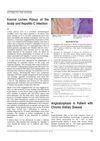
Patients with lichen planus should be tested for hepatitis C.
 April 2008 in “Companion Animal”
 The cat's skin condition was linked to cancer and did not improve with treatment, leading to a poor outcome.
 November 1999 in “Australasian Journal of Dermatology”
 The document concludes that there is a need for more research and regulation in dermatology, covering topics like latex allergy in children, the use of botulinum toxin, and treatments for skin conditions.
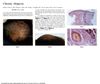 June 1995 in “Archives of Dermatology”
 A woman's hair loss was due to trichotillomania, which is often misdiagnosed and can require different treatments based on age and underlying conditions.
 March 2026 in “Current Research in Diabetes & Obesity Journal”
 Skin conditions can signal diabetes and insulin resistance.
June 2025 in “Australasian Journal of Dermatology” Pigmented rings with central clearing help diagnose melasma more accurately.
 April 2025 in “Clinical Dermatology Review”
 Trichoscopy is effective for diagnosing hair and scalp disorders without invasive biopsies.
November 2024 in “International Journal of Women’s Dermatology” Frontal fibrosing alopecia in Bogotá mainly affects postmenopausal women, with possible links to hormonal changes and sunscreen use.