 August 2025 in “ChemPhotoChem”
 A new method using solid-state circular dichroism anisotropy can distinguish similar chiral compounds better than traditional techniques.
16 citations
,
October 2009 in “Xenobiotica” The tested hair dye ingredients do not form harmful oxidized metabolites in the liver.
December 2025 in “Sustainable Chemistry One World” Mangosteen waste can be used as an eco-friendly natural hair dye, producing a lasting reddish color and strengthening hair.
The herbal hair dye using Platycladus orientalis effectively prevents hair loss, covers gray, and is gentle and safe for all ages.
 2 citations
,
May 2023 in “Journal of Advanced Research”
2 citations
,
May 2023 in “Journal of Advanced Research” Two mutations in KRT74 and EDAR genes cause sheep to have finer wool.
 8 citations
,
July 2013 in “PLoS ONE”
8 citations
,
July 2013 in “PLoS ONE” DNA can be quickly and effectively extracted from hair using laundry powder.
December 2021 in “Cosmetics” February 2022 in “arXiv (Cornell University)” A new method accurately captures and renders hair color for real and synthetic images.
 March 2010 in “International Journal of Cosmetic Science”
 Disulfide bonds affect the melting behavior of hair's crystalline structure, but hair retains some stability even after these bonds are broken.
4 citations
,
July 2024 in “BMC Zoology” Dromedary camel hair structure and mineral content change with age.
 May 2026 in “Zenodo (CERN European Organization for Nuclear Research)”
 The herbal hair dye with Barleria prionitis is a safe, effective, and natural alternative to chemical dyes.
 1 citations
,
June 2023 in “Journal of applied crystallography”
1 citations
,
June 2023 in “Journal of applied crystallography” The technique showed that human hair has two main parts, with 68% being rigid and the rest flexible, and water swelling affects its structure.
May 2025 in “Journal of Photochemistry and Photobiology B Biology” Blue LED light improves hair treatments for Caucasian and Asian hair but not for African hair.
4 citations
,
June 2017 in “Irish veterinary journal” The deltamethrin solution effectively and safely treats and prevents lice in horses for up to one month.
7 citations
,
June 2015 in “EMBO Reports” Forensic DNA phenotyping can help generate new leads in cold cases but faces accuracy, legal, and acceptance challenges.
 3 citations
,
May 2020 in “Annals of the Academy of Medicine Singapore”
3 citations
,
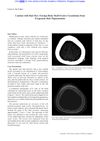
May 2020 in “Annals of the Academy of Medicine Singapore” Hair dye can cause serious scalp issues, including skull erosion.
 March 2026 in “INTERANTIONAL JOURNAL OF SCIENTIFIC RESEARCH IN ENGINEERING AND MANAGEMENT”
 Herbal hair dyes are safer and eco-friendly compared to synthetic dyes.
 December 2023 in “The journal of physical chemistry. B (1997 : Online)”
 Human hair keratin might be good for filtering out harmful substances from water.
1 citations
,
September 2024 in “Journal of Oncology Pharmacy Practice” Hydroxyurea treatment unexpectedly restored hair color from gray to dark brown in an older woman.
 January 2025 in “International Journal of Advanced Research in Science Communication and Technology”
 Polyherbal hair dyes are safer and more eco-friendly than chemical dyes.
 April 2018 in “The journal of investigative dermatology/Journal of investigative dermatology”
 Li2CO3 improved skin disease in a mouse model of Focal Dermal Hypoplasia without toxicity.
 2 citations
,
September 2021 in “International Journal of Ayurvedic Medicine”
2 citations
,
September 2021 in “International Journal of Ayurvedic Medicine” Despite adverse effects, people continue using hair dyes for aesthetic reasons, highlighting the need for safer options.
 November 2023 in “Journal of cosmetic dermatology”
 The 595-nm pulsed dye laser effectively reduces symptoms of EFFC with minimal side effects.
10 citations
,
January 2012 in “Case reports in medicine” Diphencyprone can cause unexpected and possibly permanent vitiligo.
 May 2026 in “International Journal of Research Publication and Reviews”
 The polyherbal hair dye is a safe, effective, and eco-friendly alternative to synthetic dyes.
October 2024 in “UNESP Institutional Repository (São Paulo State University)” Straightening and dyeing damage hair structure.
45 citations
,
December 2004 in “Forensic Science International” Laser microdissection helps get DNA from single hair follicles for better forensic analysis.
2 citations
,
September 1996 in “Journal of Applied Polymer Science” Potassium cyanide changes hair's disulfide bonds to monosulfide, affecting high-sulfur proteins more.
 September 2001 in “PubMed”
 The new X-ray technique allows for precise and non-destructive measurement of elements in hair, creating the first database of its kind for a specific ethnic group.