70 citations
,
August 2006 in “Cancer Research” AP-1 controls tumor cell type by affecting key signaling pathways.
1 citations
,
September 2019 in “Journal of Investigative Dermatology” Anti-Desmocollin 3 antibodies can cause pemphigus-like symptoms in mice.
 November 2022 in “The journal of investigative dermatology/Journal of investigative dermatology”
 The STRIPAK complex is crucial for skin cell organization and creating a functional skin barrier.
 28 citations
,
January 2012 in “Biological & pharmaceutical bulletin”
28 citations
,
January 2012 in “Biological & pharmaceutical bulletin” Hairless protein can both repress and activate vitamin D receptor functions, affecting gene regulation.
April 2010 in “The FASEB Journal” Knockout mice showed anemia and hair loss, suggesting other ways exist for iron absorption.
72 citations
,
July 2002 in “Journal of Investigative Dermatology” Desmoglein 1 can partly make up for the loss of Desmoglein 3 in hair adhesion but not in mucous membranes.
135 citations
,
December 2006 in “PLoS Medicine” Hyaluronate fragments can help reverse skin thinning by working with the CD44 receptor.
4 citations
,
January 2023 in “Journal of Clinical Investigation” Specific mutations in a receptor cause facial abnormalities and hair loss.
42 citations
,
July 2015 in “PLoS ONE” The study revealed the detailed structure of a keratin dimer, aiding understanding of how intermediate filament proteins function.
 April 2023 in “The journal of investigative dermatology/Journal of investigative dermatology”
 p120-catenin helps control skin inflammation by regulating cadherin levels.
 September 2016 in “Journal of Dermatological Science”
 A gene mutation worsens skin irritation in mice due to a lack of certain fats.
42 citations
,
May 1997 in “The Journal of Biochemistry” PAD type III enzyme is specific to rat skin and hair follicles.
 2 citations
,
January 2001 in “Biomedical Research”
2 citations
,
January 2001 in “Biomedical Research” Trichohyalin and peptidylarginine deiminase type III are found together in rat hair follicles, with trichohyalin being modified after expression.
3 citations
,
March 2023 in “Annals of the New York Academy of Sciences” Mutations in claudin-1 and claudin-3 cause hair loss in baby mice.
 April 2018 in “Journal of Investigative Dermatology”
 Researchers found that the Leptin receptor is a consistent marker for hair follicle dermal cells, which may help future hair research.
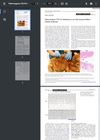 May 2024 in “Animal genetics”
 A cat's poor wound healing was linked to a genetic deletion in the COL5A1 gene.

Inhibiting AP-1 changes skin tumor types and affects tumor cell identity.
37 citations
,
February 2007 in “Experimental Dermatology” Increasing PDCD4 protein may help prevent or treat some skin cancers.
38 citations
,
September 1997 in “The journal of investigative dermatology/Journal of investigative dermatology” A mutation in mice causes hair loss and skin issues due to a defect in a gene affecting cell adhesion.
 April 2017 in “Journal of Investigative Dermatology”
 Removing the Crif1 gene in mouse skin disrupts skin balance and hair growth.
22 citations
,
January 1990 2 citations
,
August 2021 in “Animal Cells and Systems” Egfl6 is not needed for zebrafish face development.
February 2025 in “bioRxiv (Cold Spring Harbor Laboratory)” Cell detachment, not autoantibody binding, causes major changes in pemphigus.
60 citations
,
December 1988 in “Journal of Biochemical Toxicology” TCDD reduces EGF receptors in the liver, affecting growth and development.
 13 citations
,
November 2013 in “Journal of Endocrinology/Journal of endocrinology”
13 citations
,
November 2013 in “Journal of Endocrinology/Journal of endocrinology” Vitamin D receptor helps control hair growth genes in skin cells.
324 citations
,
May 2002 in “Oncogene” 29 citations
,
February 2001 in “Proceedings of the National Academy of Sciences” A specific DNA region controls skin cell gene expression by working with certain proteins.
34 citations
,
July 2020 in “American journal of human genetics” Changes in the SREBF1 gene cause a rare genetic skin and hair disorder.
2 citations
,
July 2021 in “UNC Libraries” Mutations at Val-889 and Arg-752 disrupt key interactions in androgen receptor dimerization.
July 2025 in “Journal of Investigative Dermatology”