 June 2017 in “International Journal of Periodontics & Restorative Dentistry”
 Using skin grafts from behind the ear for oral surgery in two patients with jaw injuries led to successful healing and good results.
 9 citations
,
February 2013 in “Plastic and Reconstructive Surgery”
9 citations
,
February 2013 in “Plastic and Reconstructive Surgery” The article explains how to rebuild parts of the head and face and how to transplant hair to cover scars, highlighting the need for careful planning and choosing the right method for each patient.
3 citations
,
November 1992 in “The Journal of Dermatologic Surgery and Oncology” The method effectively reduces and hides scalp defects after surgery.
 4 citations
,
November 2015 in “Aesthetic Plastic Surgery”
4 citations
,
November 2015 in “Aesthetic Plastic Surgery” Using tissue expanders for scalp reconstruction in patients with extensive Aplasia Cutis Congenita is effective and has minimal complications.

Platelet-rich plasma improves skin flap survival by reducing tissue death.
 2 citations
,
April 2014 in “International Wound Journal”
2 citations
,
April 2014 in “International Wound Journal” The V-Y-S plasty is a safe and effective one-stage method for repairing medium to large scalp defects.
October 2022 in “Hair Transplantation” Combining old and new methods is effective for repairing large scalp defects.
 2 citations
,
September 2003 in “Annals of Plastic Surgery”
2 citations
,
September 2003 in “Annals of Plastic Surgery” The document concludes that hair from the forehead can be used to reconstruct eyebrows.
 June 1997 in “The American Journal of Cosmetic Surgery”
 Scalp flaps are still a valuable hair loss treatment because of their benefits.
 14 citations
,
May 2004 in “Annals of Plastic Surgery”
14 citations
,
May 2004 in “Annals of Plastic Surgery” Composite flaps are better than muscle-only flaps for long-term skull coverage.
 2 citations
,
December 2019 in “Archives of Craniofacial Surgery”
2 citations
,
December 2019 in “Archives of Craniofacial Surgery” Using a method of stretching skin multiple times can help cover large bald spots on the scalp, but it takes a long time and isn't good for kids.
 7 citations
,
August 2015 in “Journal der Deutschen Dermatologischen Gesellschaft”
7 citations
,
August 2015 in “Journal der Deutschen Dermatologischen Gesellschaft” Scalp-to-scalp skin grafts quickly heal and hide well under regrown hair, making them good for repairing large scalp defects.
 34 citations
,
October 2004 in “Plastic and Reconstructive Surgery”
34 citations
,
October 2004 in “Plastic and Reconstructive Surgery” Nasolabial skin-fat grafts are good for nasal reconstruction with minimal scarring and no need for bolsters, but smoking may affect graft survival.
 5 citations
,
August 2011 in “Dermatologic Surgery”
5 citations
,
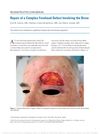
August 2011 in “Dermatologic Surgery” Artificial dermis used for hair transplantation can reconstruct scalp defects effectively without the need for tissue expansion.
 3 citations
,
April 2016 in “Dermatologic Surgery”
3 citations
,
April 2016 in “Dermatologic Surgery” A man's forehead and eyebrow were successfully reconstructed with a skin and hair graft that matched his other eyebrow, without needing frequent trimming.
 87 citations
,
February 2004 in “Plastic and Reconstructive Surgery”
87 citations
,
February 2004 in “Plastic and Reconstructive Surgery” Hair follicle stem cells helped heal a severe scalp burn without needing traditional skin grafts.
January 2019 in “Dermatologic Surgery” 2 citations
,
September 2023 in “Journal of clinical medicine” Scalp skin grafts effectively cover lower limb defects with high success and minimal complications.
 November 2022 in “PubMed”
 Deep dermal tissue dislocation injury in pigs leads to thicker fibrotic tissue and increased type III collagen, affecting skin repair.
 26 citations
,
February 2011 in “Journal of Plastic Reconstructive and Aesthetic Surgery”
26 citations
,
February 2011 in “Journal of Plastic Reconstructive and Aesthetic Surgery” Technique effectively treats deformities, achieves re-pigmentation, and releases scar contractures.
 January 1995 in “Surgical technology international”
 Using consecutive transposition flaps can manage gaps in hair growth after multiple hair loss surgeries.
2 citations
,
November 2020 in “Chirurgia” Scalp reconstruction is complex and aims to restore function and appearance after damage.
 13 citations
,
June 2016 in “Journal of neurological surgery”
13 citations
,
June 2016 in “Journal of neurological surgery” Using L-PRF membranes for skull base surgery might help healing, but more research is needed.
 March 2026 in “Clinical Cosmetic and Investigational Dermatology”
 Effective hair removal is crucial for better cosmetic results in forehead flap reconstruction, with laser hair removal being the preferred method.
 57 citations
,
July 2018 in “Scientific Reports”
57 citations
,
July 2018 in “Scientific Reports” Using adipose tissue-derived fragments improves early skin graft success.
 9 citations
,
May 2012 in “Journal of Craniofacial Surgery”
9 citations
,
May 2012 in “Journal of Craniofacial Surgery” Submental tissue is good for repairing mouth area skin with minimal scarring and good cosmetic results.
 62 citations
,
March 2015 in “PLOS ONE”
62 citations
,
March 2015 in “PLOS ONE” Pre-seeding scaffolds with fibroblasts improves skin wound healing.
 December 2015 in “Dermatologic Surgery”
 Double trichophytic closure effectively repairs thin scalp scars, reducing financial burden.
 52 citations
,
February 2012 in “Plastic Surgery International”
52 citations
,
February 2012 in “Plastic Surgery International” Skin grafting is a key procedure for repairing skin defects, with the success depending on the right graft choice, donor site management, and aftercare.
 August 2019 in “Journal of The American Academy of Dermatology”
 The document concludes that using micropore tape on an 18-gauge needle can control depth in hair restoration surgery, reducing scalp trauma and complications.