March 2023 in “Medico Research Chronicles” Omega-3 fatty acids may help manage hair loss in middle-aged women.
 March 2023 in “Journal of Cosmetic Dermatology”
 Dilated scalp capillaries might be a sign of hair loss related to COVID-19.
 September 2022 in “The American journal of dermatopathology/American journal of dermatopathology”
 A patient with a thick scalp and hair loss was correctly diagnosed with alopecia areata and a thick scalp fat layer, not lipedematous alopecia, and regrew hair after treatment.
 June 2022 in “Research, Society and Development”
 COVID-19 may cause increased hair loss, but the exact reason is unclear and standard hair loss treatments are recommended.
 May 2022 in “Голова и шея.”
 Orthorexia nervosa is not common among people.
January 2022 in “Journal of Pharmaceutical Negative Results” The VGG-SVM method accurately identifies and classifies stages of Alopecia Areata and other hair loss conditions.
December 2021 in “Pathologica” Trichogerminoma is a rare, benign skin tumor from hair cells, with a small risk of becoming cancerous.
 December 2021 in “Journal of The American Academy of Dermatology”
 COVID-19 can cause different types of hair loss, which may last up to 100 days, and treatments are still being explored.
 September 2021 in “CRC Press eBooks”
 CCCA is a common hair loss condition in African American women, often inherited and influenced by hairstyling, with unique scalp features detectable by special tools.
 May 2021 in “Dermatopathology”
 The review emphasizes the need to recognize skin conditions that affect hair follicles and sweat glands to avoid misdiagnosis.
 January 2021 in “Advanced Biomedical Engineering”
 Needle shape affects the force needed for hair implants, with certain shapes reducing the effort required.
 June 2020 in “Journal of cosmetic medicine”
 A good hair transplant is judged by various factors including cosmetic appearance, hair angles, complication signs, and donor scar consideration.
May 2020 in “International journal of dermatology and venereology” Hair matrix cysts are rare skin nodules with unique features, often needing surgical removal.
 December 2019 in “Journal of pediatrics & neonatology”
 A 13-year-old boy had a rare, stable type of hair loss with little chance of regrowth, but treatment is available for looks.
 September 2019 in “Rheumatology advances in practice”
 Diagnosing and treating rapidly worsening lung disease is difficult and requires better guidelines and understanding.
 May 2019 in “Australasian Journal of Dermatology”
 New insights in skin conditions show a complex link between certain moles and melanoma, improved hair loss treatments, and the need to identify different types of lupus.
 August 2018 in “Pediatric Dermatology”
 A baby had a unique skin condition with a pale patch and surrounding dark hairs, not linked to other health issues.
 July 2018 in “Elsevier eBooks”
 Discoid Lupus Erythematosus often causes scarring hair loss, is influenced by genetics and environment, and requires early treatment to prevent worsening.
 April 2018 in “Journal of Investigative Dermatology”
 BLZ-100 is safe for use in skin cancer surgery and may help identify cancerous tissue.
 January 2018 in “Springer eBooks”
 Congenital triangular alopecia is a harmless, non-spreading hair loss condition often seen in young children.
 January 2018 in “Communications in computer and information science”
 Researchers developed a computer system to automatically diagnose hair loss by analyzing scalp images.
IL-1 and IL-7 help activate cells that boost hair follicle stem cell growth, aiding wound healing.
 August 2017 in “Companion animal”
 Focal alopecia in dogs has many causes and requires various tests for accurate diagnosis and treatment.
 May 2016 in “Endocrine Abstracts”
 The removal of the adrenal tumor improved the patient's symptoms and reduced androgen levels, indicating successful surgery.
 April 2016 in “Proceedings of SPIE”
 UV-induced autofluorescence is effective for identifying different types of alopecia.
 January 2016 in “SpringerBriefs in bioengineering”
 Genetic defects and UV radiation cause skin damage and aging.
 January 2015 in “Hair therapy & transplantation”
 New hair and scalp disease diagnosis methods are important for correct treatment.
 January 2015 in “Indian Dermatology Online Journal”
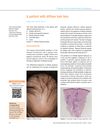
 The patient's hair loss is most likely due to diffuse alopecia areata.
January 2015 in “Faculty of 1000 Research Ltd” Androgenetic alopecia may be irreversible due to the detachment of a muscle from hair follicles.

The models can help find better inhibitors for conditions like baldness and prostate disorders.