 July 2021 in “Clinical case reports and studies”
 Topical diphencyprone effectively treated a 9-year-old boy's alopecia areata with fewer side effects.
The woman was diagnosed with lichen sclerosus, a rare skin condition, after initial misdiagnosis and ineffective treatments.
April 2023 in “Journal of Dermatological Treatment” Tofacitinib helped regrow hair in a teen with a unique pattern of alopecia areata.
July 2024 in “International Journal of Medical Science and Clinical Research Studies” Alopecia Areata Incognita causes sudden hair loss in young females but usually has a better outcome than other types.
December 2023 in “International Journal of Dermatology” Accurate diagnosis of alopecia areata incognito requires trichoscopy and histopathology.
 1 citations
,
July 2018 in “Elsevier eBooks”
1 citations
,
July 2018 in “Elsevier eBooks” Alopecia Areata is an autoimmune hair loss condition, with various treatments showing mixed effectiveness and no guaranteed cure.
 51 citations
,
September 2015 in “Medical Clinics of North America”
51 citations
,
September 2015 in “Medical Clinics of North America” The conclusion is that acne, alopecia, and hyperhidrosis are common skin issues with various treatments available, and accurate diagnosis is key for effective management.
 3 citations
,
June 2006 in “Expert Review of Dermatology”
3 citations
,
June 2006 in “Expert Review of Dermatology” The document concludes that hair loss is complex, affects many people, has limited treatments, and requires more research on its causes and psychological impact.
15 citations
,
January 2016 in “International journal of trichology” Low vitamin D3 levels are significantly linked to hair loss, especially in female students.
Low Vitamin D3 levels are linked to hair loss in female students in South India.
 November 2024 in “Fizioterapevt (Physiotherapist)”
 Combined therapy is highly effective for treating diffuse alopecia.
 January 2024 in “Современные проблемы науки и образования (Modern Problems of Science and Education)”
 Treating post-COVID hair loss leads to full recovery, while not treating it often results in ongoing symptoms.
 July 2021 in “Indian journal of dermatopathology and diagnostic dermatology”
 Trichoscopy is a reliable method for diagnosing hair and scalp disorders quickly and non-invasively.
 4 citations
,
March 2012 in “Annals of oncology”
4 citations
,
March 2012 in “Annals of oncology” New treatment with green tea polyphenols and nicotinamide improves skin problems from cancer therapy.
 64 citations
,
November 2008 in “Journal of The American Academy of Dermatology”
64 citations
,
November 2008 in “Journal of The American Academy of Dermatology” A new type of rapid hair loss called ADTA usually gets better on its own within 6 months.
 59 citations
,
January 2002 in “Dermatology”
59 citations
,
January 2002 in “Dermatology” A new type of sudden, complete female hair loss was found, with most patients fully recovering within 6 months without needing steroid treatment.
 November 2025 in “SKIN The Journal of Cutaneous Medicine”
 Baricitinib works better in adolescents than adults for treating severe alopecia areata.
 2 citations
,
October 2017 in “Journal of The American Academy of Dermatology”
2 citations
,
October 2017 in “Journal of The American Academy of Dermatology” Focal atrichia helps diagnose female pattern hair loss.
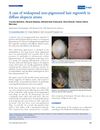 March 2019 in “Our Dermatology Online”
 A woman with severe hair loss regrew mostly white hair after treatment.
 10 citations
,
January 2015 in “Journal of Dermatology and Dermatologic Surgery”
10 citations
,
January 2015 in “Journal of Dermatology and Dermatologic Surgery” Hair loss in adult females in Makkah is often linked to iron-deficiency anemia and thyroid issues.
 9 citations
,
September 2016 in “Dermatologic Surgery”
9 citations
,
September 2016 in “Dermatologic Surgery” New LPP subtype affects vellus hairs, mimics AGA, and needs biopsy for diagnosis.
 67 citations
,
November 2002 in “Journal of The American Academy of Dermatology”
67 citations
,
November 2002 in “Journal of The American Academy of Dermatology” The document concludes that careful evaluation is key to diagnose and treat women with hair loss, with tests for thyroid, iron, and hormones as needed.
 4 citations
,
January 2022 in “Drug design, development and therapy”
4 citations
,
January 2022 in “Drug design, development and therapy” Intramuscular corticosteroids are effective and safe for severe alopecia areata, with most patients regrowing hair, but nearly half may relapse.
 42 citations
,
January 2008 in “Dermatology”
42 citations
,
January 2008 in “Dermatology” Dermoscopy effectively distinguishes between acute total hair loss and other types of female hair loss.
 January 2025 in “SKIN The Journal of Cutaneous Medicine”
 Baricitinib significantly regrows hair in severe alopecia areata patients.
 185 citations
,
February 2018 in “Journal of Investigative Dermatology”
185 citations
,
February 2018 in “Journal of Investigative Dermatology” Melatonin may benefit skin health and could be a promising treatment in dermatology.
 29 citations
,
June 2013 in “Journal of the Saudi Society of Dermatology & Dermatologic Surgery”
29 citations
,
June 2013 in “Journal of the Saudi Society of Dermatology & Dermatologic Surgery” Alopecia areata is an autoimmune hair loss condition treated with corticosteroids, and histologic confirmation is the best diagnosis method.
 16 citations
,
March 2017 in “Bone Marrow Transplantation”
16 citations
,
March 2017 in “Bone Marrow Transplantation” Some children who had stem cell transplants developed permanent hair loss, especially when treated with a drug called busulphan.
 15 citations
,
December 2011 in “Journal of the European Academy of Dermatology and Venereology”
15 citations
,
December 2011 in “Journal of the European Academy of Dermatology and Venereology” Hair loss in systemic lupus erythematosus patients is unique and improves with treatment.
 8 citations
,
October 2019 in “Immunological investigations”
8 citations
,
October 2019 in “Immunological investigations” The AIRE gene variant rs2075876 is linked to a higher risk of alopecia areata in males.