December 2025 in “Chinese Medical Journal” Experts recommend starting systemic treatment for alopecia areata when the condition is severe or causes significant distress.
Accurate diagnosis of hair loss types is crucial for effective treatment.
 January 2023 in “Przegla̧d dermatologiczny”
 There are two main types of alopecia areata with different severity, and diagnosis is made through clinical examination and trichoscopy, influencing treatment choices.
Patient history is key in diagnosing hair loss types.
 23 citations
,
August 2018 in “Anais Brasileiros De Dermatologia”
23 citations
,
August 2018 in “Anais Brasileiros De Dermatologia” Both androgenetic alopecia and alopecia areata negatively impact quality of life, with no significant difference between them.
16 citations
,
February 1999 in “American Journal of Dermatopathology” Lymphocytes may hinder hair stem cells, causing hair loss without scarring.
 September 2021 in “CRC Press eBooks”
 Alopecia areata incognita causes sudden hair thinning, responds well to steroids, and is more common in those with genetic hair loss conditions.
 February 2017 in “International Journal of Research in Dermatology”
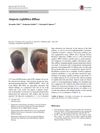
 A six-year-old girl unusually had a hair loss condition common in middle-aged women.
October 2015 in “CRC Press eBooks” Scalp biopsy and digital phototrichogram help diagnose and manage different types of diffuse hair loss.
 6 citations
,
April 2015 in “Infection”
6 citations
,
April 2015 in “Infection” Treatment with benzylpenicillin and prednisolone cured the patient's syphilis and hair loss.
July 2026 in “Scholars Journal of Medical Case Reports” Different scalp conditions can coexist and need separate treatments.
 59 citations
,
January 2002 in “Dermatology”
59 citations
,
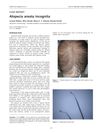
January 2002 in “Dermatology” A new type of sudden, complete female hair loss was found, with most patients fully recovering within 6 months without needing steroid treatment.
 19 citations
,
January 2011 in “Clinics”
19 citations
,
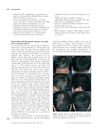
January 2011 in “Clinics” A young woman with a rare hair loss condition improved with steroid and biotin treatment.
 10 citations
,
July 2012 in “International Journal of Dermatology”
10 citations
,
July 2012 in “International Journal of Dermatology” Syphilis can cause hair loss and should be considered in unexplained cases.
 January 2019 in “International Journal of Trichology”
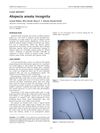
 A woman lost all her hair in one day, was diagnosed with a rare type of hair loss, and regrew it in 12 weeks with treatment.
 December 2007 in “CRC Press eBooks”
 Alopecia areata incognita causes widespread hair loss without patches and needs a scalp biopsy for diagnosis.
2 citations
,
January 2022 in “Annals of Dermatology” Treatment type and patch size affect hair regrowth patterns in alopecia areata.
Alopecia Areata has no cure, treatments are limited, and the condition often recurs, but new therapies like JAK inhibitors show promise.
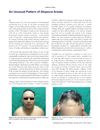 January 2014 in “International Journal of Trichology”
 A man had an unusual type of hair loss that didn't match known patterns and didn't improve with treatment.
 8 citations
,
January 2015 in “International journal of trichology”
8 citations
,
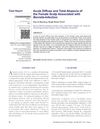
January 2015 in “International journal of trichology” A woman's total hair loss was linked to a Borrelia infection and was reversed with appropriate treatment.
 7 citations
,
August 2013 in “Journal of the European Academy of Dermatology and Venereology”
7 citations
,
August 2013 in “Journal of the European Academy of Dermatology and Venereology” Less than a quarter of alopecia areata cases were unusual forms or had paradoxical regrowth.
1 citations
,
May 2025 in “The Journal of Dermatology” Increased regulatory T cell activity may lead to better outcomes in acute diffuse and total alopecia.
September 2023 in “Journal of the American Academy of Dermatology” Increased Treg cells and IL-10 may help quick recovery in acute diffuse and total alopecia.
 2 citations
,
January 2017 in “Clinical and medical investigations”
2 citations
,
January 2017 in “Clinical and medical investigations” Herbal lotions are effective for severe hair loss, with a 64.8% success rate, but relapse is common and long-term management requires allergen control and possible corticosteroid use.
 83 citations
,
May 1999 in “International Journal of Dermatology”
83 citations
,
May 1999 in “International Journal of Dermatology” Hair loss that spreads out can often fix itself or be treated by finding and handling the cause.
 19 citations
,
January 2015 in “Journal of Clinical and Diagnostic Research”
19 citations
,
January 2015 in “Journal of Clinical and Diagnostic Research” The main causes of diffuse hair loss in women are telogen effluvium and androgenetic alopecia, often related to stress and iron deficiency.
 October 2024 in “Dermatology Practical & Conceptual”
 Vitamin D3 deficiency is common in Pakistanis with diffuse hair fall, and early treatment is advised.
 August 2022 in “Our Dermatology Online”
 The conclusion is that examining the scalp closely and checking for iron levels and thyroid issues is key to understanding chronic hair loss in women.
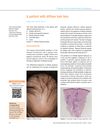 January 2015 in “Indian Dermatology Online Journal”
 The patient's hair loss is most likely due to diffuse alopecia areata.
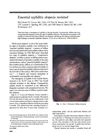 53 citations
,
May 1995 in “Journal of The American Academy of Dermatology”
53 citations
,
May 1995 in “Journal of The American Academy of Dermatology” Syphilis can cause hair loss that looks like other conditions, but it improves with treatment.