 29 citations
,
January 2003 in “Dermatology”
29 citations
,
January 2003 in “Dermatology” The condition called 'acute diffuse and total alopecia of the female scalp' is actually a known condition named alopecia areata incognita.
 24 citations
,
January 2012 in “Indian Journal of Dermatology, Venereology and Leprology”
24 citations
,
January 2012 in “Indian Journal of Dermatology, Venereology and Leprology” Diffuse alopecia areata involves more inflammation and higher allergy-related antibodies than patchy types.
 23 citations
,
September 2019 in “Dermatology practical & conceptual”
23 citations
,
September 2019 in “Dermatology practical & conceptual” The study concluded that AAI and DAA are forms of the same disease, with different symptoms in men and women, and that corticosteroid treatment is effective.
21 citations
,
October 2007 in “Australasian Journal of Dermatology” A woman with hair loss regrew white hair after taking prednisolone.
 19 citations
,
February 2016 in “Journal of The American Academy of Dermatology”
19 citations
,
February 2016 in “Journal of The American Academy of Dermatology” CD3+ T-cell presence is a reliable marker to tell apart alopecia areata from pattern hair loss.
 10 citations
,
August 2016 in “Oxford Medical Case Reports”
10 citations
,
August 2016 in “Oxford Medical Case Reports” Tocilizumab therapy may cause skin and hair conditions like halo naevi, vitiligo, and alopecia areata.
 4 citations
,
October 2018 in “Experimental Dermatology”
4 citations
,
October 2018 in “Experimental Dermatology” Dermoscopy shows that diffuse alopecia areata progresses through specific hair growth stages.
2 citations
,
February 2024 in “Journal of the European Academy of Dermatology and Venereology” Diffuse alopecia areata in children has unique features and needs specific treatment.
2 citations
,
January 2018 Diffuse alopecia areata causes widespread hair thinning due to an autoimmune response.
 1 citations
,
October 2018 in “Madridge journal of dermatology & research”
1 citations
,
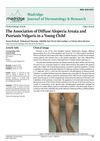
October 2018 in “Madridge journal of dermatology & research” A young child with alopecia areata and psoriasis improved with treatment, suggesting a link between the two conditions.
 March 2024 in “Case Reports in Dermatology”
 A woman's hair loss was misdiagnosed as alopecia areata but was actually lichen planopilaris, needing immediate and ongoing treatment.
 August 2021 in “Acta medica Philippina”
 A girl's hair loss was found to be caused by both a hair-pulling disorder and another hair loss condition.
 March 2019 in “Our Dermatology Online”
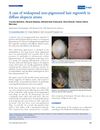
 A woman with severe hair loss regrew mostly white hair after treatment.
 30 citations
,
November 2012 in “Anais Brasileiros De Dermatologia”
30 citations
,
November 2012 in “Anais Brasileiros De Dermatologia” Diagnosing diffuse alopecia, a hair loss condition, can be challenging and may require a scalp biopsy or tracking the disease's progression when symptoms and skin tests aren't enough.
January 2014 in “International Journal of Dermatology and Venereology” A man with hair loss and a scalp lump was diagnosed with a diffuse neurofibroma but chose not to have surgery.
 64 citations
,
November 2008 in “Journal of The American Academy of Dermatology”
64 citations
,
November 2008 in “Journal of The American Academy of Dermatology” A new type of rapid hair loss called ADTA usually gets better on its own within 6 months.
 3 citations
,
July 2013 in “Journal of Cutaneous Pathology”
3 citations
,
July 2013 in “Journal of Cutaneous Pathology” A woman's hair loss, resembling an autoimmune condition, improved after treatment, but requires ongoing checks due to potential serious associations.
December 2021 in “IP Indian journal of clinical and experimental dermatology” PRP therapy significantly improved hair growth in a girl with chronic alopecia areata.
April 2025 in “Anais Brasileiros de Dermatologia” Abrocitinib effectively treats severe alopecia areata with significant improvement and no side effects.
 March 2017 in “The American Journal of Cosmetic Surgery”
 Transplanted hair follicles can resist hair loss from an autoimmune condition better than natural hair.
8 citations
,
August 2016 in “Journal of the European Academy of Dermatology and Venereology” Oral tacrolimus helped a rheumatoid arthritis patient regrow hair lost due to alopecia areata.
 29 citations
,
October 2012 in “Anais Brasileiros De Dermatologia”
29 citations
,
October 2012 in “Anais Brasileiros De Dermatologia” Diagnosing hair loss disorders needs clinical, dermoscopic, and histological differences, and checking menstrual cycle, weight changes, drug therapy, and nail changes.
 1 citations
,
January 2010 in “Türkiye klinikleri tıp bilimleri dergisi”
1 citations
,
January 2010 in “Türkiye klinikleri tıp bilimleri dergisi” A rare case showed hair regrowth after chemotherapy for thymoma, suggesting a link between alopecia areata and thymoma.
 5 citations
,
January 2019 in “Skin appendage disorders”
5 citations
,
January 2019 in “Skin appendage disorders” The conclusion is that it's important to tell apart alopecia areata from lipedematous alopecia for proper treatment, as alopecia areata can be reversed.
 67 citations
,
November 2002 in “Journal of The American Academy of Dermatology”
67 citations
,
November 2002 in “Journal of The American Academy of Dermatology” The document concludes that careful evaluation is key to diagnose and treat women with hair loss, with tests for thyroid, iron, and hormones as needed.
 19 citations
,
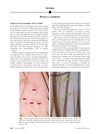
December 2008 in “Journal of The American Academy of Dermatology”
19 citations
,
December 2008 in “Journal of The American Academy of Dermatology” The authors suggest that a new type of hair loss exists, which is different from alopecia areata.
2 citations
,
September 2023 in “Journal of the European Academy of Dermatology and Venereology” Trichoscopy is a useful tool for diagnosing different types of female hair loss without needing a biopsy.
 2 citations
,
January 2012 in “Journal of Cutaneous Pathology”
2 citations
,
January 2012 in “Journal of Cutaneous Pathology” The author clarifies that alopecia areata incognito and diffuse alopecia areata are different types of hair loss with unique symptoms and challenges in diagnosis.
June 2026 in “Skin Appendage Disorders” Diffuse unpatterned alopecia causes widespread hair thinning and is hard to diagnose and treat.
 February 2026 in “Ciencia Latina Revista Científica Multidisciplinar”
 Early recognition and thyroid evaluation are crucial for managing diffuse alopecia areata linked to autoimmune thyroid disease.