 8 citations
,
January 1989 in “Annual Reports in Medicinal Chemistry”
8 citations
,
January 1989 in “Annual Reports in Medicinal Chemistry” Hair loss from alopecia areata and androgenetic alopecia can be treated, but more effective and safer treatments are needed.
A girl with Crohn's disease developed hair loss due to her increased medication, a rare side effect seen in some children.
 79 citations
,
September 2009 in “Pediatric dermatology”
79 citations
,
September 2009 in “Pediatric dermatology” The 308-nm Excimer laser is effective and safe for treating patchy alopecia areata in children.
 7 citations
,
January 2017 in “Dermatology”
7 citations
,
January 2017 in “Dermatology” People who get alopecia areata after age 50 usually have mild symptoms, high chances of hair regrowth, and often have other health conditions.
 July 2017 in “The American Journal of Cosmetic Surgery”
 A patient's hair loss after a browlift surgery improved on its own over 8 months.
 21 citations
,
March 2006 in “Seminars in Cutaneous Medicine and Surgery”
21 citations
,
March 2006 in “Seminars in Cutaneous Medicine and Surgery” Most hair loss disorders can be accurately diagnosed and treated in an outpatient setting.
 10 citations
,
July 2008 in “Journal of Cutaneous Pathology”
10 citations
,
July 2008 in “Journal of Cutaneous Pathology” Increased mucin in the skin might indicate lupus in patients with hair loss, but more research is needed.
5 citations
,
January 2020 in “Acta dermatovenerologica Alpina, Pannonica et Adriatica (Tiskana izd.)” Injecting platelet-rich plasma or applying it with a laser or microneedling can treat hair loss effectively. The laser and microneedling methods cause less pain.
 1 citations
,
March 2021 in “Current Dermatology Reports”
1 citations
,
March 2021 in “Current Dermatology Reports” Various treatments help hair growth, but more research needed for safety and effectiveness.
 1 citations
,
July 2018 in “Elsevier eBooks”
1 citations
,
July 2018 in “Elsevier eBooks” Heredity and hormones cause common hair loss, and topical minoxidil is the first recommended treatment.
 1 citations
,
July 2012 in “Nasza Dermatologia Online”
1 citations
,
July 2012 in “Nasza Dermatologia Online” CCCA may be caused by both hair traction and an immune response.
 April 2025 in “International Journal of Homoeopathic Sciences”
 Homeopathic treatment helped a girl regrow hair after other treatments failed.
 April 2024 in “Proceedings”
 People with alopecia areata often have lower iron levels than healthy people.
 89 citations
,
March 2018 in “The Journal of Dermatology”
89 citations
,
March 2018 in “The Journal of Dermatology” Trichoscopy helps diagnose and monitor alopecia areata by looking at a combination of specific hair and scalp features.
 63 citations
,
May 2017 in “American Journal of Clinical Dermatology”
63 citations
,
May 2017 in “American Journal of Clinical Dermatology” People with alopecia areata often have lower levels of vitamin D, zinc, and folate, but more research is needed to understand if supplements can help treat it.
 48 citations
,
May 1999 in “International Journal of Dermatology”
48 citations
,
May 1999 in “International Journal of Dermatology” Alopecia areata is an unpredictable autoimmune hair loss condition, treated based on severity, with half of patients regrowing hair within a year without treatment.
 42 citations
,
November 2018 in “Archives of dermatological research”
42 citations
,
November 2018 in “Archives of dermatological research” Apremilast was not effective in treating moderate-to-severe alopecia areata.
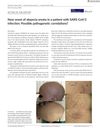 32 citations
,
March 2021 in “Journal of cosmetic dermatology (Print)”
32 citations
,
March 2021 in “Journal of cosmetic dermatology (Print)” COVID-19 infection may trigger alopecia areata in some patients.
 21 citations
,
January 2014 in “International Journal of Trichology”
21 citations
,
January 2014 in “International Journal of Trichology” The study concluded that yellow dots are a common and useful sign for diagnosing alopecia areata in dark-skinned individuals and may indicate the severity of the condition.
 4 citations
,
March 2024 in “Quality of Life Research”
4 citations
,
March 2024 in “Quality of Life Research” More severe hair loss in alopecia areata greatly impacts patients and caregivers.
 3 citations
,
January 2015 in “Nasza Dermatologia Online”
3 citations
,
January 2015 in “Nasza Dermatologia Online” Some treatments for autoimmune hair loss work, but JAK inhibitors like tofacitinib are promising for regrowth.
 January 2026 in “Ciencia Latina Revista Científica Multidisciplinar”
 Exosomes helped regrow hair in a 14-year-old with difficult-to-treat alopecia.
 January 2025 in “International Journal of Homoeopathic Sciences”
 Personalized homeopathic treatment may help manage alopecia areata.
 February 2024 in “Sohag Medical Journal”
 Various local treatments for alopecia areata show promise, but individualized plans and more research are needed.
 May 2015 in “Journal of The American Academy of Dermatology”
 Combination therapy with cyclosporine and low-dose corticosteroid shows favorable long-term results for treating alopecia areata.
 December 2025 in “IP Indian Journal of Clinical and Experimental Dermatology”
 DNCB is more effective than betamethasone for hair regrowth but has more side effects.
 20 citations
,
December 2017 in “Journal of Investigative Dermatology Symposium Proceedings”
20 citations
,
December 2017 in “Journal of Investigative Dermatology Symposium Proceedings” Researchers created a fast, accurate computer program to measure hair loss in alopecia areata patients.
 15 citations
,
May 2016 in “Archives of Dermatological Research”
15 citations
,
May 2016 in “Archives of Dermatological Research” ULBP3 could be a marker for diagnosing alopecia areata incognita and may be linked to its cause and development.
 14 citations
,
January 2017 in “Skin appendage disorders”
14 citations
,
January 2017 in “Skin appendage disorders” Simvastatin/ezetimibe did not effectively treat severe alopecia areata and caused side effects in some patients.
 1 citations
,
August 2021 in “International Journal of Research in Dermatology”
1 citations
,
August 2021 in “International Journal of Research in Dermatology” There is no significant link between metabolic syndrome and alopecia areata.