 May 2024 in “World Journal Of Advanced Research and Reviews”
 Low iron levels are strongly linked to chronic hair loss in women.
 16 citations
,
March 2017 in “Bone Marrow Transplantation”
16 citations
,
March 2017 in “Bone Marrow Transplantation” Some children who had stem cell transplants developed permanent hair loss, especially when treated with a drug called busulphan.
 83 citations
,
April 1992 in “Clinical Endocrinology”
83 citations
,
April 1992 in “Clinical Endocrinology” Having enough iron improves the effectiveness of a specific hair loss treatment in women.
 24 citations
,
January 2012 in “Indian Journal of Dermatology, Venereology and Leprology”
24 citations
,
January 2012 in “Indian Journal of Dermatology, Venereology and Leprology” Diffuse alopecia areata involves more inflammation and higher allergy-related antibodies than patchy types.
 January 2025 in “International Journal of Dermatology Research”
 Tailored combination therapy improves non-scarring alopecia outcomes.
 28 citations
,
January 2015 in “Journal der Deutschen Dermatologischen Gesellschaft”
28 citations
,
January 2015 in “Journal der Deutschen Dermatologischen Gesellschaft” Women with scarring alopecia have a lower quality of life and more anxiety and depression than those with non-scarring alopecia.
 19 citations
,
February 2013 in “The American Journal of Dermatopathology”
19 citations
,
February 2013 in “The American Journal of Dermatopathology” Nonscarring alopecia has higher hair density than scarring alopecia, and hair density can help diagnose the type of alopecia.
 3 citations
,
January 2017 in “Journal of Pakistan Association of Dermatology”
3 citations
,
January 2017 in “Journal of Pakistan Association of Dermatology” Women with certain types of hair loss may have low iron levels, and iron supplements could help.
 2 citations
,
July 2005 in “Baylor University Medical Center Proceedings”
2 citations
,
July 2005 in “Baylor University Medical Center Proceedings” A 4-year-old girl was diagnosed with trichotillomania, a condition where she pulls out her hair, which may resolve on its own or require therapy.
 June 2023 in “International journal of pharmaceutical quality assurance”
 Videodermoscopy is effective for diagnosing different types of non-scarring hair loss.
 July 2022 in “Al-Mağallaẗ al-ʻirāqiyyaẗ li-l-ṣaydalaẗ”
 Androgenetic alopecia with telogen effluvium is the most common hair loss in women with hirsutism.
 July 2012 in “Springer eBooks”
 The document concludes that proper diagnosis and treatment of nonscarring alopecias can improve quality of life and hair regrowth is possible as the hair follicle remains intact.
 1 citations
,
August 2021 in “Consilium Medicum”
1 citations
,
August 2021 in “Consilium Medicum” Selencin effectively reduces hair loss and improves hair health in diffuse alopecia.
 December 2021 in “Consilium Medicum”
 The combined Selencin treatment effectively reduces hair loss and improves hair health after COVID-19.
 122 citations
,
April 1995 in “Journal of Cutaneous Pathology”
122 citations
,
April 1995 in “Journal of Cutaneous Pathology” The document describes how to tell different types of non-scarring hair loss apart by looking at hair and scalp tissue under a microscope.
 32 citations
,
December 2017 in “International Journal of Molecular Sciences”
32 citations
,
December 2017 in “International Journal of Molecular Sciences” Low vitamin D might be linked to certain types of hair loss, and supplements could help, but more research is needed.
 29 citations
,
July 2008 in “Journal of Cutaneous Pathology”
29 citations
,
July 2008 in “Journal of Cutaneous Pathology” Hair root sheaths are more common in non-scarring hair loss and help diagnose the type of hair loss.
 17 citations
,
May 2016 in “Archives of Dermatological Research”
17 citations
,
May 2016 in “Archives of Dermatological Research” Reflectance confocal microscopy can help tell apart scarring from non-scarring hair loss.
 15 citations
,
February 2003 in “British Journal of Dermatology”
15 citations
,
February 2003 in “British Journal of Dermatology” The study suggests computer-assisted analysis of scalp biopsies could improve hair loss diagnosis but needs more validation.
 June 2026 in “Research Square”
 Vitamin D may help with certain types of hair loss in women.
 January 2025 in “International Journal of Dermatology Sciences”
 Androgenetic alopecia is the most common type of non-scarring hair loss, especially in young males, and early diagnosis and treatment are important.
 September 2023 in “Medical lasers”
 The botanical shampoo with Morus alba root extract is safe and effective for treating hair loss.
 9 citations
,
March 2014 in “TURKDERM”
9 citations
,
March 2014 in “TURKDERM” Proper nutrition is crucial for healthy hair growth.
 13 citations
,
February 2015 in “Actas Dermo-Sifiliográficas”
13 citations
,
February 2015 in “Actas Dermo-Sifiliográficas” The document concludes that recognizing specific histological features of different nonscarring alopecias is crucial for accurate diagnosis and understanding hair loss progression.
 7 citations
,
January 2018 in “Medicinski arhiv”
7 citations
,
January 2018 in “Medicinski arhiv” A herbal extract may help treat certain types of hair loss by reducing a specific gene's activity.
 2 citations
,
February 2025 in “Dermatology and Therapy”
2 citations
,
February 2025 in “Dermatology and Therapy” UVF-dermoscopy is a useful tool for accurately diagnosing types of alopecia, especially in people with lighter skin.
 1 citations
,
January 2017 in “International Journal of Dermoscopy”
1 citations
,
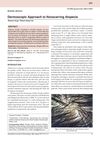
January 2017 in “International Journal of Dermoscopy” Dermoscopy is useful for identifying and tracking different types of hair loss without scarring.
 8 citations
,
January 2015 in “International journal of trichology”
8 citations
,
January 2015 in “International journal of trichology” A woman's total hair loss was linked to a Borrelia infection and was reversed with appropriate treatment.
 64 citations
,
November 2008 in “Journal of The American Academy of Dermatology”
64 citations
,
November 2008 in “Journal of The American Academy of Dermatology” A new type of rapid hair loss called ADTA usually gets better on its own within 6 months.
 59 citations
,
January 2002 in “Dermatology”
59 citations
,
January 2002 in “Dermatology” A new type of sudden, complete female hair loss was found, with most patients fully recovering within 6 months without needing steroid treatment.