 19 citations
,
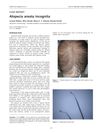
January 2011 in “Clinics”
19 citations
,
January 2011 in “Clinics” A young woman with a rare hair loss condition improved with steroid and biotin treatment.
 14 citations
,
January 2012 in “International Journal of Trichology”
14 citations
,
January 2012 in “International Journal of Trichology” Hodgkin's lymphoma can show up as hair loss.
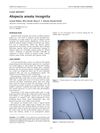 December 2007 in “CRC Press eBooks”
 Alopecia areata incognita causes widespread hair loss without patches and needs a scalp biopsy for diagnosis.
June 2026 in “The Journal of Cosmetic Medicine” Scalp micropigmentation effectively creates the look of fuller hair but requires skilled application and touch-ups.
January 2015 in “Iraqi Journal of Hematology” Iron supplements can help reduce hair loss in women with low iron levels.
 August 2024 in “Dermatology and Therapy”
 Vorasidenib can cause unusual hair growth.
Amphetamines may not directly cause hair loss.
July 2026 in “Scholars Journal of Medical Case Reports” Different scalp conditions can coexist and need separate treatments.
 1 citations
,
January 2009 in “Journal of Clinical Dermatology”
1 citations
,
January 2009 in “Journal of Clinical Dermatology” Hair loss after childbirth is more common in women who have had multiple births, cesarean deliveries, significant weight gain, and full-term pregnancies.
 December 2017 in “Journal of The American Academy of Dermatology”
 The document explains how to claim CME credit by diagnosing and treating hair loss conditions in two patient cases.
Eye drops with β-blockers may cause hair loss.
 75 citations
,
October 1996 in “Dermatologic Clinics”
75 citations
,
October 1996 in “Dermatologic Clinics” Chronic Telogen Effluvium is a hair loss condition in middle-aged women that usually doesn't lead to complete baldness.
 20 citations
,
August 2009 in “Journal of The European Academy of Dermatology and Venereology”
20 citations
,
August 2009 in “Journal of The European Academy of Dermatology and Venereology” Occipital scalp affects female hair loss; terminal/vellus ratio helps diagnose androgenetic alopecia.
 16 citations
,
January 2015 in “Annals of Dermatology”
16 citations
,
January 2015 in “Annals of Dermatology” The study found specific hair and scalp patterns for different types of hair loss in Koreans, noting racial differences affect diagnosis.
 13 citations
,
May 2004 in “Facial Plastic Surgery Clinics of North America”
13 citations
,
May 2004 in “Facial Plastic Surgery Clinics of North America” Surgeons need to understand natural hair patterns for better hair restoration results.
 3 citations
,
November 1999 in “Journal of Cutaneous Medicine and Surgery”
3 citations
,
November 1999 in “Journal of Cutaneous Medicine and Surgery” Examining scalp biopsies in different ways helps better diagnose hair loss types.
 March 2025 in “Meditsinskiy sovet = Medical Council”
 Diffuse telogen alopecia is temporary hair loss treated by addressing the root cause and improving scalp health.
 October 2016 in “Mağallaẗ Kulliyyaẗ al-ṭibb Baġdād”
 Most Iraqi women with telogen effluvium did not have a clear cause for their hair loss, and few had significant thinning.
 October 2016 in “Mağallaẗ Kulliyyaẗ al-ṭibb Baġdād”
 Most Iraqi women with telogen effluvium had no clear cause for their hair loss, and few had significant thinning.
January 2009 in “La ley penal: revista de derecho penal, procesal y penitenciario” Androgenetic alopecia is the most common hair loss, more severe in men, and best treated with a combination of hair growth promoters and antiandrogens.
 March 2004 in “Journal of The American Academy of Dermatology”
 Women with lupus experienced non-scarring hair loss with fewer hair follicles, and the test for lupus in hair was not helpful.
 June 1982 in “Reactions (Auckland)”
 Metoprolol and propranolol may cause hair loss.
 November 2010 in “Journal of The American Academy of Dermatology”
 The issue concluded that various skin conditions have different effective treatments and factors influencing them.
 2 citations
,
August 1987 in “Australasian Journal of Dermatology”
2 citations
,
August 1987 in “Australasian Journal of Dermatology” Birth control pills can cause skin issues but may help with acne and hirsutism, and choosing the right type can minimize side effects.
A diet of collagen and vinegar improved hair growth and scalp health in women aged 40-60 more effectively than collagen alone.

Hair loss in SLE patients is mostly due to chronic telogen effluvium and is linked to moderate disease activity.
April 2015 in “Our Dermatology Online” Zinc supplements and diet changes can effectively treat zinc deficiency and prevent complications.
 63 citations
,
October 1972 in “British Journal of Dermatology”
63 citations
,
October 1972 in “British Journal of Dermatology” Women with thinning hair have thinner hair strands than women without hair loss.
 44 citations
,
August 2008 in “Archives of Dermatology”
44 citations
,
August 2008 in “Archives of Dermatology” Trichoscopy is a non-invasive way to diagnose hair and scalp problems without needing hair samples.
 39 citations
,
October 1967 in “British Journal of Dermatology”
39 citations
,
October 1967 in “British Journal of Dermatology” Hair loss in women often doesn't follow a pattern, isn't linked to age, may be genetic, and can be related to thyroid issues or other health factors.