8 citations
,
June 2025 in “Stem Cell Research & Therapy” Exosome therapy may help treat diabetic nerve damage, but more research is needed.
8 citations
,
November 2024 in “EMBO Molecular Medicine” Targeting JAK-STAT1 can reduce inflammation and promote hair growth in conditions linked to EGFR deficiency.
 6 citations
,
November 2022 in “Development”
6 citations
,
November 2022 in “Development” New research shows that skin diversity is influenced by different types of dermal fibroblasts and their development, especially involving the Wnt/β-catenin pathway.
 5 citations
,
June 2023 in “BMC genomics”
5 citations
,
June 2023 in “BMC genomics” A specific gene mutation causes long hair in Angora rabbits.
4 citations
,
May 2023 in “Pigment Cell & Melanoma Research” BMI1 is essential for preventing hair greying and maintaining hair color.
 4 citations
,
November 2022 in “Frontiers in Immunology”
4 citations
,
November 2022 in “Frontiers in Immunology” Lung and liver macrophages protect our tissues and their dysfunction can cause various diseases.
2 citations
,
November 2025 in “International Journal of Molecular Sciences” Balancing good and harmful microbes is key to healing chronic wounds.
2 citations
,
August 2023 in “Infection and Drug Resistance” A scalp infection by Mycobacterium abscessus can cause hair loss even in healthy individuals and may be misdiagnosed.
 2 citations
,
January 2023 in “International Journal of Biological Sciences”
2 citations
,
January 2023 in “International Journal of Biological Sciences” A specific pathway involving AR, miR-221, and IGF-1 plays a key role in causing common hair loss.
2 citations
,
December 2020 in “Developmental cell” Chemotherapy drugs can cause abnormal growth and changes in healthy skin and gland cells.
 1 citations
,
March 2024 in “Science”
1 citations
,
March 2024 in “Science” Vitamin A helps skin stem cells decide their function, aiding in hair growth and wound repair.
 1 citations
,
March 2023 in “Frontiers in Cardiovascular Medicine”
1 citations
,
March 2023 in “Frontiers in Cardiovascular Medicine” A specific gene variant is linked to heart disease, increased heart muscle, curly hair, and thick skin on palms and soles.
 1 citations
,
August 2021 in “Frontiers in Genetics”
1 citations
,
August 2021 in “Frontiers in Genetics” Certain genes related to sulfur metabolism are more active during the growth phase of Cashmere goat wool, and melatonin might help this process.
June 2026 in “Nature Communications” Stretching skin helps fibroblasts support stem cell renewal for skin growth.
June 2026 in “Journal of Investigative Dermatology” Aging weakens sweat glands due to reduced support from immune cells, but treatments may help restore function.
 March 2026 in “Scientific Data”
 Chromatin state changes in hair follicle stem cells can improve cashmere growth.
 February 2026 in “Journal of Aesthetic Medicine”
 Combining different treatments like fillers, collagen stimulators, botulinum toxin, and energy devices gives better facial rejuvenation results.
Machine learning improves DNA predictions for eye and hair color, but challenges remain for skin tone and facial features.
August 2025 in “Biomolecules” Fibroblast growth factors could be a better, safer treatment for hair loss than current options.
 October 2024 in “Biology”
 Dermal papilla cells can help regrow hair and are promising for hair loss treatments.
 September 2024 in “Journal of Inflammation Research”
 Type 1 Diabetes prevents hair growth by causing cell death in hair follicles.
ILC1-like cells may contribute to hair loss in alopecia areata.
ILC1-like cells may contribute to hair loss in alopecia areata and could be new treatment targets.
13 citations
,
August 2024 in “iScience” 3D spheroid culture makes stem cells better at reducing inflammation.
 September 2023 in “HAL (Le Centre pour la Communication Scientifique Directe)”
 Peptide nanoparticles can effectively deliver CRISPR-Cas9 to target KRAS mutations in cancer.
19 citations
,
May 2016 in “Biology Direct” A new method, iSiMPRe, effectively identifies key protein regions in cancer genes, highlighting potential drug targets.
 20 citations
,
July 2013 in “European Journal of Oral Sciences”
20 citations
,
July 2013 in “European Journal of Oral Sciences” A new PAX9 gene mutation causes missing teeth and hair problems, but not skin or nail issues.
 12 citations
,
January 2016 in “Journal of Orofacial Orthopedics / Fortschritte der Kieferorthopädie”
12 citations
,
January 2016 in “Journal of Orofacial Orthopedics / Fortschritte der Kieferorthopädie” Researchers found a new mutation in the EDA gene that likely causes missing teeth and mild skin symptoms in one family.
 10 citations
,
October 2014 in “Journal of Ovarian Research”
10 citations
,
October 2014 in “Journal of Ovarian Research” The IRS-2 Asp/Asp genotype may increase the risk of PCOS in Chinese women, especially if they are not obese.
 7 citations
,
March 2015 in “British Journal of Dermatology”
7 citations
,
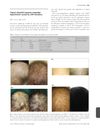
March 2015 in “British Journal of Dermatology” Applying minoxidil can help improve hair growth in people with hair loss caused by LIPH gene mutations.