 August 2013 in “Facial Plastic Surgery Clinics of North America”
 Hair restoration techniques and new cell sources improve hair loss treatments.
 December 2015 in “Actas Dermo-Sifiliográficas”
 Hair transplantation for Frontal Fibrosing Alopecia may work if the disease is inactive for 2 years and with ongoing treatment to maintain results.
 114 citations
,
January 2007 in “Drug Safety”
114 citations
,
January 2007 in “Drug Safety” Some drugs can cause skin, nail, and hair problems, which are important for healthcare professionals to recognize and report.
 June 2023 in “Romanian Medical Journal”
 The case shows how hard it is to tell apart Multiple Autoimmune Syndrome from other similar autoimmune conditions, but correct diagnosis is key for treatment to work.
 155 citations
,
June 2009 in “International Journal of Dermatology”
155 citations
,
June 2009 in “International Journal of Dermatology” Lichen planus is a skin condition that can resolve on its own, is linked to hepatitis C, and increases the risk of skin cancer.
 79 citations
,
March 2017 in “Dermatologic clinics”
79 citations
,
March 2017 in “Dermatologic clinics” Vitiligo affects overall health and self-esteem, needing more research and awareness.
 62 citations
,
January 2003 in “Dermatology”
62 citations
,
January 2003 in “Dermatology” Sunlight worsens hair loss; protect scalp.
 45 citations
,
January 2010 in “International journal of trichology”
45 citations
,
January 2010 in “International journal of trichology” Topical immunotherapy, especially with DPCP, is effective for treating severe alopecia areata.
 30 citations
,
January 2013 in “International Journal of Trichology”
30 citations
,
January 2013 in “International Journal of Trichology” The most common causes of hair loss in Jordanian children are fungal infections, autoimmune hair loss, and hair shedding after fever, with zinc deficiency also being a notable cause.
 29 citations
,
September 2012 in “Dermatologic Clinics”
29 citations
,
September 2012 in “Dermatologic Clinics” Hair disorders are caused by a complex mix of biology, genetics, hormones, and environmental factors, affecting hair growth and leading to conditions like alopecia.
 20 citations
,
March 2017 in “Journal of cutaneous pathology”
20 citations
,
March 2017 in “Journal of cutaneous pathology” Shrinking of oil glands in the skin is a key sign of hair loss linked to TNF inhibitor drugs and may improve if the treatment is stopped.
 8 citations
,
June 2008 in “Aktuelle Dermatologie”
8 citations
,
June 2008 in “Aktuelle Dermatologie” Early diagnosis and personalized treatment are crucial for managing different types of alopecia effectively.
 4 citations
,
June 2025 in “Frontiers in Immunology”
4 citations
,
June 2025 in “Frontiers in Immunology” People with atopic dermatitis have a higher risk of developing autoimmune diseases.
 4 citations
,
July 2012 in “Dermatologic Clinics”
4 citations
,
July 2012 in “Dermatologic Clinics” New biopsy techniques and tools improve alopecia diagnosis, and both too much and too little selenium can cause hair loss.
 4 citations
,
November 2009 in “Medical Clinics of North America”
4 citations
,
November 2009 in “Medical Clinics of North America” Stress, nutritional issues, and chronic diseases can cause hair loss, and nail changes may signal internal diseases; treatment focuses on the underlying cause.
 1 citations
,
October 2008 in “Expert Review of Dermatology”
1 citations
,
October 2008 in “Expert Review of Dermatology” Frontal Fibrosing Alopecia is a slowly progressing hair loss condition, likely underdiagnosed, with ineffective treatments, needing more research to understand it fully.

Patients with lichen planopilaris have a higher risk of heart disease.
 May 2025 in “The Journal of Rheumatology”
 Middle-aged women with dilated cardiomyopathy should be screened for antiphospholipid syndrome.
 May 2025 in “The Journal of Rheumatology”
 Early recognition and a team approach are crucial for managing diffuse alveolar hemorrhage in antiphospholipid syndrome.
Fractional CO2 laser is more effective and safer than steroid injections for treating alopecia areata.
 December 2004 in “Medicine”
 A thorough history and examination are crucial for diagnosing skin diseases, which affect up to a third of people. This includes details about skin lesions, medication, general health, lifestyle, family, and contacts, as well as examining the rash, hair, nails, and mucous membranes. Changes in hair and nails can also indicate other medical and skin disorders.
 22 citations
,
January 2017 in “Skin appendage disorders”
22 citations
,
January 2017 in “Skin appendage disorders” The conclusion is that primary scarring alopecia is a complex condition that requires early and accurate diagnosis for effective treatment.
 5 citations
,
December 2005 in “Clinical Techniques in Equine Practice”
5 citations
,
December 2005 in “Clinical Techniques in Equine Practice” Skin and hair changes in horses can indicate serious diseases, and recognizing these signs is important for treatment and management.
Skin changes throughout life, from development before birth to aging effects like wrinkles, influenced by both genetics and environment.
 January 2026 in “Annals of Dermatology”
 Many dermatology patients experienced anxiety, depression, PTSD, and skin issues after the February 6, 2023 earthquakes, highlighting the need for combined skin and mental health care.
Alopecia Areata has no cure, treatments are limited, and the condition often recurs, but new therapies like JAK inhibitors show promise.
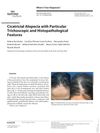 November 2018 in “Skin appendage disorders”
 The document concludes that a woman has both Frontal Fibrosing Alopecia and Lichen Simplex Chronicus, a previously unreported combination of conditions.
 339 citations
,
February 2014 in “Journal of The American Academy of Dermatology”
339 citations
,
February 2014 in “Journal of The American Academy of Dermatology” Most patients with frontal fibrosing alopecia are postmenopausal women, and treatments like finasteride and dutasteride can improve or stabilize the condition.
 291 citations
,
January 2014 in “The Scientific World Journal”
291 citations
,
January 2014 in “The Scientific World Journal” Lichen Planus is a less common condition affecting skin and mucous membranes, with various types and associated risk factors, challenging to diagnose, significantly impacts life quality, and may have a risk of cancerous changes in oral lesions.
 278 citations
,
March 2013 in “Gut”
278 citations
,
March 2013 in “Gut” Anti-IL-12/IL-23 antibody therapy effectively treats psoriasiform skin lesions in IBD patients.