 1 citations
,
August 2023 in “arXiv (Cornell University)”
1 citations
,
August 2023 in “arXiv (Cornell University)” Deep learning effectively diagnoses scalp disorders, but improvements are needed.
October 2020 in “Stem cells” The document concludes that DNA methylation and the mTOR pathway are important for stem cell function and could impact disease treatment.
 April 2018 in “Journal of Investigative Dermatology”
 The study found that p63 needs signals from morphogens to help skin cells differentiate properly.
 182 citations
,
June 2002 in “Journal of Neuroscience”
182 citations
,
June 2002 in “Journal of Neuroscience” Androgens can help prevent memory problems caused by apoE4.
 223 citations
,
October 2020 in “Microsystems & Nanoengineering”
223 citations
,
October 2020 in “Microsystems & Nanoengineering” Microtechnology methods improve organoid production for medical research.
 11 citations
,
May 2023 in “Journal of Cancer Research and Clinical Oncology”
11 citations
,
May 2023 in “Journal of Cancer Research and Clinical Oncology” CRISPR/Cas systems show promise for cancer treatment by targeting miRNAs, but delivery and specificity challenges remain.
55 citations
,
February 2013 in “The Anatomical Record” Mouse nails are similar to human nails, making them useful for studying nail diseases.
 31 citations
,
November 2016 in “Cell Reports”
31 citations
,
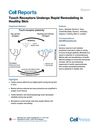
November 2016 in “Cell Reports” Touch sensitivity in mouse skin decreases during hair growth due to changes in touch receptors.
5 citations
,
April 2024 in “ACS Chemical Neuroscience” A new method accurately measures nine neuroactive steroids in small blood samples, helping to study brain diseases.
 5 citations
,
February 2024 in “Clinical Pharmacokinetics”
5 citations
,
February 2024 in “Clinical Pharmacokinetics” A 50 mg daily dose of ritlecitinib is effective for alopecia areata, with temporary treatment breaks up to 6 weeks not affecting results.
April 2026 in “Future Medicinal Chemistry” PROTACs have become a breakthrough in medicine by effectively targeting and degrading specific proteins to treat diseases.
Compounds in fluted pumpkin and African yam bean seed oils may help manage benign prostate hyperplasia.
New peptides can delay aging and improve cell function.
 March 2025 in “Nature Communications”
 NSC167409 can effectively inhibit the virus causing hand, foot, and mouth disease.
 June 2024 in “The American journal of psychiatry”
 Schizophrenia risk genes may affect early brain development, contributing to the disease.
 August 2022 in “Frontiers in genetics”
 A new genetic change in the DSC3 gene is linked to a rare condition causing hair loss and skin blisters in a child.

Better models and evaluation methods for alopecia areata are needed.
 March 2016 in “National Repository of Dissertations in Serbia”
 Dutasteride is more cost-effective than finasteride for treating benign prostatic hyperplasia in Montenegro.
 58 citations
,
November 2012 in “PLoS ONE”
58 citations
,
November 2012 in “PLoS ONE” Human skin cells can be turned into versatile stem cells, but their ability to do so decreases with repeated use.
21 citations
,
March 2023 in “Journal of Crohn s and Colitis” Microvascular damage and platelet issues persist in ulcerative colitis remission, helping assess disease states.
 1 citations
,
April 2025 in “Dermatology and Therapy”
1 citations
,
April 2025 in “Dermatology and Therapy” Vitiligo's impact varies widely, affecting both emotions and social life, not just physical symptoms.
 August 2025 in “Frontiers in Pharmacology”
 [6]-Gingerdiol 3-monoacetate shows promise for treating T. whipplei infections.
 March 2024 in “Tropical Journal of Natural Product Research”
 Many people in Fez-Meknes use potentially toxic plants for various health and cosmetic purposes, but more research is needed to ensure their safety.
 34 citations
,
August 2016 in “Scientific Reports”
34 citations
,
August 2016 in “Scientific Reports” Blocking TGFβ-RI signaling enhances surface ectoderm differentiation from human stem cells.
 7 citations
,
August 2022 in “Journal of Nanobiotechnology”
7 citations
,
August 2022 in “Journal of Nanobiotechnology” Advancements in nanoformulations for CRISPR-Cas9 genome editing can respond to specific triggers for controlled gene editing, showing promise in treating incurable diseases, but challenges like precision and system design complexity still need to be addressed.

Human hair follicle stem cells improved memory and brain health in rats.
 7 citations
,
May 2005 in “Experimental Dermatology”
7 citations
,
May 2005 in “Experimental Dermatology” Two mouse mutations cause similar hair loss despite different skin changes.
 142 citations
,
March 2019 in “Frontiers in Cellular Neuroscience”
142 citations
,
March 2019 in “Frontiers in Cellular Neuroscience” The document concludes that adenosine receptor agonists have potential for treating various conditions, but only a few are approved due to challenges like side effects and the need for selective activation.
 63 citations
,
April 2018 in “Journal of the American Academy of Dermatology”
63 citations
,
April 2018 in “Journal of the American Academy of Dermatology” Topical JAK inhibitors may help treat some skin conditions but need more research.
 58 citations
,
December 2020 in “Mayo Clinic Proceedings”
58 citations
,
December 2020 in “Mayo Clinic Proceedings” The conclusion is that individual differences in COVID-19 severity are influenced by factors like age, sex, race, and genetics, which are important for personalized medicine.