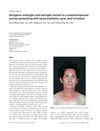
 August 2009 in “International Journal of Dermatology”
 A postmenopausal woman's facial redness, acne, and excess hair were caused by too much hormone therapy for insomnia, but improved after stopping the treatment.
 13 citations
,
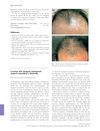
February 2007 in “British Journal of Dermatology”
13 citations
,
February 2007 in “British Journal of Dermatology” EF and PXE not closely related.
 January 2015 in “Endocrine updates”
 Bariatric surgery patients need careful before and after surgery care for safety and long-term health.
29 citations
,
October 2004 in “Differentiation” Multiple mouse desmoglein 1 isoforms have distinct roles in skin and hair development.
29 citations
,
December 2004 in “Developmental biology” cDermo-1 causes dense skin, feathers, and scales in chickens.
56 citations
,
November 1958 in “The Journal of Cell Biology” A unique skin cell similar to hair bulb melanocytes was identified, with better preservation using permanganate fixation.
25 citations
,
November 2015 in “Journal of Dermatological Science” Sebum helps protect human skin from microbes.
 July 2025 in “Advanced Science”
 Collagen VI and Semaphorin 3C are important for hair pigmentation and could help treat pigmentation disorders.
 April 2023 in “Journal of Investigative Dermatology”
 Disrupting a specific protein's function in hair follicle stem cells triggers their activation and a self-healing process.
 13 citations
,
March 2022 in “Cell Death and Differentiation”
13 citations
,
March 2022 in “Cell Death and Differentiation” Sema3A can both slow and speed up wound healing, depending on its form and combination with EGF.
January 2018 in “VCU Scholars Compass (Virginia Commonwealth University)” Desmosomes are crucial for skin and heart development, and JNK may help regulate them.
1 citations
,
September 2019 in “Journal of Investigative Dermatology” Anti-Desmocollin 3 antibodies can cause pemphigus-like symptoms in mice.
96 citations
,
September 1996 in “PubMed” Desmocollin 1 and 3 have distinct patterns in human tissues, with Dsc1 in specific skin and hair layers and Dsc3 in various epithelial layers.
October 2021 in “The journal of investigative dermatology/Journal of investigative dermatology” Desmoglein 3 is important for keeping hair follicle stem cells inactive and maintaining their special properties.
 11 citations
,
December 2014 in “The American journal of pathology”
11 citations
,
December 2014 in “The American journal of pathology” A gene deletion in mice causes weak protein, immune issues, hair loss, airway problems, and wasting disease.
 April 2018 in “Journal of Investigative Dermatology”
 Dsg1 is essential for maintaining a healthy skin barrier in mice.
January 2005 in “Journal of Cutaneous Pathology” The hair erector muscle is involved in various skin conditions and disorders.
December 2018 in “Dermatologic Surgery” October 2014 in “Microscopy” The method using ionic liquid improves observation of cell structures with less damage.
2 citations
,
September 2004 in “Experimental Dermatology” Desmosomal adhesion is essential for healthy skin structure and function.
 April 2018 in “Journal of Investigative Dermatology”
 Desmoglein 3 organization in cell connections changes without calcium, affecting cell adhesion.
1 citations
,
August 2019 Anti-Desmocollin 3 antibodies can cause atypical pemphigus symptoms.
 August 2019 in “Journal of Investigative Dermatology”
 Frog skin cells need the protein desmoplakin for proper development and cell layer formation.
 1 citations
,
July 2023 in “Communications biology”
1 citations
,
July 2023 in “Communications biology” Removing Mediator 1 from certain mouse cells causes teeth to grow hair instead of enamel.
 1 citations
,
November 2023 in “iScience”
1 citations
,
November 2023 in “iScience” A protein called desmoglein 3 is important for keeping hair follicle stem cells inactive and helps in their regeneration.
 108 citations
,
July 2002 in “Molecular and cellular biology”
108 citations
,
July 2002 in “Molecular and cellular biology” Overexpressing Dsg3 in mice skin causes excessive cell growth and abnormal skin development.
 November 2024 in “Image Analysis & Stereology”
 The method improves hair image segmentation accuracy while reducing annotation costs.
 2 citations
,
April 2010 in “The Open Dermatology Journal”
2 citations
,
April 2010 in “The Open Dermatology Journal” Corneodesmosin is essential for skin and hair health, and its dysfunction can lead to skin and hair disorders.
 September 2022 in “bioRxiv (Cold Spring Harbor Laboratory)”
 Removing Mediator 1 causes teeth cells to turn into hair cells.
19 citations
,
February 2013 in “Journal of Investigative Dermatology” Touch domes in human skin are complex sensory structures not directly linked to hair.