 3 citations
,
January 2024 in “Cureus”
3 citations
,
January 2024 in “Cureus” Folliculitis decalvans was successfully treated with doxycycline and ozenoxacin.
67 citations
,
February 2022 in “International Journal of Molecular Sciences” The nanofiber membranes effectively promote wound healing and have strong antibacterial properties.
 July 2025 in “Journal of the European Academy of Dermatology and Venereology”
 A new treatment plan helps manage folliculitis decalvans effectively.
 36 citations
,
December 2015 in “Drugs”
36 citations
,
December 2015 in “Drugs” New treatments for a chronic skin condition show promise, but individualized plans are crucial due to varying responses.
9 citations
,
April 2024 in “Advanced Drug Delivery Reviews”  July 1988 in “Journal of The American Academy of Dermatology”
 Various dermatologic treatments were effective for skin conditions like acne, rosacea, hair loss, and psoriasis from December 1986 to December 1987.
16 citations
,
May 2006 in “The Journal of Dermatology” Peeling skin syndrome was successfully treated with a vitamin D cream.
 2 citations
,
August 2018 in “Advances in Animal and Veterinary Sciences”
2 citations
,
August 2018 in “Advances in Animal and Veterinary Sciences” Camels in South Iraq were cured of skin infections with antibiotics and supplements.
 March 2024 in “IP Indian journal of clinical and experimental dermatology”
 Elderly in South India commonly suffer from skin issues like wrinkles, dryness, and infections, needing better skin care education.
 July 2003 in “Journal of Cutaneous Medicine and Surgery”
 Treating psoriasis with UVB light three times a week is faster than twice a week, and certain medications and lifestyle factors affect psoriasis treatment outcomes.
Inhibiting IL-17 and IL-23 improves wound healing in obese, diabetic mice by promoting healing macrophages.
 6 citations
,
January 2016 in “Springer eBooks”
6 citations
,
January 2016 in “Springer eBooks” Invasomes effectively deliver drugs through the skin and have potential for improved treatments.
 129 citations
,
November 2005 in “Internal Medicine Journal”
129 citations
,
November 2005 in “Internal Medicine Journal” Early detection and intensive treatment of diseases caused by Staphylococcus aureus toxins are crucial for reducing severe health effects.
 September 2025 in “Institutional Repositories DataBase (IRDB)”
 Lactic acid bacteria fermentation can turn waste into valuable skincare ingredients.
 4 citations
,
March 2012 in “Annals of oncology”
4 citations
,
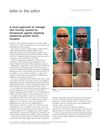
March 2012 in “Annals of oncology” New treatment with green tea polyphenols and nicotinamide improves skin problems from cancer therapy.
 610 citations
,
April 2014 in “Nature Reviews Immunology”
610 citations
,
April 2014 in “Nature Reviews Immunology” The document concludes that understanding how the skin's immune system and inflammation work is complex and requires more research to improve treatments for skin diseases.
3 citations
,
January 2017 in “Chinese Science Bulletin (Chinese Version)” Balancing gut microbes and managing stress can help improve skin conditions like eczema and acne.
January 2019 in “Dermatologic Surgery”  January 1997 in “Medical Journal Armed Forces India”
 White petrolatum jelly is as effective as bacitracin for wound healing without increasing infection rates and can save money.
 44 citations
,
March 1991 in “International Journal of Dermatology”
44 citations
,
March 1991 in “International Journal of Dermatology” Prompt treatment of inflammatory tinea capitis (kerion) is crucial to prevent scarring and hair loss.
 July 2003 in “Journal of Cutaneous Medicine and Surgery”
 Stopping certain drugs can improve skin conditions, arsenicosis affects over half of a Bangladeshi village, males are more vulnerable, and certain treatments are effective for warts, acne, and psoriasis. Smoking and drinking are linked to psoriasis in men, a cream helps with a type of skin cancer, and low iron levels don't directly cause chronic hair loss in women.
14 citations
,
July 2015 in “International Journal of Molecular Sciences” S-Methylmethionine sulfonium can protect skin from UVB damage.
 May 2011 in “British Journal of Dermatology”
 The 1891 epidemic skin disease was likely caused by arsenic poisoning, possibly from beer or fish.
54 citations
,
January 1984 in “Molecular and Cellular Biochemistry”  66 citations
,
February 2013 in “Pediatric Dermatology”
66 citations
,
February 2013 in “Pediatric Dermatology” Dermoscopy improves diagnosis and treatment monitoring for children's skin infections, inflammations, and hair disorders.
 September 2024 in “Journal of Cosmetic Dermatology”
 Ectoin helps prevent cortisone-induced skin problems and supports skin health.
 156 citations
,
August 2016 in “Journal of controlled release”
156 citations
,
August 2016 in “Journal of controlled release” Tight junctions are key for skin protection and controlling what gets absorbed or passes through the skin.
January 2026 in “Clinical & Translational Oncology” Early intervention and tailored management are crucial for skin side effects in cancer treatments.
11 citations
,
July 2024 in “Cancers” Preventing and managing skin issues from cancer treatment is crucial, especially in high UV areas like Australia and New Zealand.
22 citations
,
June 1994 in “Journal of Investigative Dermatology”