Search
for
Sort by
Research
540-570 / 1000+ results 
research Current advances of Dendrobium officinale polysaccharides in dermatology: a literature review
Dendrobium officinale polysaccharides may help with hair growth, skin moisturization, and protection against oxidative damage.
research In vitro and in vivo evaluation of biologically synthesized silver nanoparticles for topical applications: effect of surface coating and loading into hydrogels
Silver nanoparticles coated with substances like PEG showed strong antibacterial effects and improved wound healing when used in hydrogels.
research Progress in Pluronic F127 Derivatives for Application in Wound Healing and Repair
Pluronic F127-derived hydrogels show promise for effective wound healing and repair.
research Noyes-Whitney Dissolution Model-Based pH-Sensitive Slow Release of Paclitaxel (Taxol) from Human Hair-Derived Keratin Microparticle Carriers
Human hair-derived particles can effectively carry and release the cancer drug Paclitaxel in a pH-sensitive manner, potentially targeting cancer cells while sparing healthy ones.
research Molecular characterization of GhPLDα1 and its relationship with secondary cell wall thickening in cotton fibers
GhPLDα1 helps thicken cotton fiber walls by boosting cellulose production.
research Pseudo Pemphigus Phenotypes in Mice with Inactivated Desmoglein 3
Mice with a mutated Dsg3 gene showed severe symptoms but not the typical blistering of pemphigus vulgaris.
research 675-nm diode laser as an adjuvant treatment for telogen effluvium: case series
The 675-nm diode laser may safely help treat telogen effluvium.
research Optimization of Nanostructured Lipid Carriers (NLC) Extract Crude Fucoidan Algae Brown (Sargassum chrysanthemum): Design and Characterization
The developed carrier may improve hair growth treatments using brown algae extract.
research Development and optimization of biotinoyl tripeptide-1 loaded solid lipid nanoparticles for protection against heat induced hair damage
Biotinoyl tripeptide-1 nanoparticles protect hair from heat damage.

research Barrier protective use of skin care to prevent chemotherapy-induced cutaneous symptoms and to maintain quality of life in patients with breast cancer
Using a niacinamide cream can improve life quality for breast cancer patients during chemotherapy.
research Design of a RADA16-based self-assembling peptide nanofiber scaffold for biomedical applications
RADA16 is a promising material for tissue repair and regenerative medicine but needs improvement in strength and cost.

research Mutation in 5′ upstream region of GCH I gene causes familial dopa-responsive dystonia
A specific gene mutation is linked to a hereditary form of dystonia that responds well to certain medications.
research DAB-labelling for collagen type III and PDGFR as control on equine skin sections.
DAB labeling effectively identifies collagen type III and PDGFR in horse skin, but may show false positives.
research Engineering MMP9-Responsive Antioxidative Micelle-Hydrogel Dressings for Sequential Inflammatory Remodeling and Pro-Angiogenesis in Diabetic Wound Healing
The hydrogel dressing RD@PVA helps heal diabetic wounds by reducing stress and improving blood vessel growth.
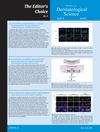
research The Editor's Choice
UV radiation may cause DNA changes in skin, certain UVB therapy helps psoriasis, a new gene mutation is linked to mild piebaldism, different immune cells affect psoriasis, a drug promotes hair growth, and some cancer drugs could treat skin barrier issues.
research A comparison of the cytotoxic effects of fatty acids on in vitro breast and prostate cell lines
DHA derivatives, especially didocosahexaenoin, effectively kill prostate cancer cells and may offer a safer cancer treatment option.
research Dutasteride nanoemulsion preparation to inhibit 5-alpha-hair follicle reductase enzymes in the hair follicle; an ex vivo study.
The dutasteride nanoemulsion could improve hair loss treatment by enhancing drug penetration and retention in hair follicles.
research DNMT1-mediated methylation inhibits microRNA-214-3p and promotes hair follicle stem cell differentiate into adipogenic lineages
DNMT1 helps turn hair follicle stem cells into fat cells by blocking a specific microRNA.

research Hair growth promoting effect of bioactive extract from deer antler velvet-loaded niosomes and microspicules serum
Deer antler velvet serum helps hair grow and is safe for skin.
research Wnt activator CHIR99021-stimulated human dermal papilla spheroids contribute to hair follicle formation and production of reconstituted follicle-enriched human skin
CHIR99021 helps create human skin with hair follicles, offering hope for hair loss treatments.
research Nanoporous Silica Entrapped Lipid-Drug Complexes for the Solubilization and Absorption Enhancement of Poorly Soluble Drugs
Nanoporous silica entrapped lipid-drug complexes significantly improve the solubility and absorption of drugs that don't dissolve well in water.
research Correction to “Multistage Transdermal Nitric Oxide Delivery System for the Efficient Treatment of Androgenic Alopecia”

research 1409 Temporary cell cycle arrest by ALRN-6924: A novel, p53-targeting strategy to protect human scalp hair follicles against cyclophosphamide-induced alopecia
ALRN-6924 can protect hair follicles from chemotherapy damage by temporarily stopping cell division.

research RP-HPLC Technique for Dustasteride Quantitative Estimation in Tablet Dosage Form: Formulation and Validation of Analytical Technique
A reliable method was developed to measure dutasteride in tablets accurately and consistently.

research Injectable Dual‐Crosslinked Poly(oligo(Ethylene Glycol) Methacrylate) Hydrogels Inspired by Mussel Adhesion for Cutaneous Wound Healing and Functional Tissue Regeneration
The hydrogels improve wound healing and tissue regeneration better than traditional treatments.

research Culture and Differentiation of Human Hair Follicle Dermal Papilla Cells in a Soft 3D Self-Assembling Peptide Scaffold
The 3D scaffold helped maintain hair cell traits and could improve hair loss treatments.
research Genome Wide Differential Expression Profiles in Nevus Sebaceous Uncovered Low Expression of CDKN2AIP and Construction of a ceRNA Network
CDKN2AIP gene is less active in nevus sebaceous, affecting related RNA networks.

research 013 Prostaglandin D2 enhances testosterone metabolism by ROS-mediated altered redox potential in keratinocytes
Prostaglandin D2 increases testosterone production in skin cells through a process involving reactive oxygen species, which could be a new target for treating hair loss and other skin conditions driven by testosterone.
research D’orenone blocks polarized tip growth of root hairs by interfering with the PIN2‐mediated auxin transport network in the root apex
D'orenone stops root hair growth by disrupting auxin transport, but adding auxin can reverse this.