 25 citations
,
October 1996 in “Dermatologic Clinics”
25 citations
,
October 1996 in “Dermatologic Clinics” Loose Anagen Syndrome causes easy-to-pull, thin hair, mainly in young girls, and improves with age.
 22 citations
,
August 2013 in “Facial Plastic Surgery Clinics of North America”
22 citations
,
August 2013 in “Facial Plastic Surgery Clinics of North America” A cosmetic procedure can lower the hairline by up to 10 cm, with high satisfaction but potential for temporary sensation loss and rare risks.
 March 2005 in “International Journal of Cosmetic Science”
 A new method helps understand hair shine and various products improve hair care.
 8 citations
,
November 2019 in “International Journal of Morphology”
8 citations
,
November 2019 in “International Journal of Morphology” Henna dye improves hair cuticle and thickness but effects vary by hair type and health.
 January 2026 in “Cosmoderma”
 A 9-year-old girl has a rare hair disorder causing beaded, sparse hair.
 11 citations
,
July 2004 in “International Journal of Cosmetic Science”
11 citations
,
July 2004 in “International Journal of Cosmetic Science” The conclusion is that a new method to measure hair shine was confirmed to match people's visual assessments.
 4 citations
,
September 2017 in “Skin appendage disorders”
4 citations
,
September 2017 in “Skin appendage disorders” The dog with an Alopecia Areata-like condition showed signs of an autoimmune disease and partially regrew hair without treatment, suggesting dogs could be models for human AA research.
117 citations
,
August 2005 in “Ultramicroscopy” Human hair's strength and flexibility vary by ethnicity, damage, and treatment.

Observing someone's physical appearance can give hints about their health, hygiene, and potential medical conditions.
 7 citations
,
August 2005 in “Evolutionary anthropology”
7 citations
,
August 2005 in “Evolutionary anthropology” Human hair is unique and important for understanding human evolution and identity.
20 citations
,
October 1996 in “Journal of the American Academy of Dermatology”  208 citations
,
December 2003 in “Journal of Investigative Dermatology”
208 citations
,
December 2003 in “Journal of Investigative Dermatology” Certain cells from hair follicles can create new hair and contribute to hair growth when implanted in mice.
 136 citations
,
June 2006 in “Journal of Dermatological Science”
136 citations
,
June 2006 in “Journal of Dermatological Science” PDGF isoforms can promote and sustain hair growth.
3 citations
,
June 1979 in “The Journal of Dermatology” Glycosaminoglycan levels peak early in hair growth and decrease as the cycle progresses.
 April 2011 in “ISRN Dermatology (Print)”
 The wigs made from human hair and polypropylene were mostly well-tolerated and durable in rabbits, suggesting they could be a new option for people with extensive hair loss.
12 citations
,
January 2013 in “Indian dermatology online journal” The document reports a unique case of woolly hair with a combination of conditions not previously seen together.
 1 citations
,
April 2017 in “Journal of Investigative Dermatology”
1 citations
,
April 2017 in “Journal of Investigative Dermatology” CCL5 is important for the hair growth potential of human dermal papilla cells.
 January 2026 in “International Journal of Dermatology Research”
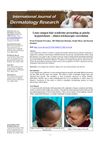
 Early recognition of loose anagen hair syndrome is important to prevent misdiagnosis and unnecessary treatments.
East and Southeast Asians typically have less dense but thicker, straight black hair.
 10 citations
,
May 2018 in “Forensic Science International”
10 citations
,
May 2018 in “Forensic Science International” Shrunken heads retain some facial features and hair characteristics, allowing for limited individual identification.
 December 2025 in “Ethnologia Fennica”
 Hair loss significantly impacts women's identity and social interactions.
 July 2019 in “Journal der Deutschen Dermatologischen Gesellschaft”
 A mother and daughter have a rare genetic hair loss disorder with no effective treatment.
 1 citations
,
January 2010
1 citations
,
January 2010 Asian women experiencing hair loss often feel embarrassed and unhappy, but hair transplantation can offer natural-looking results and improve their self-confidence.
 February 2024 in “Biomedical materials”
 Scientists created a lab-grown hair follicle model that behaves like real hair and could improve hair loss treatment research.
June 2001 in “European Journal of Dermatology” A 54-year-old woman experienced progressive hair loss starting in adolescence, leading to sparse scalp hair and almost no eyebrows or eyelashes.
 29 citations
,
April 2020 in “Biomolecules”
29 citations
,
April 2020 in “Biomolecules” The 3D scaffold helped maintain hair cell traits and could improve hair loss treatments.
 19 citations
,
May 2011 in “Dermatologic Therapy”
19 citations
,
May 2011 in “Dermatologic Therapy” The document suggests using hairpieces, wigs, and safe cosmetic techniques to hide hair loss from alopecia areata.
1 citations
,
January 2007 in “AIP conference proceedings” High-resolution x-ray images showed three main structures in human hair: medulla, cortex, and cuticle.
June 2014 in “Biotechnology and Bioprocess Engineering” Injecting lab-grown hair cells into the scalp can regrow hair.
March 2026 in “Journal of the American Academy of Dermatology” Hair diameter diversity could improve androgenetic alopecia assessment and treatment planning.