 45 citations
,
December 2009 in “Veterinary dermatology”
45 citations
,
December 2009 in “Veterinary dermatology” The book is recommended for its new scientific information and balanced treatment options for hair loss in domestic animals.
32 citations
,
November 2006 in “Veterinary dermatology” Congenital alopecia in domestic animals is rare and involves abnormal hair follicle development, needing better understanding and classification.
Selenium can be toxic to animals, causing serious health issues, especially in horses.
 4 citations
,
January 2009 in “Wiley-Blackwell eBooks”
4 citations
,
January 2009 in “Wiley-Blackwell eBooks” The book explains causes, diagnosis, and treatments for hair loss in pets.
 1 citations
,
December 2010 in “The journal of small animal practice/Journal of small animal practice”
1 citations
,
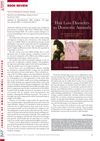
December 2010 in “The journal of small animal practice/Journal of small animal practice” The book helps veterinarians understand and treat hair loss in animals.
April 2016 in “Archivio Istituzionale della Ricerca (Universita Degli Studi Di Milano)” Sox9 is important in the development of tumors in domestic animals.
 February 2024 in “Scientific Reports”
 The wolves suspected of man-eating in the 1880s likely ate very little human flesh and mostly consumed a diet similar to herbivores and omnivores.
September 2025 in “Journal of Parasite Science” 10.5% of cats in Cimahi had a fungal skin infection, mostly affecting young, female, domestic cats.
 October 2025 in “Journal of Veterinary Diagnostic Investigation”
 Black hair in cats has higher cortisol levels than white hair.
 May 2023 in “Animal Reproduction Update”
 High levels of cortisol in hair show long-term stress which can lower fertility in animals.
44 citations
,
January 1957 in “Public Health Reports (1896-1970)” Animal ringworm is common and can spread to humans.
30 citations
,
November 2019 in “Genetics selection evolution” Chinese domestic goats have unique genetic traits due to domestication and geographic isolation.
 September 2024 in “Journal of Parasite Science”
 Dermatophytosis in cats was most common in young, male Persian cats, with symptoms like hair loss and crusts.
 1 citations
,
August 2016 in “Journal of Buffalo Science”
1 citations
,
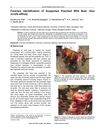
August 2016 in “Journal of Buffalo Science” The animal was likely a wild boar.
36 citations
,
January 2015 in “Clinical and Translational Allergy” Humans and pets share similar allergy mechanisms, and studying pet allergies can help treat both human and animal allergies.
June 2006 in “Experimental dermatology” The document concludes that while finding animal models for the skin disease Hidradenitis suppurativa is challenging, certain mouse mutations may provide useful insights for research and drug testing.
 December 2021 in “Molecular genetics and genomics”
 Cats with abnormal hair had DSG4 gene changes causing hair problems.
40 citations
,
January 1985 in “Tissue and Cell” Sebum production in sebaceous glands is similar to hair growth, involving cell development and degeneration.
 May 2025 in “International Journal For Multidisciplinary Research”
 Cats and dogs with dermatophytosis show skin issues, with dogs having more severe symptoms.
 2 citations
,
January 2017 in “Folia biologica”
2 citations
,
January 2017 in “Folia biologica” The KRTAP7-1 gene is very similar across different cattle and yak breeds and likely plays a role in hair strength and shape.
March 2013 in “Pigment Cell & Melanoma Research” A gene called Taqpep affects cat coat patterns like stripes and blotches.
26 citations
,
April 1975 in “Journal of Wildlife Management” Moose hair mineral levels vary by season and location, indicating environmental impacts.
3 citations
,
January 2004 in “Journal of Wildlife Diseases” A deer fawn in South Dakota was the first cervid found with congenital hypotrichosis, a condition causing sparse or missing hair.
 1 citations
,
October 2022 in “International Journal of Environmental Research and Public Health”
1 citations
,
October 2022 in “International Journal of Environmental Research and Public Health” People with Type 2 Diabetes are more likely to have a mite infestation called Demodex folliculorum.
2 citations
,
July 2013 in “Journal of Animal Physiology and Animal Nutrition” Shorthaired and hairless cat breeds excrete more felinine than longhaired breeds.
 September 2023 in “Small animal advances”
 The kitten's skin infection was cured with medication in three weeks.
 January 2025 in “International Journal of Veterinary Sciences and Animal Husbandry”
 The camel fully recovered from sarcoptic mange after 5 weeks of treatment.
 January 2025 in “International Journal of Veterinary Sciences and Animal Husbandry”
 The cat fully recovered from the infection after treatment.
 3 citations
,
March 2017 in “International journal of women’s dermatology”
3 citations
,
March 2017 in “International journal of women’s dermatology” Some domesticated animals have the same genetic skin diseases as humans, which can help doctors understand human genetic mutations.
 December 2019 in “Ukrainian Journal of Veterinary and Agricultural Sciences”
 Donkey and horse hair have different microscopic structures, which can help tell them apart.