 January 2026 in “Cosmoderma”
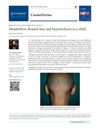
 A 9-year-old girl has a rare hair disorder causing beaded, sparse hair.
December 2025 in “Journal of health economics and outcomes research” Alopecia areata in Saudi Arabia is costly, mainly due to lost productivity and drug costs.
November 2025 in “IECCMEXICO” Regenerative therapies are improving aesthetic surgery by enhancing tissue quality and healing.
November 2025 in “Drug Testing and Analysis” Epristeride's metabolism involves key metabolites and proteins, affecting its use in doping tests.
November 2025 in “F1000Research” Certain fungi may contribute to hair loss in cynomolgus macaques.
September 2025 in “Figshare” Alopecia areata involves complex immune activity, mainly Th1, with potential benefits from broader immune treatments.
 July 2025 in “International Journal of Dermatology Venereology and Leprosy Sciences”
 Examining Survivin levels may help understand premature greying of hair.
 September 2024 in “Medicina”
 Certain gene variations may protect against skin issues and oxidative stress in women with PCOS.
 February 2024 in “BMC genomics”
 The TRPV3 gene variant may cause the long-haired suri alpaca coat.
 September 2023 in “International Journal of Cosmetic Science”
 Both shampoos increased scalp germ numbers but did not change the overall microbial community composition.
 September 2022 in “JAAD case reports”
 The man has a genetic skin condition called pachyonychia congenita.
 April 2022 in “Diabetes Therapy”
 Low testosterone does not prevent prostate cancer in men with type 1 diabetes.
 January 2022 in “International journal of zoology and animal biology”
 Dogs with dermatomyositis, especially Collies and Shetland Sheepdogs, need better treatments for their skin and muscle inflammation.
 September 2021 in “CRC Press eBooks”
 CCCA is a common hair loss condition in African American women, often inherited and influenced by hairstyling, with unique scalp features detectable by special tools.
January 2021 in “Annals of Chinese medicine” Male pattern baldness may increase COVID-19 severity risk.
 December 2020 in “Galen Medical Journal”
 People with Alopecia Areata and Androgenic Alopecia have more mast cells in their scalp than healthy individuals, especially those with Alopecia Areata.
October 2020 in “Pediatrics in Review” The newborn was diagnosed with a rare skin disorder causing blisters, which requires careful wound care and family support.
 January 2020 in “Sumatera Medical Journal”
 Family history and stress are linked to early hair graying, with family history being the main factor.
 January 2020 in “International journal of medicinal plants and natural products”
 Ayurvedic Panchakarma therapy, Virechan, can effectively manage PCOS symptoms and improve health markers.
 January 2016 in “Experimental Dermatology”
 New findings suggest potential treatments for melanoma, hyperpigmentation, hair defects, and multiple sclerosis, and show skin microbiome changes don't cause atopic dermatitis.

The article suggests using "to heal from" for a more caring approach to treating women's hair loss and discusses the impact of doctors' beliefs on treatment.
December 2014 in “DOAJ (DOAJ: Directory of Open Access Journals)” Developing plant-based treatments for alopecia is promising and necessary.
November 2014 in “Scientific periodicals of Ukraine” There's a need for safe, plant-based hair loss treatments due to limited options and side effects of current drugs.
January 2014 in “Healthy aging research” Polycystic ovarian disease symptoms can continue after menopause, making diagnosis and management in older women challenging.

The study concludes that Twenty-nail dystrophy is more common in boys among children and in women among adults, with varying response to treatment.
 February 2011 in “Journal of Clinical Investigation”
 Genetically repaired stem cells may treat certain genetic diseases, Th17 cells are key in fighting systemic fungal infections, hair loss in AGA is due to progenitor cell loss, and α-synuclein transfer might contribute to Parkinson's disease progression.
The curly mutation in SELH/Bc mice affects hair and may help study human genetic disorders.
The PI's development is closely linked to skin and hair pigmentation in macaques.
The agouti gene may help understand and treat obesity.
 2 citations
,
January 1998 in “Dermatology”
2 citations
,
January 1998 in “Dermatology” Stopping forehead irritation and using hydrocortisone helped a man's skin, Martinique has lower melanoma rates, a man had an allergy to a specific antifungal, another had unexplained cysts, certain drugs can cause skin reactions without always being interrelated, a link between Fanconi anemia and a skin condition was suggested, high levels of a certain protein may play a role in a type of psoriasis, and there's a need to study the connection between scalp pain and hair loss.